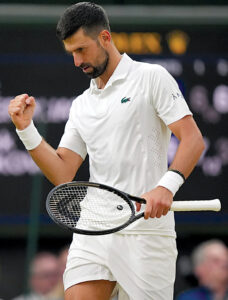
Balogun storyline at World Cup the first one in 64 years
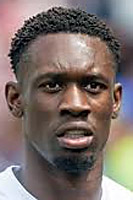
Balogun
This World Cup has prompted some questions that simply cannot be answered.
Can anyone stop Messi? Did Merlin the duck like wearing that jersey? What would have happened if the Congo’s statue fan had to sneeze?
That said, if you’re a first-time soccer watcher still confused by all this footie, we’re here to help! Free kicks, hydration breaks, stoppage time, the situation with Folarin Balogun … there’s a lot to know. We put out a call for your burning World Cup questions — and we’ll keep answering them if you have more. We’re compiling answers to your FAQs below.
Now to some new questions:
Has what happened with Balogun ever happened before at a World Cup?
Not for 64 years. Back then, in the 1962 World Cup and at a time when there were no physical red cards in soccer, Brazil midfielder Garrincha was sent off the field by the referee in the semifinals for kicking a Chilean opponent away from the ball. However, Garrincha escaped a ban for the final — a scenario Brazil officials feared — as a result of the intervention of host nation Chile’s president, who argued that Garrincha should be allowed to play. The Balogun case differs slightly in the sense that his ban for the red card was placed on suspension for one year.
How are World Cup referees chosen and vetted?
Brazilian ref Raphael Claus — the match official President Donald Trump described as “a little bit suspect” in light of the red card for Balogun — was one of 52 referees selected for the tournament based on their “quality and consistency of performances” over the previous three years in international and domestic competitions, FIFA says. They’ve been monitored, attended seminars and even received support from mental specialists. “The very best in the world,” is how FIFA referee chief Pierluigi Collina put it.
Who are the kids with players at the start of games?
Lucky souls, aren’t they? Those children holding hands and sometimes talking with the best soccer players in the world before games are officially called “player escorts” — even though many would describe them as “mascots.” One of FIFA’s sponsors is food company Quaker, who has teamed up with dozens of community organizations to give kids “from underserved communities” the chance to walk players onto the field.
Why do Americans call it ‘soccer’?
First of all, it’s not just Americans — looking at you, fallen brethren in Australia, New Zealand, South Africa and Canada. While all the teams that call it “soccer” and not “football” may have been knocked out, England — the birthplace of the sport — is hanging in there in the quarterfinals and still flies the “it’s called football!” flag. That’s despite the word “soccer” actually being coined in Britain, perhaps as far back as the 1880s. The exact date it was first used is not known, but it is widely believed “soccer” was derived from “association football,” which was the first official name of the sport. “Soccer” is not a commonly used term in Britain these days and some Brits often roll their eyes when they hear others use the word instead of “football.” But given the U.S. has its own version of football, surely it’s OK to use “soccer” as a differentiator, right?
What does it take to rain out or delay a game?
Soccer isn’t like cricket or tennis or baseball — it can be played through heavy rain. If it gets too heavy, though, the referee has the authority to bring a halt to, or abandon, a match owing to poor weather conditions that affect the field or the surrounding areas. Storms have been an issue at this World Cup — one caused a delay of around two hours during the group game between France and Iraq — and a rule used by FIFA pauses games for 30 minutes if lightning is detected within 8 miles (up to 13 kilometers). Each strike resets the clock. World Cup regulations state that if a match was to be abandoned after it had kicked off, it restarts “at the minute at which play was interrupted rather than being replayed in full, and with the same scoreline.”
What happens if teams are still tied after five penalty kicks?
In that case, the shootout then goes to the forebodingly named “sudden death.” That means the teams take extra rounds of penalties — one attempt each — until one scores and one doesn’t. On some occasions, even the goalkeepers end up taking a penalty. The shootout can go on for quite some time, like in the Israeli third-tier promotion playoff between F.C. Dimona and Shimshon Tel Aviv in 2024, when 56 shots were needed before Dimona prevailed 23-22.
Can you drink alcohol at the soccer games?
Yes! Unlike at the Paris Olympics venues or the Qatar World Cup stadiums, alcoholic beer is available at World Cup venues. Michelob Ultra and Budweiser are the official sponsors. Stadiums can also offer cocktails and hard seltzers for sale.
National Sports
Tough day for former coach, player for Curve

Despite the hoopla, US men’s soccer still stagnant
Balogun storyline at World Cup the first one in 64 years
Dallas star had brain trauma
AUSTIN, Texas — Former Dallas Cowboys defensive end Marshawn Kneeland had a brain abnormality linked to repeated ...
Knicks’ superstar Brunson has wrist surgery