
Frozen out: Early bloom, spring freeze devastate crops
Early bloom, spring freeze devastate crops
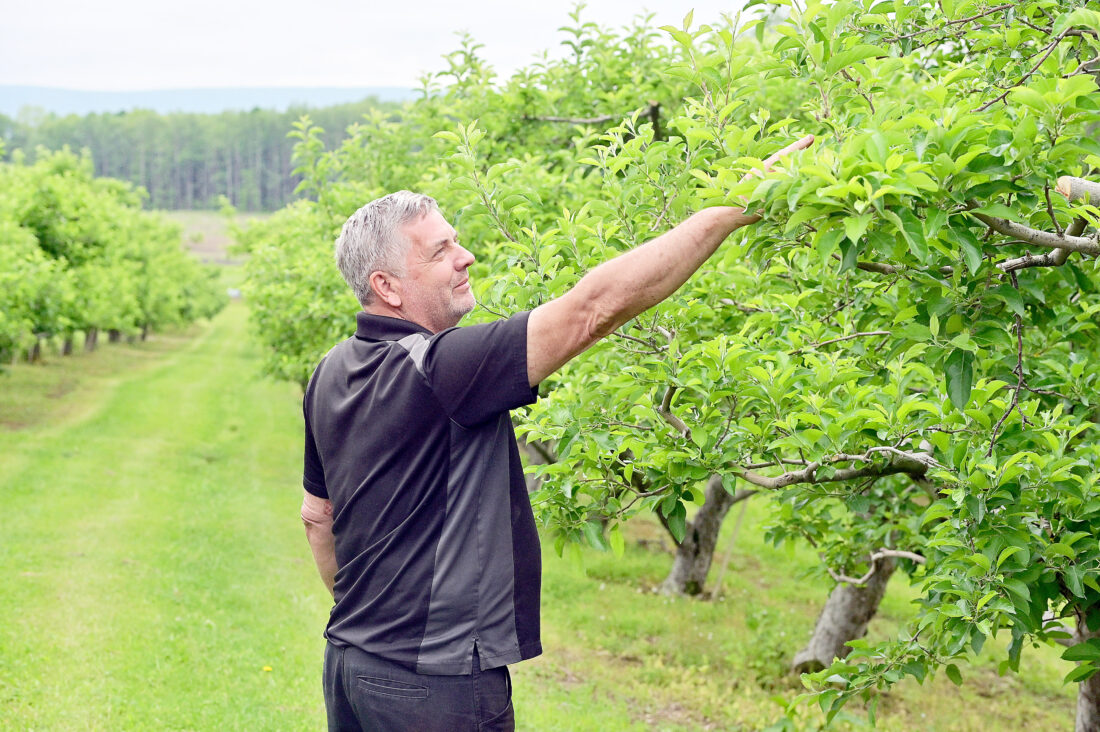
Troy McCoy, owner of McCoy’s Orchard, 2573 Quaker Valley Road, New Paris, walks through his apple orchard. Mirror photo by Patrick Waksmunski
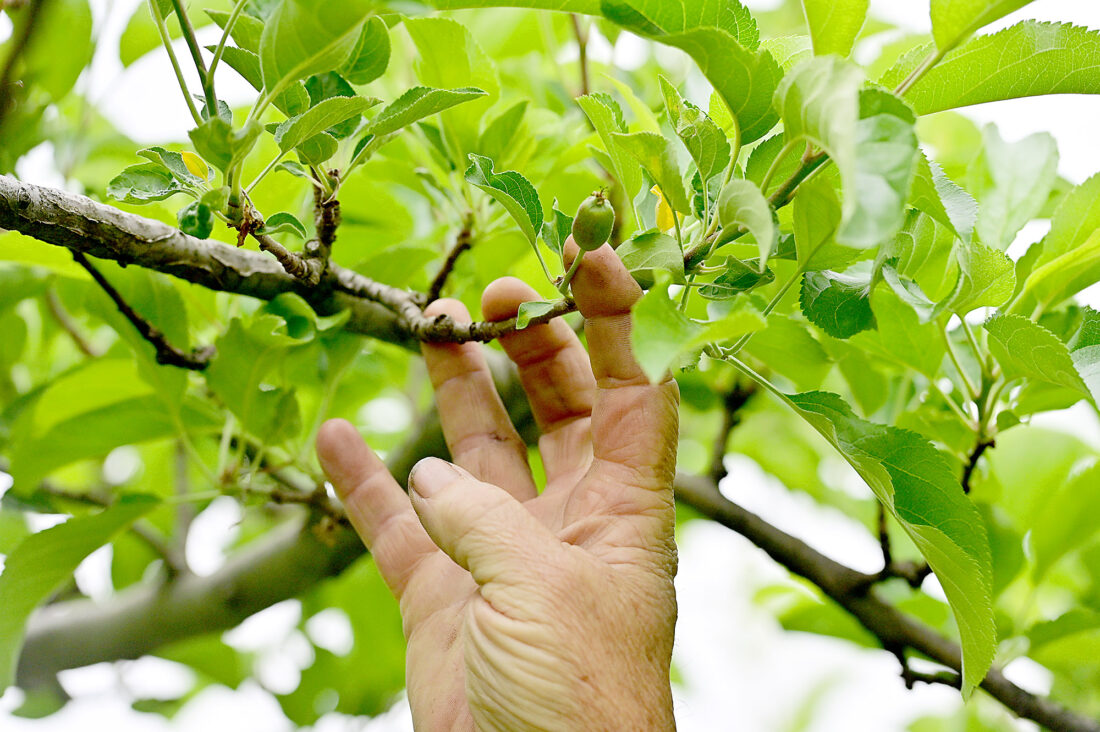
Troy McCoy, owner of McCoy’s Orchard, shows a yellow delicious apple that didn’t survive the cold. Mirror photo by Patrick Waksmunski
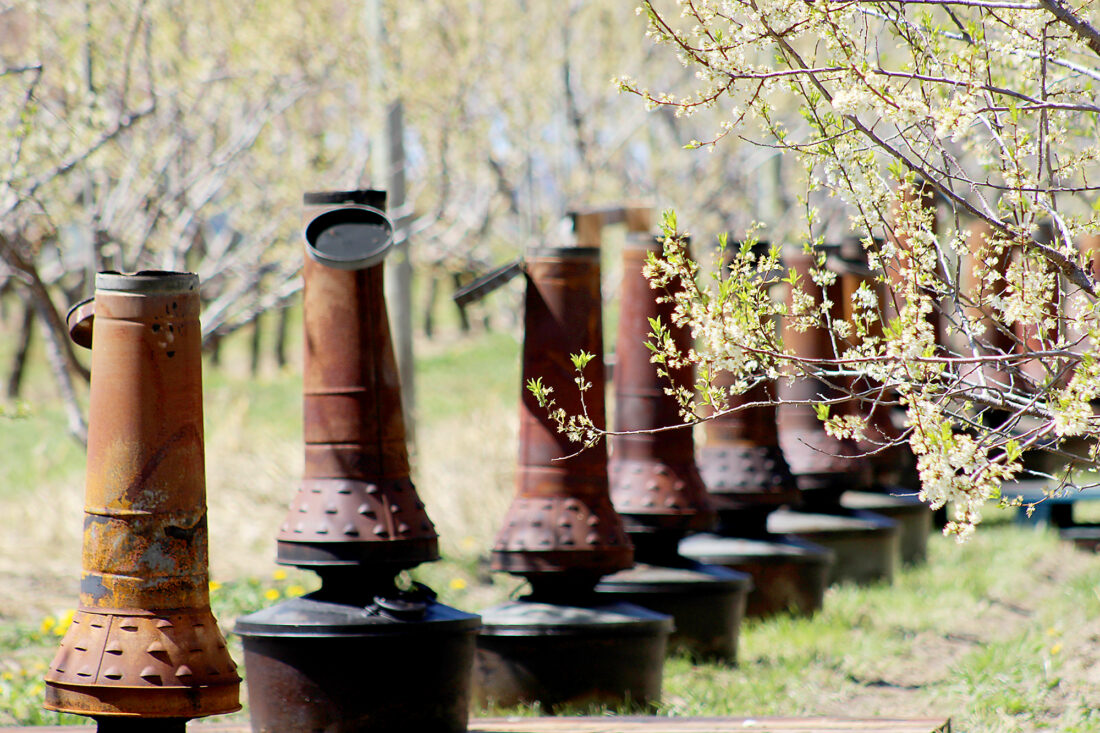
A line of smudge pots stands among the fruit trees in mid-April during the bloom. Smudge pots, when lit, can heat the air around the tree, preventing frost damage. Mirror photo by Holly Claycomb
Troy McCoy, owner of McCoy’s Orchard, 2573 Quaker Valley Road, New Paris, walks through his apple orchard. Mirror photo by Patrick Waksmunski
Troy McCoy, owner of McCoy’s Orchard, shows a yellow delicious apple that didn’t survive the cold. Mirror photo by Patrick Waksmunski
A line of smudge pots stands among the fruit trees in mid-April during the bloom. Smudge pots, when lit, can heat the air around the tree, preventing frost damage. Mirror photo by Holly Claycomb
Trending
Farmers -- whether concentrating on livestock or crops -- know they're at the mercy of Mother Nature, but the too-early bloom for fruit trees followed by freezing temperatures has the region's fruit growers reeling.
"We have nothing left, everything was frozen," said Troy McCoy, owner of McCoy Orchards, New Paris.
Apples and peaches are gone, he said. "We lost our entire crop."
McCoy said there were four or five nights with cold temperatures, but he points to April 19 as "the worst freeze, the one that cooked them."
He's fortunate to have crop insurance that he purchased last year, but it's still a huge loss.
"We lost a lot of money," he said, noting crop insurance will pay "something" but not what a successful season would have brought in.
For those without crop insurance, "it is a bad experience," he said.
McCoy isn't alone, as the state Department of Agriculture is estimating statewide losses between $150 million to $200 million for fruit growers.
"Record temperatures a few days the week of April 12 tricked fruit into blooming quickly in Mid-April, and a late April freeze that occurred on April 21 for most growers killed everything that had bloomed prior to that night," said Will Whisler, Pennsylvania Farm Bureau spokesman. "We have orchards across the state that are going to be experiencing losses, depending on size, in the $500,000 to $3.5 million range."
The Farm Bureau conducted a survey to determine the extent of the damage. Whisler said of 250 total respondents, 221 reported that they were negatively impacted by the freezing temperatures. Primarily impacted were growers of apples, grapes, peaches, pears, plums, cherries and apricots.
Of the 221 respondents who reported damage: 13% reported a loss of 10% or less; 87% reported a loss of at least 25%; 65% reported a loss of at least 75%; and 29% reported a total crop loss, Whisler said.
Of the 221 individuals who reported damage, 125 provided a dollar figure for their losses. The net losses of those 125 people added up to $43.7 million, Whisler added.
Cherry, peaches decimated
"It wiped out our cherries and peaches, and if I am lucky, we will have about five percent of our apple crop," said Jackie Sleek, owner of Sleek's Orchard, New Paris.
"I have been doing this for 40 years and I have never seen anything this bad," she said, adding that she figures the loss will be about $350,000.
For Sleek, this loss will be hard felt, as she doesn't have crop insurance.
"I did (have crop insurance) years ago, but it is so expensive," she said, vowing that "I will have it next year."
Beyond her orchard, though, Sleek said the crop damage has a widespread impact.
"It will affect the people who haul and pick the fruit and the consumers," she said. In addition, Sleek usually sends apples to those who make cider. The loss "will impact them. It will not be good."
'Unprecedented' spring
Way Fruit Farm in Port Matilda was also hit hard by the freeze, and although owner Jason Coopey said the peaches and cherries were decimated, and the apples took a hit, he expects to have 40% to 50% of his apple crop.
It is one of the worst springs he has seen, Coopey said.
"The word we are using is unprecedented. In 2012, we had a bad spring that was isolated to me. We got colder than the rest of Pennsylvania. This is only the second time we have been frozen since 1945 ... twice in the last 14 years," Coopey said.
He points to the early start of the season, when some March days hit 75 degrees, causing an explosion of blooms.
"An early warm period doesn't always work well for us. If plants bloom three weeks ahead of normal, you will get bit," he said.
Not only will orchards feel the loss, consumers will too, as prices spike due to short supplies of locally grown fruit.
"It will be hard to find a peach this summer, and if you find them, they will be pricey," Coopey predicted, adding that he expects apple and cider prices to rise as well.
On a positive note, Coopey said his strawberry crop survived.
"Our strawberries did well, I irrigated them 15 times in the last three weeks. We hope to have pick-your-own strawberries within the next two weeks," he said.
Wind machines didn't help
Despite installing wind machines to move cold air out and bring warm air down to the trees, Ridgetop Orchards in Fishertown took a big hit from an April 21 freeze.
"We have seven wind machines that push warm air from above to raise temperatures. Unfortunately with this freeze event, there was no inversion layer (heat) to have," said co-owner and orchard manager Seth Boyer, adding that temperatures stayed at 24 degrees for almost six hours.
With some apple trees still in bloom and other trees with tiny fruit in the 4-millimeter stage, "we had catastrophic damage like I had never seen before," he said.
Boyer has been a fruit farmer for 25 years, following in the footsteps of his father Dan, who farmed for 50 years.
"I never saw anything like this," Boyer said, adding that his father probably never saw anything like this year, either.
"Our cherries and peaches are a total loss; we will have five percent of our apples if we are lucky," he said, noting that the fruit that is left is probably compromised and will be small and mushy this year.
"It won't be good enough to sell at grocery stores," Boyer said.
Ridgetop is the largest orchard in the region and has its own packing plant.
Because of the crop damage, he has had to lay off a lot of employees who would normally be trimming trees, thinning the fruit and overall taking care of the maturing crop.
"We are down to a skeleton core," he said. "It breaks my heart. I have six guys, I should have 16."
Washington state will pick up slack
As locally grown peaches, cherries and, in the fall, apples will be hard to come by, Boyer expects Washington state to pick up the slack.
"Washington state is a monster when it comes to apples," Boyer said, though he expects an increase in prices.
Boyer said if the weather pattern this year is the new normal, farmers will be in trouble.
"Farmers in general, we are in big trouble between climate change, the price of fuel and the price of labor," he said. Now, with this damage, Ridgetop is "no longer a grower, packer and shipper, we are just a grower."
Ridgetop does have a few plans in the works to salvage their season.
The hope is to get their retail space open in June with ice cream and a bakery.
"We are trying to turn a bad situation into a learning experience," Boyer said.
Over the ridge in New Paris, Boyer Orchards was also hit hard by the freeze.
Owner Matt Boyer told WJAC that the damage to his crops could make this one of the most difficult seasons he's seen in decades.
Boyer said the cold temperatures damaged crops across the orchard, probably wiping out his peach crop. He said some apples survived, but the orchard won't produce the volume it normally would.
Meanwhile, Gov. Josh Shapiro sent a letter to the U.S. Secretary of Agriculture Brooke Rollins requesting a Secretarial Disaster Designation and urging the U.S. Department of Agriculture to expedite disaster assistance for Pennsylvania farmers affected by the April freeze, including faster damage assessments that will help growers begin filing crop insurance claims.
Shapiro is calling on the federal government for their support in helping growers recover financially and maintain long-term market stability. The Pennsylvania Department of Agriculture is exploring additional flexibility with appropriated state funds to respond to this situation and working with Penn State Extension to collect early industry assessments.
"I've called on USDA to cut through delays, expedite the disaster declaration and ensure farmers receive the assistance and crop insurance support they need to recover and keep their operations moving forward. We will continue to have the backs of our farmers and make sure we explore every option at our disposal to help them through this crisis," Shapiro said.
"This freeze didn't just damage crops -- it jeopardized years of hard work and the future stability of family farms across Pennsylvania," said Russell Redding, state agriculture secretary. "Growers are facing heartbreaking losses that will ripple far beyond the orchard or field, impacting local economies, farm markets, processors and packagers and the families who depend on agriculture for their livelihoods."
Mirror Staff Writer Walt Frank is at 814-946-7467.