Separation of PIAA playoffs far from certain

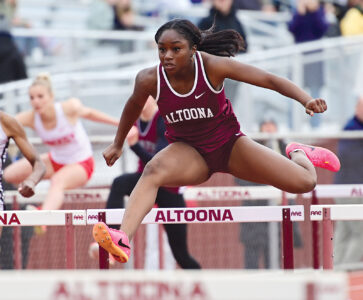
09/14/23 Mirror photo by Patrick Waksmunski /
The passing of House Bill 41 by the Pennsylvania House of Representatives on Wednesday brought with it a lot of attention and a lot of hope to those who are searching for change in the postseason format of Pennsylvania Interscholastic Athletic Association competition.
But those expecting to see separate private school playoffs and public school playoffs any time soon should not hold their breath.
It’s certainly possible the bill — which passed by an overwhelming bipartisan margin of 178-23 — will pass through the Senate, the next step. However, the chances the bill does anything other than pass the target of certain people’s ire from politicians to the PIAA seems slim.
New PIAA Executive Director Mark Byers was interviewed by Mercer County sports personality Bob Greenburg recently and addressed House Bill 41, which would give the PIAA the opportunity to separate the playoffs — something the organization legally cannot currently do and hasn’t been able to do for decades despite constant yearly public calls for it every time a private school wins a championship in dominant fashion.
Byers said the PIAA had three different paths forward — the first is to do nothing, the second would be to separate certain sports and the third would be to separate all sports.
His concern was that the bill, in the form it was in when he was interviewed, did not offer the PIAA any protection from lawsuits and it could lead to liability against the PIAA for unequal treatment of schools.
In the days leading up to the bill being passed, the politicians addressed some of Byers’ concerns and included an amendment to the bill that indemnifies the PIAA from being sued in court if the PIAA had public schools play in one playoff bracket and private schools play in a different one.
That addition could potentially provide some momentum for public schools seeking change.
But almost immediately after the bill was passed, one District 6 school put out a public statement condemning it.
Bishop McCort, which has made the news recently with its lawsuit directed against both the PIAA and its fellow public schools in the Laurel Highlands Athletic Conference, claimed the legislation “raises significant concerns regarding equity, consistency and the treatment of student athletes.”
McCort also contended the bill is selective targeting in violation of U.S. Supreme Court standards — suggesting schools like McCort may pursue legal action beyond the state courts of Pennsylvania.
A statement by McCort principal and head football coach Tom Smith alluded to the bill ignoring “the realities of school choice and student mobility within the public system.”
The point he brings up is a valid one.
Without naming any student athletes or schools, I will say with 100 percent certainty that in my 20 years at the Altoona Mirror, I have seen public schools benefit from student athletes who were previously living outside of district lines come to a public school and help that team achieve great success just as much as the private schools in the area.
However, the message coming from Smith and McCort tends to fall on deaf ears because of the school’s recent history.
The Crushers recently served a period where their high school wrestling team and individual wrestlers were not eligible for postseason competition in 2022 and 2023 due to PIAA sanctions related to recruiting and the recent LHAC lawsuit has turned many removed from the situation against the school.
Smith also made the following comments to the Mirror prior to last football season when the Crushers were attempting to add three players each from Johnstown and Windber’s football teams to their squad.
“We have people that want to come to this school. I’m not going to shy away from that. In fact, I’m proud of that,” Smith said in July of 2025. “We’re proud of the fact that people are attracted to our school. We offer so many things that are different — we have a four-day school week at our school that a lot of people don’t know about. We have a partnership with Conemaugh Hospital. There’s a lot of reasons why people come to Bishop McCort. We have a 100 percent graduation rate, and last year 100 percent of our students went on to a four-year college. That’s pretty attractive to people. We use it as motivation.”
Other schools have used other motivations to help their athletic situations — whether it be AAU ties or an opportunity to play right away to add players from outside their own districts — and those schools are not always private schools.
Any public school can allow tuition-based enrollment for out-of-district students, and if private schools are separated from public schools in the postseason, it’s only a matter of time before more public schools start using that more often to improve their chances to win.
It’s certainly a problem, but the problem is much more complex than public vs. private, and my belief is that the PIAA will see it that way regardless of the future of House Bill 41.
The politicians get what they want — they can say they passed a bill that puts it in the PIAA’s hands and blame the PIAA for letting the public down. But as much as some public schools appeal for reform, possible legal ramifications, financial, hosting and staffing concerns about hosting two separate playoffs in possibly each sport every year are legitimate reasons to not go forward with a change.
In my view, the true issue people are upset about is roster building by adding players from outside a reasonable area surrounding the school, and it’s being done by both sides. That’s where this bill misses the mark. It’s not about public schools against private schools, and doing it that way will make discrimination of religious beliefs a courtroom topic.
In reality, many people aren’t upset about what is being taught at private schools or how it’s being taught. They are just frustrated about a loaded roster on that school’s athletic team with players from all over the state and in some cases multiple states or countries.
People move for many reasons, including but not limited to, job changes, divorce or death in the family.
So, simply declaring you must have been born within a school district to play varsity sports there doesn’t work either.
The PIAA needs to find a solution, because winning a state title in certain sports at certain classifications has become virtually impossible for 95 percent of the schools competing, but the problem the organization needs to fix is the roster building done by both public and private schools, not just eliminate an entire group of schools from competition completely.
Michael Boytim can be reached at mboytim@altoonamirror.com or 814-946-7521. Follow him on X @BoytimMichael