End of an era: Family to auction furnishings from Blair County’s oldest home
Family to auction furnishings from Blair’s oldest home
-
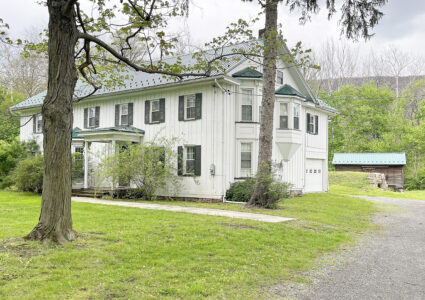
- Four generations of the Bell family lived in the farmhouse at Mary Ann Forge. The house on old Route 220 near Bellwood is the oldest in northern Blair County. Mirror photo by William Kibler
-
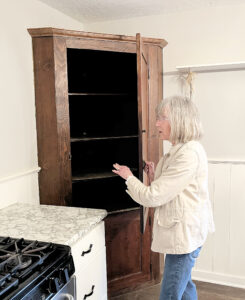
- Hilda Young shows off a cabinet in her family home on old Route 220 near Bellwood. Mirror photo by William Kibler
-
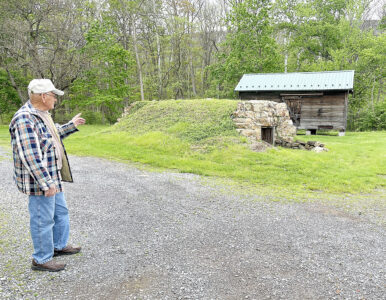
- “Col.” Kenneth R. Miller shows off a root cellar on the property. Four generations of the Bell family lived in the farmhouse at Mary Ann Forge. Mirror photo by William Kibler
-
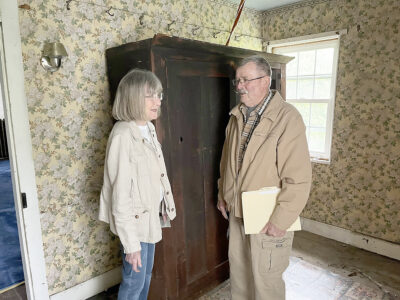
- Hilda Young and Chuck McCloskey stand inside their family home on old Route 220 near Bellwood. Mirror photo by William Kibler
-
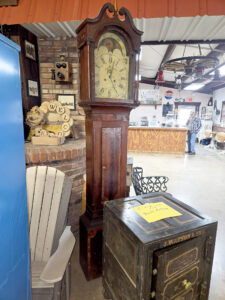
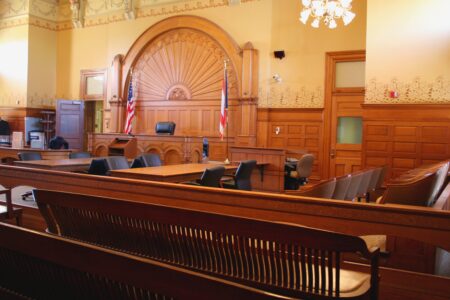
- Furnishings from the Bell estate will be auctioned at Cross Keys Auction house in Duncansville next month. Courtesy photo
-
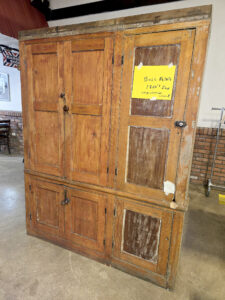
- Furnishings from the Bell estate will be auctioned at Cross Keys Auction house in Duncansville next month. Courtesy photo
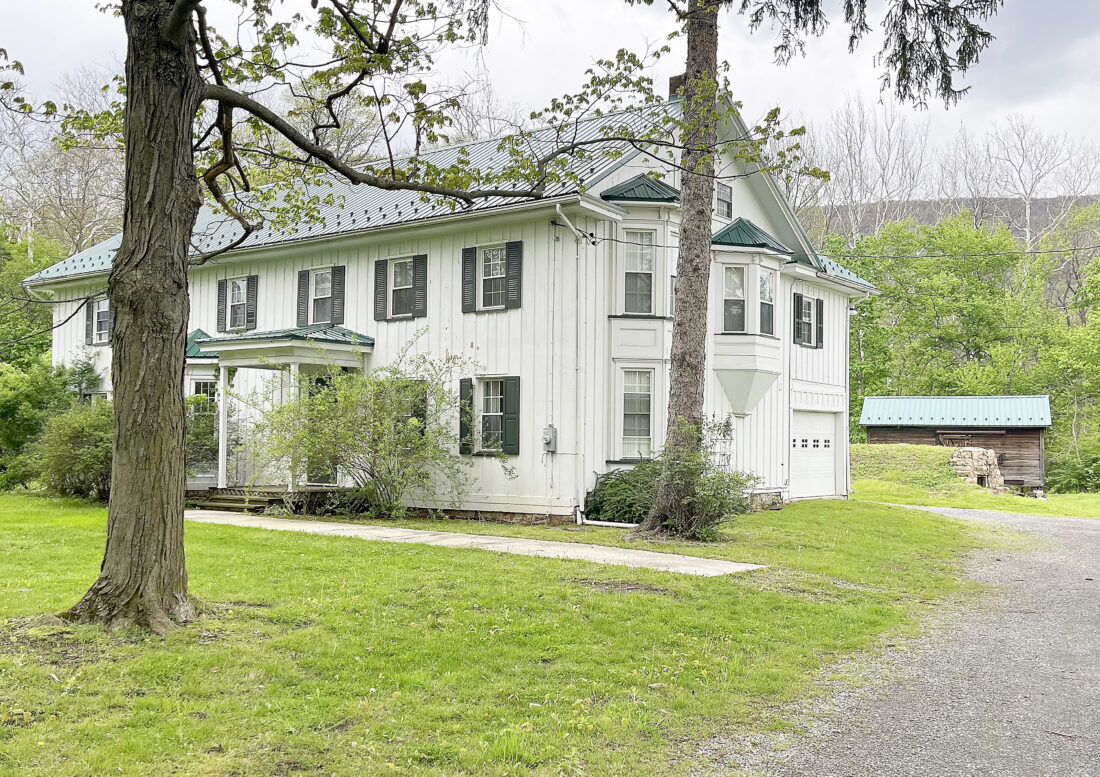
Four generations of the Bell family lived in the farmhouse at Mary Ann Forge. The house on old Route 220 near Bellwood is the oldest in northern Blair County. Mirror photo by William Kibler
Cross Keys Auction house in Duncansville next month will be selling the furnishings from northern Blair County’s oldest house — a home that’s nearly as old as the nation itself — and the brother and sister who commissioned the sale won’t be attending.
It’s not because Hilda Young, 81, and Chuck McCloskey, 79, aren’t interested: they’re altogether too invested in those contents — and in the house on old Route 220 near Bellwood from which the furnishings were recently removed.
“It’s very sad,” said Young about the emptying of the farmhouse, and the still-uncertain fate of the property occasioned by the death in February of her sister Sarah Helen McCloskey, who lived there for the last 25 years of her life, and who, like her siblings, loved to visit their grandmother’s place from the time she was a child.
“I enjoyed it while it was here,” Chuck said of the furnishings. “I don’t want to see it go somewhere else.”
Four generations of the Bell family lived in the farmhouse at Mary Ann Forge, according to auctioneer “Col.” Kenneth R. Miller, who will be selling the contents beginning about 3 p.m. June 9 at his auction house, 295 Emerald Drive, Duncansville.
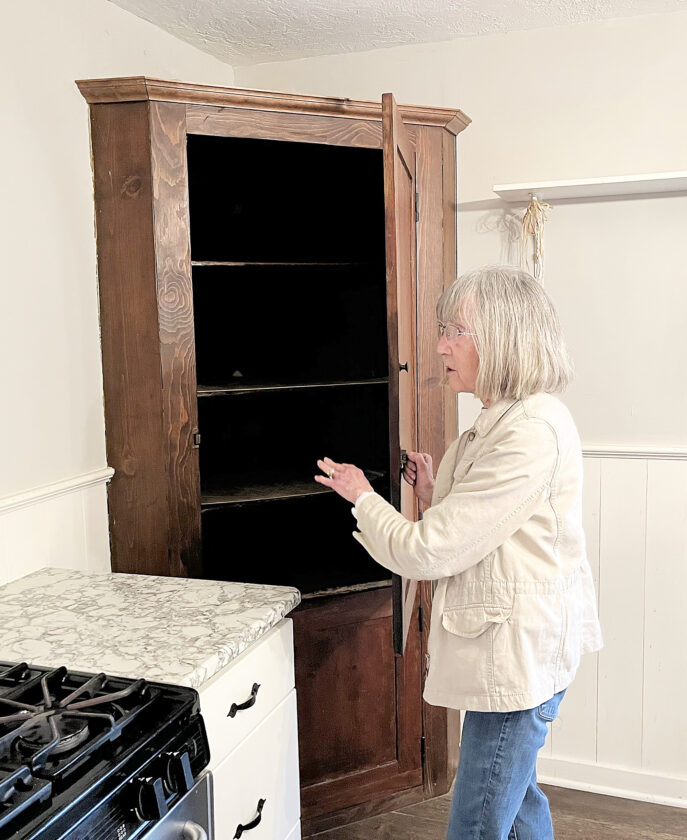
Hilda Young shows off a cabinet in her family home on old Route 220 near Bellwood. Mirror photo by William Kibler
Miller has hauled away seven 20-foot trailer loads and still has three large standalone cupboards to remove.
Some of the furniture, some of it Victorian in style, dates back to the 1800s, Miller said.
There are also wide-board wall cupboards, a variety of glassware, butcher kettles, apple butter kettles and additional ironware.
The house itself is not for sale, and the two siblings are undecided about whether to keep it.
Still, they realize they’re too old to do anything with it themselves, said Denny Young, Hilda’s husband.
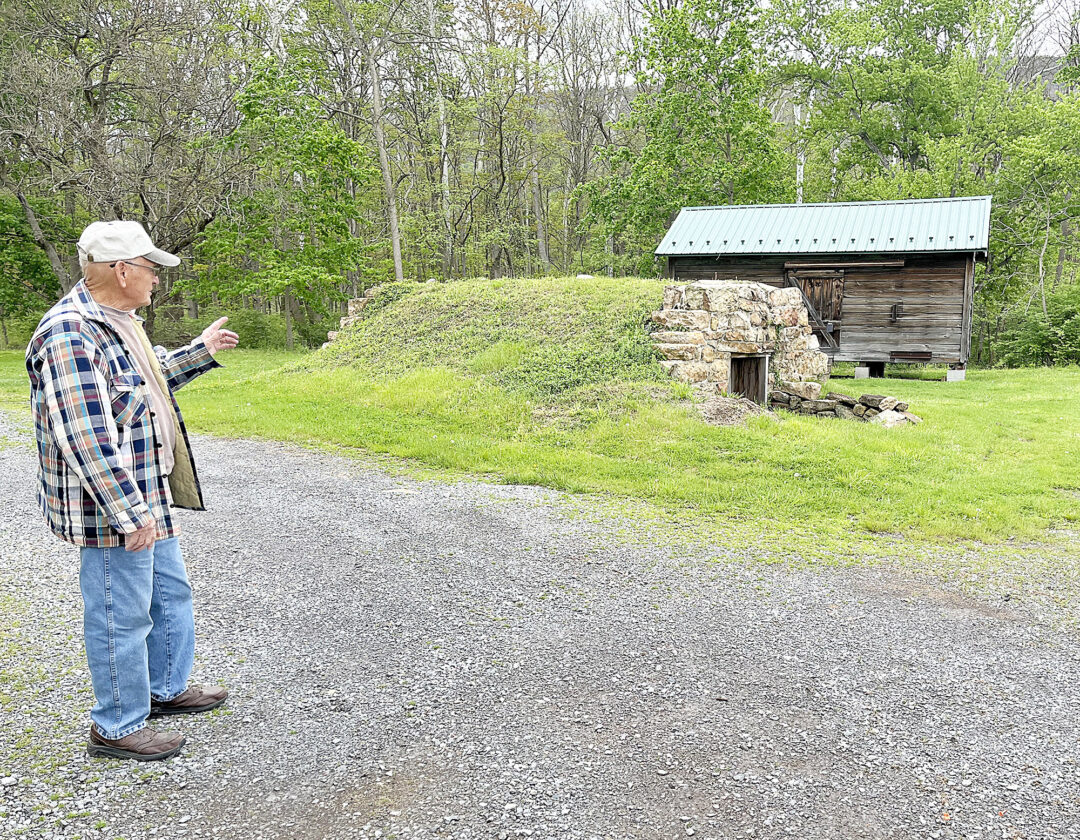
“Col.” Kenneth R. Miller shows off a root cellar on the property. Four generations of the Bell family lived in the farmhouse at Mary Ann Forge. Mirror photo by William Kibler
Both families have their own houses, McCloskey added.
“I wish we could stop the clock,” Hilda said.
The farmhouse was always a special place to the siblings, starting when they were children in the late 1940s and into the 1950s.
“We would come here a lot,” from their home in Bellwood, said Hilda, whose father was a mailman and whose mother was a nurse.
They’d often sleep over, especially on weekends and in the summer.
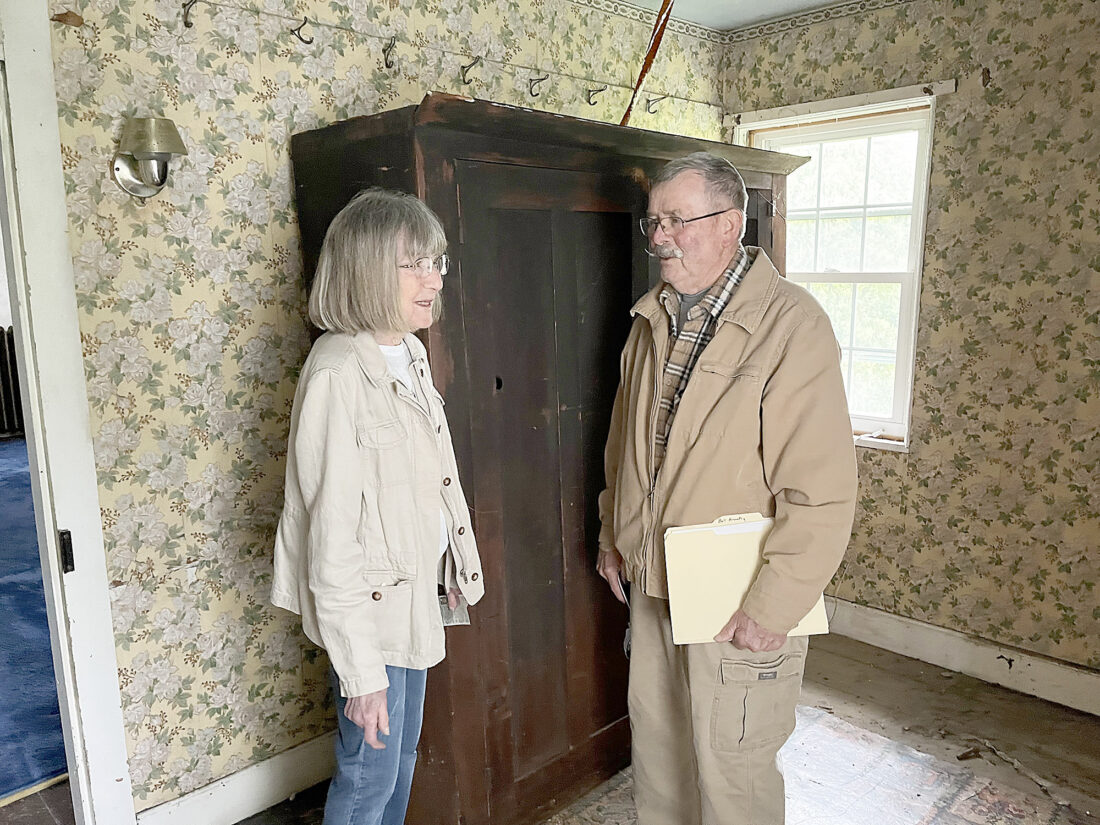
Hilda Young and Chuck McCloskey stand inside their family home on old Route 220 near Bellwood. Mirror photo by William Kibler
There was a barn, cows, a chicken coop and the root cellar — the artificial “cave” — out back, where their grandmother Christina (Mundorff) Bell, along with their Aunt Sarah and Uncle Bud, both of whom never married, would keep potatoes, corn, beans, peas and beets, all grown on the farm and all of which were canned on a big wood-burning stove, Hilda said.
The root cellar remained cool all year round, although it was “very dank,” Hilda said.
They would help bale hay, they would use a pulley-operated grapple fork to lift it to the hay loft, and they’d play in the loft.
They’d pick sweet corn in the mornings, and Chuck would ride in the old International pickup, sometimes in the bed, as his Uncle Bud drove to different grocery stores in Bellwood to drop off the produce in bushel baskets or burlap bags.
Chuck remembers the “wonderful” smells.
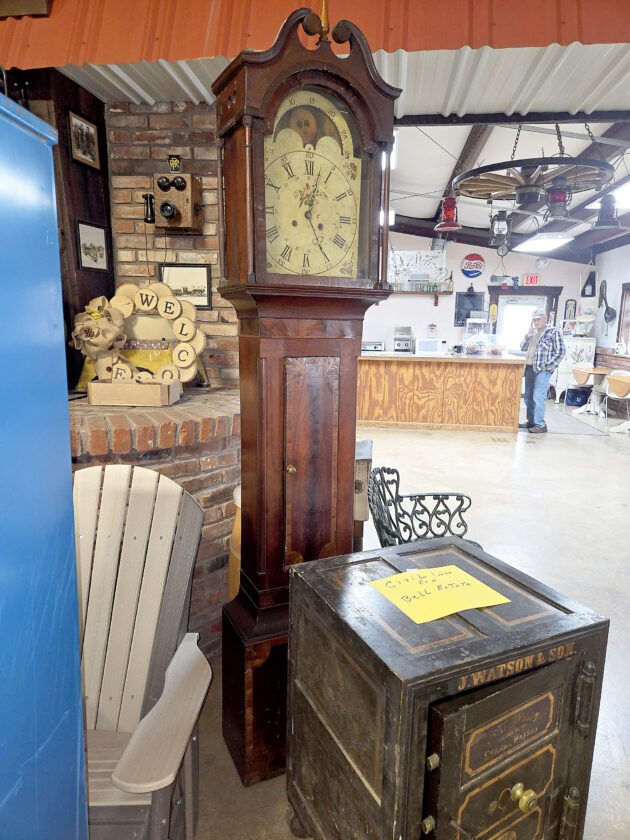
Furnishings from the Bell estate will be auctioned at Cross Keys Auction house in Duncansville next month. Courtesy photo
There was always someone cooking or canning, he said.
Or making pies, using “absolutely the best pie dough,” he said.
There was sweet corn to eat in summer and always a roast chicken on Sunday.
His Aunt Sarah was “notorious for cooking rice,” he said.
The farmhouse was constructed of logs, probably hemlocks from the mountain, Chuck said.
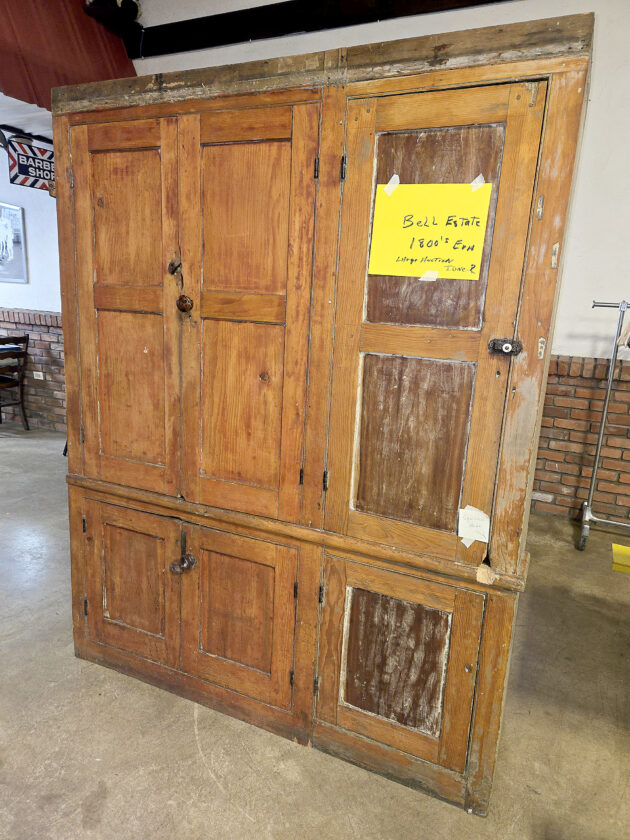
Furnishings from the Bell estate will be auctioned at Cross Keys Auction house in Duncansville next month. Courtesy photo
At some point, the logs were covered with vertical board-and-batten siding.
Originally, the house was heated by fireplaces.
Later, there was a coal furnace, with convection distribution, via registers on the floor — no ductwork.
Later, while still using coal, a hot water system with radiators was installed.
Eventually, the coal furnace was replaced by one that burns gas.
The house was an inn for a time.
The back, just about 150 feet from the Little Juniata River, was the place where a stage coach that traveled parallel to the river would drop off and take on passengers.
There was an office in the house where the siblings’ grandfather, W.S. (William Shomo) Bell, who was born in 1860, would conduct business for his many companies.
They included the farm itself and a coal route in Cambria County.
There was a sawmill on the property that ran on a stationary truck engine.
There was a grist mill that used water power from a “race” that paralleled the river.
The race was filled in after the barn burned down in the early 1970s.
There are 39 acres connected with the house, including acreage on the other side of the river, according to Denny Young.
There are also an additional 546 acres owned by the family in two segments off Brush Mountain Road and Skelp Mountain Road.
If the house would be sold, it would likely be with only the 39 acres to which it connects, Denny said.
The family originally had around 40,000 acres, according to a 1976 article in The Patriot, a copy of which was supplied by the family.
The property “means so much to all of us,” Hilda said. “It’s the end of an era.”
Mirror Staff Writer William Kibler is at 814-949-7038.
Local News
St. Vincent de Paul society seeking deal with Amtran to assist homeless
The local office of the Society of St. Vincent de Paul and Amtran plan to work out an arrangement by which a ...
Shapiro, Garrity willing to debate in governor’s race
HARRISBURG — For the first time since 2018, Pennsylvanians may have the chance to watch their choices for ...
Starting to make a splash: Work begins on Prospect Pool renovations
Vandals target Hollidaysburg’s Canal Basin Park
HOLLIDAYSBURG — Although graffiti from a recent incident at Canal Basin Park has been removed, officials are ...
Crash claims East Freedom motorist
An East Freedom man was killed in a single-vehicle accident Monday night. According to the Blair County ...