Anxiety rises over fuel prices
Renewed tensions in Iran conflict worry consumers
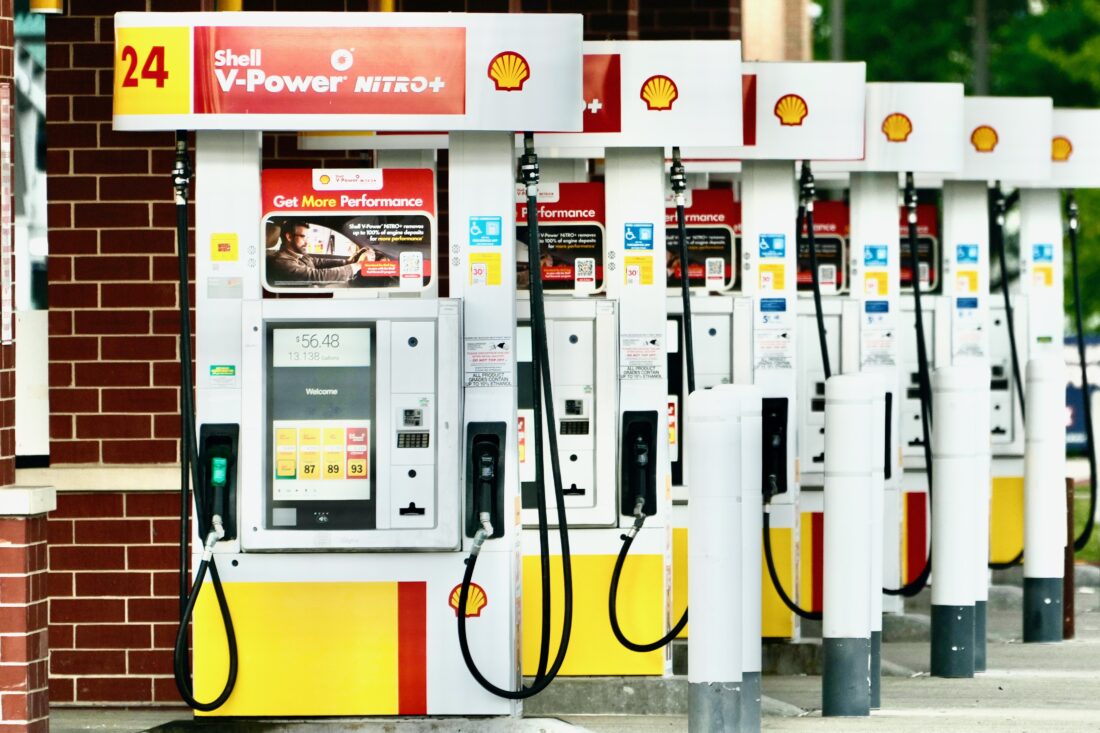
The Associated Press / Gas pumps are seen at a gas station in Buffalo Grove, Ill., on June 25. Prices have been trending downward in recent weeks, but renewed strikes between the U.S. and Iran raise concerns that prices could reverse course and begin to rise again.
NEW YORK — The potential unraveling of a fragile truce between Iran and the United States renewed anxiety Wednesday over whether fuel prices would go back up if sustained fighting kept oil tankers from traveling through the Persian Gulf.
Oil prices rose to their highest point in weeks after President Donald Trump declared the U.S. ceasefire with Iran over, responding to Iranian attacks on commercial ships in the Strait of Hormuz and on American military sites in other Gulf nations. Costlier crude oil could lead to costlier gas station fill-ups as drivers in many countries were getting a break from elevated prices brought on by the war.
“Tanker traffic through the Strait of Hormuz has essentially stopped, which tells you more about risk perception right now than any statement from Washington or Tehran,” said Jorge Leon, head of geopolitical analysis at Rystad Energy, in an email. “Oil markets reacted quickly to the renewed geopolitical risk.”
U.S. gasoline prices increased slightly Wednesday to an average of $3.80 for a gallon of regular, up from $3.79 the day before, but still well below the month-ago average of $4.16, according to motor club federation AAA.
Crude oil makes up the bulk of the price of gasoline, so when oil prices rise, gasoline eventually follows. But it can take weeks for consumers to feel the full impacts. That’s because refiners make gasoline with oil purchased in advance. The finished product then has to travel through a system of pipelines and trucks to reach gas station pumps.
Gas station owners set prices at the pump, and to stay competitive, they sometimes absorb the impact of higher oil prices instead of immediately passing it along to customers.
To suppress high oil prices during the war, the U.S. and other countries released oil from their emergency stockpiles starting in March. But those stockpiles won’t last forever.
The U.S. Strategic Petroleum Reserve held 319.5 million barrels as of July 3. The last time the inventory was that low was in 1983, when the reserve was initially being filled up.
“Unfortunately, the drawdown of strategic stocks means that there is a lot less ammunition in Trump’s holster,” said Michael Lynch, a distinguished fellow at Energy Policy Research Institute in Amherst, Massachusetts.
A barrel of U.S. benchmark crude was selling for $75.80 on Wednesday, the highest price in more than two weeks. Brent crude, the international standard, climbed close to $79 per barrel, its highest level since June 19.
The market reaction “highlights how sensitive prices remain to any escalation around the strait, given its role as a critical transit route for global oil flows,” Leon said.
Shipping uncertainty increases after strikes
A day after the U.S. accused Iran of striking three commercial vessels and revoked the country’s ability to openly sell crude oil on the world market, some advised the shipping industry to reconsider whether it was safe to send crewed ships through the Strait of Hormuz — and the wider Middle East.
International Maritime Organization Secretary-General Arsenio Dominguez condemned attacks on ships in the strait.
“As long as the safety and security of crews cannot be assured, I urge flag states, shipowners, operators and all relevant authorities to avoid exposing seafarers to unnecessary danger by transiting the strait,” Dominguez said Wednesday. “The situation in the region remains volatile.”
Some traffic traversed the strait on Tuesday, according to data and analytics company Kpler, which verified 41 crossings compared to 36 on Monday. It was unclear if the crossings happened before or after the strikes.
National News
Daily briefing
Nation Maine Dem Platner to drop out of Senate race Graham Platner said Wednesday that he plans to withdraw ...

‘The Pitt’ leads the way in Emmy nominations with 25
Ukraine to get license for Patriot systems
ANKARA, Turkey — U.S. President Donald Trump said at a NATO summit Wednesday in Turkey that the U.S. will give ...

Family demands probe in ICE shooting

Video of Kirk suspect shown in court