
Fed officials deeply divided over future of US inflation
Trending
WASHINGTON -- The Federal Reserve's rate-setting committee is split over whether inflation is likely to stay elevated or whether it will cool once the Iran war winds down, according to minutes released Wednesday.
In the first set of minutes released under new chair Kevin Warsh, "many" of the Fed's 19 officials said its key rate would be unchanged from or slightly below its current level of 3.6% by the end of this year. But "many" also said that it would likely be higher by year-end.
Forecasts released after the meeting ended June 17 showed that half of the 18 policymakers who submitted projections supported lifting rates by the end of this year, while the other half supported keeping them unchanged or reducing them. Warsh did not submit a forecast, reflecting his view that doing so can lock policymakers into a specific approach that is harder to change if the economy shifts direction.
Half support a hike by end of year, half don't
The minutes underscored the deep divisions among Fed officials, particularly over the future path of inflation. The policymakers generally expected inflation would decline as gas prices cooled and the effect of tariffs faded. Yet many officials also worried that massive investment in the artificial intelligence buildout would keep inflation elevated by lifting prices for semiconductors and other technology goods.
The minutes, released three weeks after the June 16-17 meeting, also said that a few officials believed there was "a case for raising" the Fed's rate at that meeting, but they agreed to keep it unchanged, a decision that was approved by a unanimous vote. The minutes don't disclose the identities of which officials supported which outcomes.
Warsh was appointed by President Donald Trump earlier this year to replace Jerome Powell, whose term ended in May. Trump had repeatedly criticized Powell for not reducing borrowing costs quickly enough, but for now there's little sign Warsh is moving to cut rates.
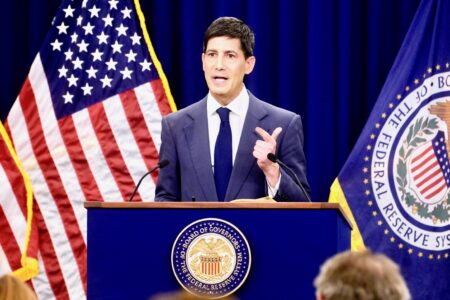
During a news conference June 17, Warsh emphasized that the Fed will return inflation to its 2% target, which it has missed for more than five years. His comments were interpreted by economists and Wall Street investors as evidence that the Fed may hike rates later this year.
AI likely an inflation driver, minutes say
A key concern for many Fed officials is the potential for the AI buildout to contribute to higher inflation by pushing up prices for semiconductors, computer equipment, and electricity. Data centers require significant power to operate.
"Many participants noted that ongoing strong demand for AI infrastructure would likely sustain upward pressure on prices for technology products and electricity," the minutes said.
Last month, Apple said it would increase the price of laptops and iPads because of more expensive memory chips.
Consumers worried inflation will stay high
Inflation has worsened since the United States and Israel attacked Iran in late February, reaching a three-year high of 4.2% in May. As the conflict has eased, gas prices have fallen back and inflation is likely to cool when June's figures are reported next week.
But another concern for the Fed is whether Americans are increasingly expecting prices to stay high. If consumers and businesses assume inflation will remain elevated, such an outcome can become self-fulfilling.