
Farmers hit hard by rising costs; bankruptcies increase
Chapter 12 farm bankruptcies increase 46% from 2024 to 2025
-
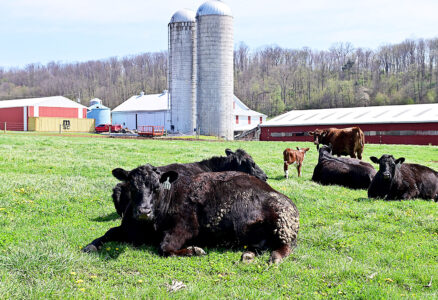
- Cattle relax at a farm along Auction Road south of Martinsburg.
-
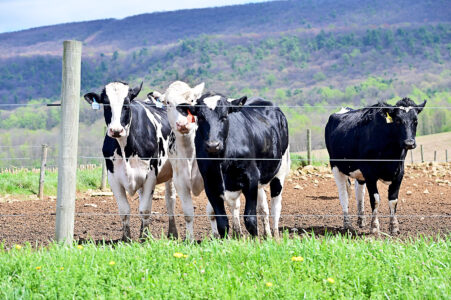
- Curious cattle stare along Clover Creek Road north of Martinsburg. Mirror photo by Patrick Waksmunski
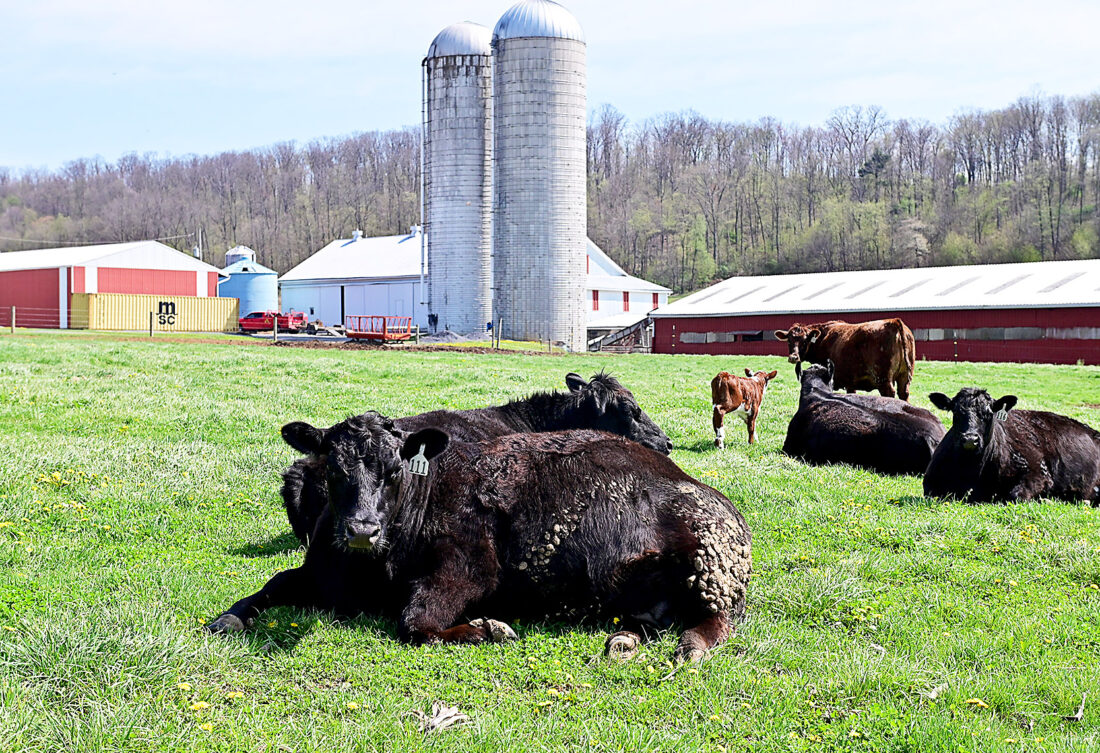
Cattle relax at a farm along Auction Road south of Martinsburg.
Rising prices across a broad spectrum of goods and services have hit everyone hard, including farmers, who supply consumers with everything from fresh milk, eggs and meat to fruits, vegetables, flowers and more.
“All agriculture is in a tough spot,” said Cambria County farmer Tommy Nagle, vice president of the Pennsylvania Farm Bureau.
According to the American Farm Bureau Federation, Chapter 12 bankruptcies increased for the second year in a row, reaching 315 filings in 2025. This is a 46% increase from 2024.
Pennsylvania saw 10 Chapter 12 farm bankruptcies in 2025, a sharp increase from only two in 2024. Counties affected include Wayne, Tioga, Huntingdon, Centre, Washington, Somerset, Armstrong and Fayette.
Farm bankruptcies are increasing due to a combination of high interest rates, plunging commodity prices and elevated production costs — fuel, fertilizer, labor — causing a severe squeeze on profit margins, according to the American Farm Bureau Federation. Total farm debt is expected to reach a record billion in 2026, forcing many producers to take on more debt to cover operating expenses.
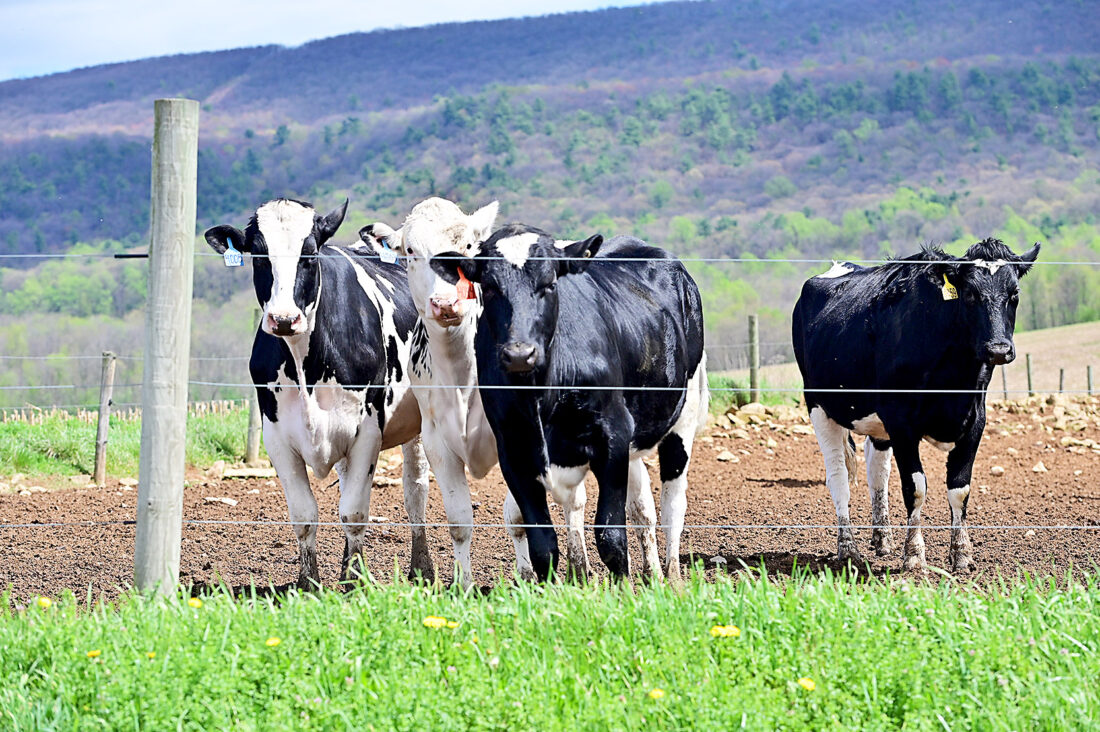
Curious cattle stare along Clover Creek Road north of Martinsburg. Mirror photo by Patrick Waksmunski
There are many reasons farmers struggle to make ends meet, Nagle said.
“The main reason is we have high input costs and low commodity prices,” he said, noting that today farmers are seeing record high input costs.
In addition to these costs, there is a lot of added pressure. For example, interest rates are high, too, he said.
“In Cambria County, property taxes are rising,” Nagle said, noting that adds pressure to farmers.
Production costs outweigh income, causing a farm to become unprofitable over the long term, leading to bankruptcies, said Marty Yahner, president of the Cambria County Farm Bureau.
“Farmers, like any other business can only sustain losses or not enough income to cover expenses for so long. Then, the bank sometimes won’t loan them any more money.”
“It is called burning through equity. The business has less and less net worth. Liabilities are greater than assets or cash flow,” Yahner said.
Practically every commodity across the nation for the last several years has had very limited or no profit potential for the farmer, other than beef production, Yahner said.
“For generations, it has been said that the farmer is his own worst enemy. Because we are so productive that we overproduce for the market,” he said.
Yahner also said the disastrous policies of the Biden administration caused inflation to be at a 40 year high.
“Fuel and fertilizer costs have been a larger and larger percentage of a farmer’s expense compared to our income,” he said, explaining that farmers have been in a cost/price squeeze with record high input costs but commodity prices that are the same as they were decades ago.
The conflict in the Middle East has added even more pressure, sending fertilizer and fuel prices soaring.
The closure of the Strait of Hormuz has been keeping critical fertilizer supplies and crude oil from reaching global markets, putting a squeeze on supplies around the world, he said.
Due to short supply and soaring costs, an overwhelming majority of America’s farmers who responded to a nationwide survey said they cannot afford to purchase enough fertilizer to get them through the year.
The survey, conducted by the AFBF in early April, shows 70% of respondents said fertilizer is so expensive that they will not be able to buy all the fertilizer they need.
More than 5,700 farmers, both Farm Bureau members and non-members, from every state and Puerto Rico took the survey. Farm Bureau economists analyzed the results in the latest Market Intel.
“Spring planting decisions depend heavily on access to fertilizer and diesel fuel, both of which have been impacted by geopolitical risks that have disrupted global markets,” the Market Intel states. “Since the escalation of tensions in the Middle East, nitrogen fertilizer prices have risen more than 30%, while combined fuel and fertilizer costs have increased roughly 20% to 40%. Urea prices have increased by 47% since the end of February, marking the largest month-to-month percentage increase in the price of urea. These increases are occurring when many producers were already facing tight margins for many consecutive years.”
Many of the farmers surveyed said they will forgo applying fertilizer this spring in hopes that prices will return to an affordable level later in the growing season.
It’s often a no-win situation, as without fertilizer, crops may not produce as expected, resulting in a drop in income for farmers.
With all these factors coming into play, the American Farm Bureau Federation is concerned the number of bankruptcies among farmers may continue.
That, too, puts more pressure on surviving farms and the food, fiber and fuel supply chain for all Americans, the AFBF reported.
Mirror Staff Writer Walt Frank is at 814-946-7467.
Local News
Cambria County students celebrated for America250 essays
JOHNSTOWN — Winning scores for the Cambria County America250PA committee’s essay contest were within just a few ...

A warm Yinzer welcome: NFL draft fans flood Pittsburgh
Farmers hit hard by rising costs; bankruptcies increase
Ebensburg’s Art in Bloom Spring Art Show returns
Ebensburg’s Art in Bloom Spring Art Show will return to the Cambria County Courthouse, Ebensburg, this ...
Pennsylvania State House panel voting on bills to abolish death penalty
A state House committee plans to consider two bills from opposite sides of the aisle to abolish the state death ...
Cambria County students celebrated for America250 essays
JOHNSTOWN — Winning scores for the Cambria County America250PA committee’s essay contest were within just a few ...