
State of the State: 84-year-old downtown State College staple ‘just getting started’ in quest to expand regional impact
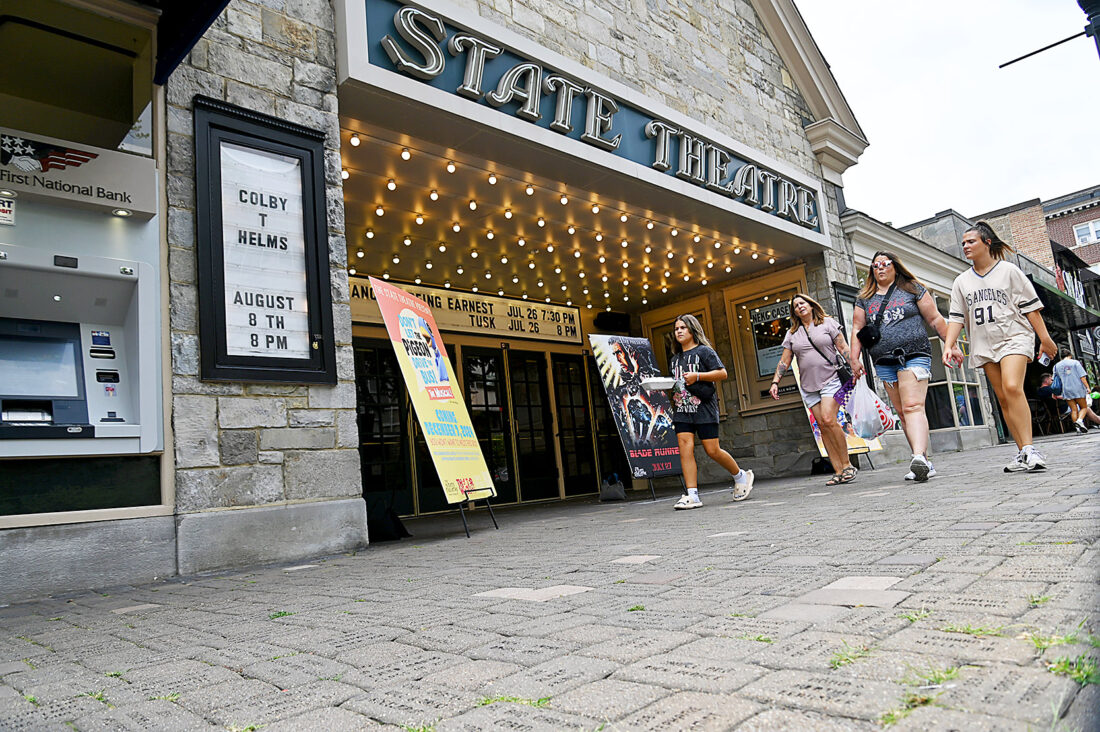
People walk past the State Theatre, 130 W. College Ave., in downtown State College. Mirror photo by Patrick Waksmunski
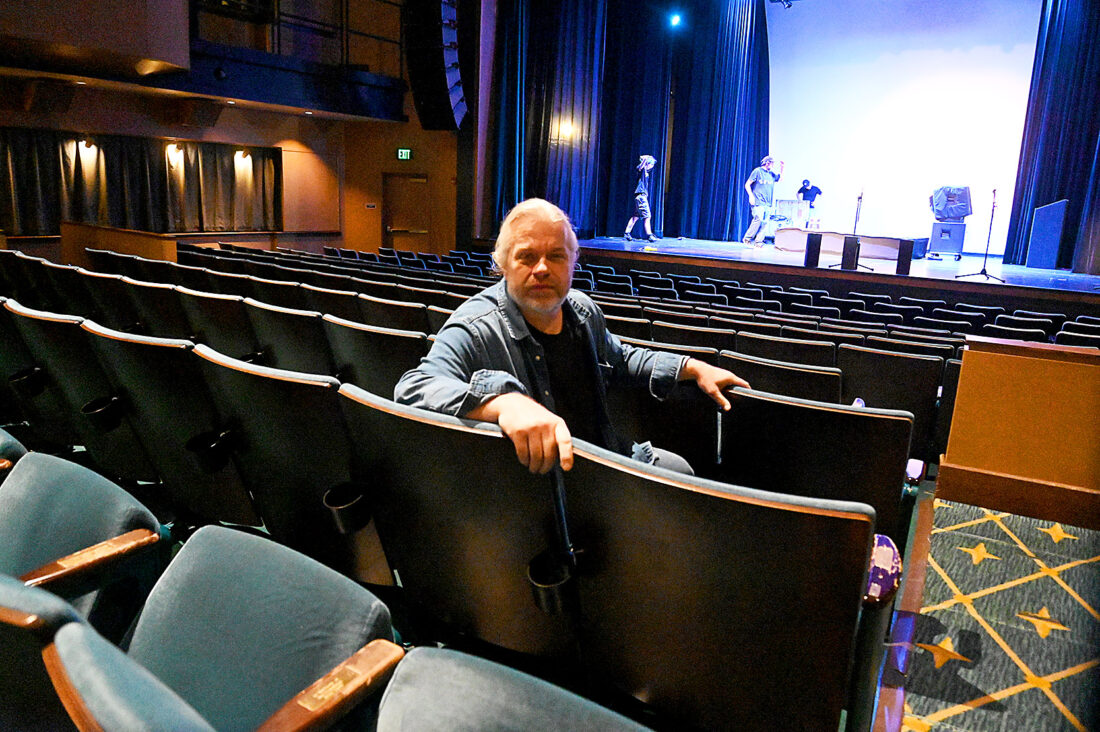
State Theatre executive director John Rattie is pictured as the stage crew sets up for a show in the 84-year-old theater in downtown State College. Mirror photo by Patrick Waksmunski
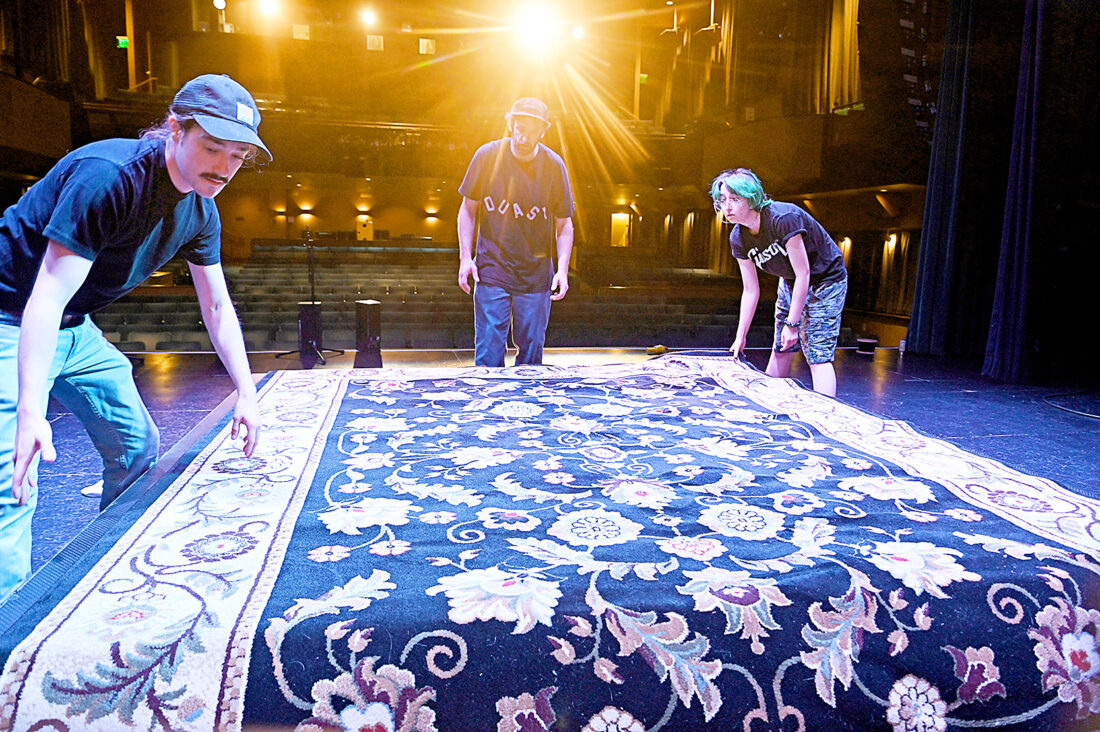
State Theatre production manager Will Jossart, audio technician Ben Wentz and production technician Rosalie Kalupson (from left) set up the stage for a show. Mirror photo by Patrick Waksmunski
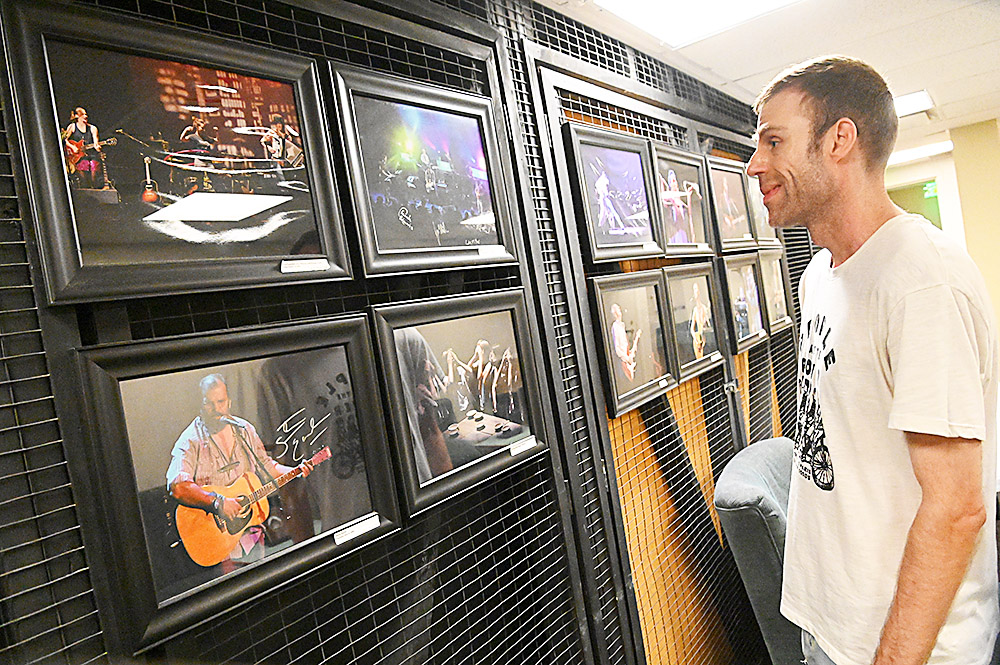
Talent buyer Johnny Macko (programming) looks at photos of some of the entertainers that have performed at the theater. Mirror photo by Patrick Waksmunski
People walk past the State Theatre, 130 W. College Ave., in downtown State College. Mirror photo by Patrick Waksmunski
State Theatre executive director John Rattie is pictured as the stage crew sets up for a show in the 84-year-old theater in downtown State College. Mirror photo by Patrick Waksmunski
State Theatre production manager Will Jossart, audio technician Ben Wentz and production technician Rosalie Kalupson (from left) set up the stage for a show. Mirror photo by Patrick Waksmunski
Talent buyer Johnny Macko (programming) looks at photos of some of the entertainers that have performed at the theater. Mirror photo by Patrick Waksmunski
Trending
STATE COLLEGE -- After weathering the storm of the pandemic, the State Theatre is back. With new leadership at the helm, the downtown State College staple is gearing up to expand its regional impact, fostering a community of arts-curious patrons across central Pennsylvania.
The 554-seat auditorium and intimate attic stage now feature nationally touring musicians, revival movies and local events three to four nights a week, and is "just getting started," according to executive director John Rattie.
While Rattie was initially approached to be the State's production manager in early 2020, it wasn't until May 2021 that he officially came aboard. Rattie would go on to become the general manager of the theater in March 2022, following the departure of the previous manager in fall 2021.
Rattie hit the ground running in his new role, having been tasked by the board of directors to get the then-84-year-old theater back on its feet after a slump in attendance during the pandemic.
To stay afloat without the cash influx from regular shows, the State Theatre slimmed down its workforce to only a few core employees and utilized government arts grants to survive.
"It was a hard time for the theater ... all music venues, all theaters, it was a brutal time, they were hit pretty hard," Rattie said.
According to Rattie, it was a slow rebuilding process for the theater, which was dependent on "getting everybody to understand that it's okay to come out -- it's taken a while."
The theater only returned to its pre-pandemic staffing level earlier this year, with about a dozen full-time employees and a handful of part-time helpers for busy nights.
Some are tasked with manning the front desk or welcoming eager crowds through the marquee lights, while others are nestled deep in the maze of quiet backstage hallways, ensuring everything runs smoothly when the curtain parts.
"That is still far less than what we need to keep up with the growth that we want," Rattie said.
Rattie is not prone to sentimentality, evident in his no-holds-barred management style, which leaves nothing free from scrutiny.
"Everything's changing. We're working on everything from accounting to how we book shows and why we book shows, the whole staff is new, our whole production staff is new, we kind of cleaned the slate on everything," Rattie said. "The mindset has changed."
Prior to the pandemic, the State Theatre had gotten by on a diet of local theater and music acts and hit-or-miss touring artists, without much upward momentum.
But after the pandemic, Rattie and his crew of new employees were ready to rethink the entire operation, retooling the theater to attract bigger stars and reach a wider audience while still preserving its community connection.
This starting-from-scratch approach has allowed the State to create a culture of constant collaboration and mutual enthusiasm for the theater.
"It was a thing of 'Let's see if we can put the gas pedal down and see the theater reach its fullest potential,'" Rattie said. "The only way to test that, to do that, is to examine everything, all the history, what other people have done, what worked and what didn't."
While Rattie is, nominally, the boss, it's far from a dictatorship. Every employee is encouraged to share their ideas, even if it's not about their assigned role, he said.
This collaborative vision is wholly dependent on every member of the staff pulling their weight and showing up with genuine passion for the work, Rattie said.
"It's a great place to work because everybody here is chasing that improvement, to take it further, and we're getting there," he said.
Even with nearly a century of existing precedent in theater leadership, Rattie is not satisfied with resting on his laurels.
"Status quo doesn't really stand a chance here, and the appeals to tradition don't work ... we're going to carve our own path," Rattie said.
Constant change
Opened in 1938 by Warner Bros. as a test theater to screen new movies before deciding on whether to send them to major markets along the East Coast, the State Theatre enjoyed a successful adolescence, according to self-styled "quartermaster" Bob Livsey.
Beyond drawing consistent crowds for the black-and-white blockbusters, the State also hosted the occasional live performance, with one notable show in the 1940s featuring jazz pianist Duke Ellington, but these acts were few and far between till the early 21st century.
The State was the only theater in town until the 1970s, when the national cinema chains moved to the region, Livsey said.
This began a slow but steady decline through the following two decades, where the main auditorium was partitioned to operate as a "twinplex" movie theater, Livsey said.
And by 1999, the writing was on the wall -- the increasingly scarce attendance prompted a small group of citizens to launch a "Save the State" campaign, which kicked off the remodeling process when the State closed its doors for good in 2001.
Five years and approximately $3 million in renovations later, the State reopened as a 501(c)(3) with an inaugural performance by Grammy award-winning country artist and former PSU defensive tackle Mike Reid on Dec. 14, 2006.
Since the reorganization, the State has shifted from a majority-movie calendar to a mixed bill of film, music and local events, while serving its new mission of "entertain, enrich, educate and inspire."
The choice to diversify the program offerings was obvious, Rattie said. "It's the best chance for the theater to reach its potential."
Movie magic
In recent years, the State has returned to its roots, regrowing its movie program to screen a rotating assortment of classic films on nights without a musical act.
The State is a revival theater, which means it is not constrained by contracts with major distributors to show the latest blockbusters on release days like most "first run" theaters are, Livsey said.
That allows the State to screen a range of films that are long past their original theatrical release.
These range from 1980s comedies, '70s action thrillers to '30s film noir, said Livsey, who helps run the movie program.
As a self-professed "film buff," Livsey said he enjoys the opportunity to screen movies that are hard to find anywhere else.
"That's the route we're going down now -- revival films, older films that haven't been seen in a while on the big screen that people need to see on the big screen," Livsey said. "We're really hoping that people enjoy that experience when they come out and see them as they're intended to be seen."
Early this year, the State doubled down on the movie program, launching a fundraising campaign to purchase a $120,000 4K digital laser projector and accompanying cinema audio processing system.
This sizable outlay will greatly expand the potential of the program, Livsey said, adding it will enable the State to screen Digital Cinema Package-format movies, which include many major movie festival features.
Every year, the State hosts part of the Centre Film Festival, a weeklong event that brings together dozens of local filmmakers to award the best up-and-coming documentaries, shorts and narrative features.
Community involvement
Since its rebirth in 2001 as a 501(c)(3) public charity, the State has nurtured a community of members that donate to internal projects and help guide programming.
Director of development and community outreach Justin Dorsey said his role in this community is as "a steward of relationships."
That includes working with local partners and building relationships with new donors to support the sustained financial health of the theater.
Often, this manifests as phone calls with regular theater attendees, or meetings with local government officials to reinforce the personal bonds that underpin the State's success.
One of the key pillars of this sustained support is the membership program, which lets community members give back and contribute financially.
Membership at the State conveys a number of perks, including complementary popcorn at shows and early access to buy tickets, as well as annual member receptions.
"People are interested in seeing the theater succeed, so it's really helpful," Dorsey said.
And while engaging this membership is crucial to the continued growth of the theater, Dorsey is careful to note that donors are not the ones calling the shots for what acts grace the State's stage.
"Not that there's any sort of transaction to be expected in that relationship, but we certainly want to hear what people are interested in seeing," Dorsey said.
Ultimately, Dorsey said, it is about making sure the State is a familiar, supportive presence in the local arts community.
Booking and growth
When an agent for a prominent artist like Kingfish or Deer Tick wants to book a show at the State, they call Johnny Macko.
Since he began working at the State as the talent buyer in June 2023, Macko has worked to develop the personal relationships that underpin much of the live music industry. Venue representatives, agents and the artists themselves work together to carefully coordinate the calendars and contracts that produce the final stage performance, Macko said.
Every show in the quiet, blue suede-draped "sanctuary" of the theater, whether on the main stage or in the attic, has the potential to be a special, spiritually nourishing moment for the audience, Macko said.
"The experience of a live event, whether it's theater, concert, a film, the experience that you can have in a theater can sustain people for a very long time," Macko said.
Macko connects his current work to his childhood growing up in Red Bank, New Jersey, where concerts at his local theater were community-building, joyous events that were remembered long after the auditorium emptied.
"I saw firsthand what that can do, it attracts people who are into the arts, it helps local business, it becomes the centerpiece of a downtown area, and I think the State Theatre has the potential to be that," Macko said.
In his role at the State, Macko said he is responsible for making that sort of experience as available as possible to the public.
It's a role he does not take lightly.
"There is potential energy in a space, and every day is like a blank page, every day is an opportunity to put something on stage that's going to excite people," Macko said.
This commitment to quality acts, he said, will reinforce the State's reputation as a home for the performing arts and grow in tandem with the community.
"Hopefully, the town itself becomes known as a vibrant artistic community, and this is the centerpiece, the anchor of the downtown artistic community," Macko said.
While the theater has enjoyed strong local support since the pandemic, Macko said that the entire team is looking to expand the State's impact across Pennsylvania.
"We're reaching into the region. It's not just people in State College, not just people within this ZIP code, it's becoming known in the entire region for the programming that we do," Macko said.
More information about upcoming programs can be found at thestatetheatre.org/.
Mirror Staff Writer Conner Goetz is at 814-946-7535.