
PSU players shouldn’t escape finger of blame
Trending
It's been another rough week for the Penn State football program, especially after the firing of coach James Franklin.
With so many factors to consider in addition to the team's performance (among them the Beaver Stadium building project, pay-for-play support for players, recruiting and even attendance at the team's remaining home games), the move seemed possible after the game at UCLA and likely after the Northwestern loss.
After the season started with such high expectations and hype, the failures have now been placed at Franklin's feet.
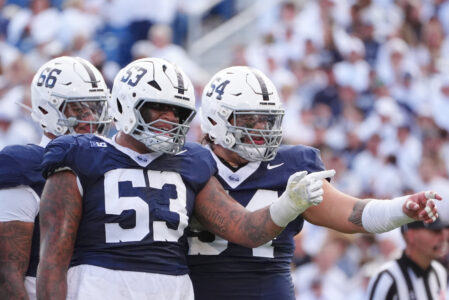
At what point, though, if at all, are the players to blame? What level of criticism comes with the money they're making and whatever responsibility they have in that altered pretty-much-pro landscape of college football?
Judging by the media coverage, the players generally get a pass.
In fairness, any criticism of quarterback Drew Allar has probably been tempered by his season-ending injury. Sure, there was a smattering of classless and irresponsible cheers in the stadium when the QB was injured, but that's not a media matter. That was the fans, largely students.
Interestingly, though, even with the players' healthy compensation packages, they've generally not been the target of more criticism from the media than in previous seasons.
What criticism that has existed has been framed more along the lines of who's getting what amount of deserved playing time at the running back position. It was a production discussion, not a payment
discussion.
Maybe the media is more mature, measured and responsible, but the difference between what a portion of fans feel or express and what the media shares or writes might not be starker with regard to anything else about college football, and at Penn State, than the pay-for-play and what-they're-making topic.
It's not clear to me that fans who believe players have more responsibility because of the money are unfair, either. For some, the question might be a matter of playing for pride and the program vs. playing for the payment -- not that they're mutually exclusive.
But the difference in willingness to raise the topic between the fans and most of the media is interesting.
Coverage contrasts
The difference between the best national media members who cover college football, other folks who just have a national platform and those who cover Penn State daily was stark when focused on the Franklin firing.
ESPN senior writer Pete Thamel broke the news Sunday afternoon, with others confirming and following quickly with their own content and insights.
Thamel, who appears on College GameDay and has years of experience, was doing what top national media types do -- flexing his insiders muscle thanks to connections.
Likewise, it was a time to shine for many who cover the team on a regular basis.
After quick confirmations and the follow-up statements, some went live with chats, others bumped up previous content back atop their timelines with updated information or interviews that might have seen more mundane earlier. Along with their information, the pay sites offered deals to join their sites at reduced rates.
It was good stuff, solid work, from those who broke the news and those who know the program best.
It was big things and little things that all led to information that served fans.
The national talkers were not as solid, though, because they were mostly filling time, simply spouting off. Unfortunately for me, that included Denton Day and Geoff Schwartz on SiriusXM.
They basically ripped and read the headline about Franklin and then made an earnest effort to complete their hour-long show, which was repeated several times Sunday afternoon. They just clearly did not know the Penn State program, which made listening a little frustrating.
Notable
– When Steve Jones gets dismissive and petty about other college football happenings (noting Ole Miss's struggles and the pregame buildup to Michigan-USC most recently) it just seems unprofessional, even though it gives a nice glimpse at his opinions and personality. It's just a stark difference when he later goes into his necessary protect-the-program mindset after a Penn State loss.
– With Penn State's struggles, it will be interesting to watch if Venmo, which has become a big sponsor locally and nationally, will make any tweaks to its TV commercial that features the program so prominently. It's improbable, but not impossible.
– There was a quick cutaway late in the Northwestern game when Fox Sports 1 thought it had an interesting fan on camera, but instead the guy was just getting ready to give two middle fingers to someone. Oops.
– This week's Penn State game at Iowa airs exclusively on Peacock. It's the first time a Penn State road game has streamed on the channel. The previous two were home games (Delaware in 2023 and Washington in 2024).
– It will get attention on the broadcast Saturday night, because it always does and it's a great visual, but it's not clear to me that The Hawkeye Wave is one of the best traditions in college football. Feel free to watch and judge for yourself.
– Kudos to the members of the media covering Penn State football who asked fair, strong questions after the team's loss to Northwestern, which turned out to be Franklin's final session with the media.
Sampsell covers the broadcast end of Penn State football for Gameday. He can be reached at stevesampsell@gmail.com
Worth watching
Nebraska at Minnesota, 8 p.m. Friday, Fox
LSU at Vanderbilt, Noon Saturday, ABC
Ole Miss at Georgia, 3:30 p.m. Saturday, ABC
USC at Notre Dame, 7:30 p.m. Saturday, NBC