
State launches work group to enhance wildlife connection
Trending
Gov. Josh Shapiro's administration is launching what officials are billing as a first-of-its-kind multi-agency work group to develop strategies to better connect wildlife habitats to protect the animals and reduce vehicle-animal collisions and other negative impacts.
The work group will bring together 11 state agencies to identify priority wildlife corridors, recommend strategic infrastructure improvements and create Pennsylvania's first statewide wildlife connectivity plan using science-based data and mapping.
Pennsylvania ranks fifth in the nation for wildlife-vehicle collisions, making the initiative an important investment in both roadway safety and conservation, state officials said. Pennsylvania leads the nation in insurance claims for deer-vehicle collisions, according to State Farm. Pennsylvania drivers file about 150,000 claims for deer crashes a year. Michigan, the state with the second most deer collisions, averages about 130,000 claims a year.
Nationally, more than 1 million large animals are killed by motor vehicles each year. When smaller creatures are included, officials estimate as many as 1 million animals are killed by motor vehicles every day.
PennDOT secured an $840,000 federal Wildlife Crossings Pilot Program grant to support development of the strategic plan.
The work group will be led by Transportation Secretary Mike Carroll and Secretary of Conservation and Natural Resources Cindy Dunn.
"Healthy, connected habitats are essential to sustaining Pennsylvania's wildlife and outdoor recreation economy," Dunn said in a statement. "By working across agencies, we're creating a statewide strategy that will better protect wildlife, strengthen our public lands, and help ensure future infrastructure projects support both conservation and community needs."
The strategic plan will identify opportunities to improve wildlife movement across roads, streams, forests and other landscapes while helping prioritize future investments in wildlife crossings, habitat restoration and transportation infrastructure.
The move to establish the work groups follows years of collaboration-building that brought together supporters from both hunting and sportsmen's groups and environmental organizations, said Anthony Bastian, co-founder of the Pennsylvania Habitat Connectivity Group.
Bastian said the works group is particularly important because of the unique character of Pennsylvania's environment. The state is both heavily forested and covered by a dense network of roads and highways.
"When you go west you don't see forests like Pennsylvania until you get to Colorado, frankly," Bastian said. "So it's such an interesting challenge in Pennsylvania."
Bastian said he hopes the work group will produce a detailed catalog of the locations and species in the state that could benefit from conservation corridor expansion.
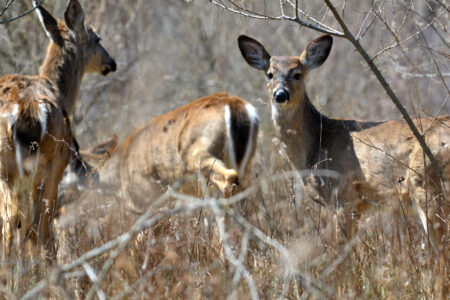
While deer may be the most obvious example of wildlife that could benefit from efforts to create safer pathways for animals to move across developed areas, many species of plants and animals could be better-protected.
"Animals have a commute, too. They need to move around to find their daily foraging," he said. "When they have to move around to find mates, they have to find genetically diverse mates."
Legislative studies
Multiple studies have been conducted to demonstrate the need for conservation corridors and demonstrate how existing efforts have successfully protected wildlife.
A 2023 report by the Department of Transportation identified almost three dozen wildlife corridors around the state.
A separate review by the Legislative Budget and Finance Committee in 2024 called for the kind of improved coordination that state officials say they are now implementing.
The 2024 report also called for better coordination to track exactly where wildlife collisions are taking place so officials can try to mitigate the risk of future collisions.