
State’s housing plan hinges on ‘affordable’ new builds
Despite Pennsylvania’s growing economy, many workers are struggling to find affordable homes near new job opportunities as housing costs continue to rise faster than wages.
In places like Sharpsburg, a small borough five miles north of Pittsburgh, nearly one in five households lives below the poverty line, making the region’s median home sale price of $260,000 out of reach.
“Over one million households in Pennsylvania are spending more than 30% of their income on housing,” said Lt. Gov. Austin Davis during a press conference in the borough on Monday. “And more than 50% of the commonwealth’s housing stock is over 50 years old, making it increasingly expensive to maintain.”
“(There) is a mismatch between the cost of housing and wages that we’ve seen both with homeownership and rental units,” Lena Andrews Executive Officer of ACTION-Housing said.
As of March, the median home price in Pennsylvania was $300,000, and current renting costs average at $1,575 per month. In contrast, household income in Pennsylvania levels at $77,545.
A shortage of 185,000 homes is predicted by 2035, with the shortfall most impacting low-income families, seniors, and those with disabilities. The Housing Action Plan, announced in February, is the state’s first comprehensive housing project. It proposes a $1 billion Critical Infrastructure Fund to build new affordable homes while bringing down housing costs in existing neighborhoods.
“Pennsylvania’s first-ever Housing Action Plan is a critical step forward,” Sara Innamorato, the Allegheny County executive, said. “Because one solution to high housing costs is straightforward: we need to build more homes.”
As funding for housing from Washington, D.C., is limited, Innamorato stressed the importance of local resources to meet the need.
“It’s really difficult to work with them (the federal government) on this issue of affordability, especially affordable housing, so we really need those state and local partnerships to be successful,” she said.
However, those at the conference also discussed the reality that funding alone is not enough.
“Communities that have affordable housing right now are overwhelmed with affordable housing,” said Richard Stephenson, Allegheny County Housing Authority executive director. “What we need to do is get affordable housing into areas we are not in, opportunity areas.”
Often, housing efforts focus on providing larger community options, but Stephenson highlighted the effectiveness of using individual homes, which offer opportunities to break generational cycles of public housing dependency. These homes, under Section 8, are made affordable through vouchers and are available for tenants to buy and own. Once purchased, these homes provide tenants with a stable investment that renting cannot.
Andrews agreed with Stephenson’s comprehensive approach to meeting housing needs, especially regarding eviction.
“Usually when someone’s facing eviction, there are other needs besides just the rental assistance,” she said. “You can need legal, or mediation, or housing navigation, or connection to other services.”
Andrews explained that the Allegheny Stabilization Housing Collaborative provided many of these additional services to successfully stabilize 1,900 households and help families get back on their feet. Bringing the conversation back to the Housing Action Plan, Andrews said that “the minute they are created (these policies), people really, really benefit from them.”
“We want to make sure every community has every opportunity to succeed,” David said in closing remarks. “We know we have a lot of work to do, but we are committed to getting that work done.”
Local News
No tax hike in preliminary Hollidaysburg Area School District budget despite deficit
Faced with a roughly $4.3 million deficit, Hollidaysburg Area School Board members approved a tentative final ...
Claysburg-Kimmel School District OKs tax increase to Act 1 Index
CLAYSBURG — In a 7-2 vote, Claysburg-Kimmel School Board members agreed to raise taxes to the Act 1 Index of 5.1% ...
Huntingdon pedestrian succumbs to injuries from April accident
A Huntingdon man has died from injuries suffered in an April accident. Richard L. Alexander, 67, was walking on ...
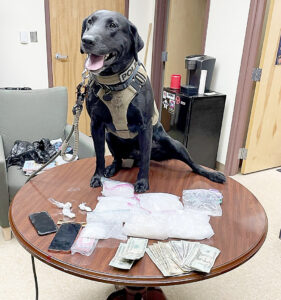
Traffic stops in Altoona result in arrests of three for drug trafficking
Philadelphia man on trial in Blair County Court for drug trafficking
HOLLIDAYSBURG — A Philadelphia man accused of trafficking nearly $74,000 worth of narcotics in December 2024 is ...
State’s housing plan hinges on ‘affordable’ new builds
Despite Pennsylvania’s growing economy, many workers are struggling to find affordable homes near new job ...