
Neighbors uneasy about South Annville data center proposal
Nesting eagles, threats, lack of information all stir discussion
Trending
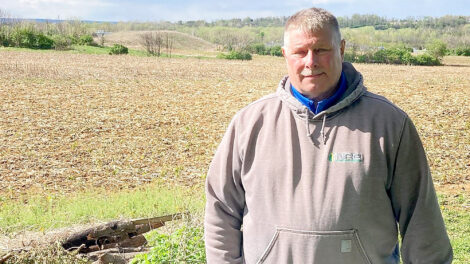
Many neighbors have seen the local eagles soaring above the gently rolling fields and stands of trees in their part of southeastern Pennsylvania, and Rick Pyles has particularly enjoyed watching the secluded nest near his home get bigger each year.
Pyles is uneasy about the data center proposal that will affect his swath of South Annville Township, Lebanon County, where the birds live and hunt. Both the township and the proposer have indicated steps will be taken to protect the eagles, but Pyles' love of the landscape -- the deer, the seasonal planting and harvesting of crops, and the majestic eagles -- cannot be put aside.
"I would rather not see it," he said of the data center.
He is one of a huge number of Pennsylvania property owners trying to figure out what the future might look like after having a data center proposed near their homes. They worry about wildlife, property values, electricity and water use, and quality of life, among other things.
Of the various levels of government -- state, county and local -- nearly all the data center action in Pennsylvania appears to be at the local level. County governments have little involvement, and there has been no bipartisan agreement in Harrisburg on comprehensive regulations for data centers.
An avalanche of opposition has appeared in South Annville to the proposal there. Online threats have been made in connection with proposals in Limerick Township, Montgomery County. In other counties, there have been raucous meetings, misunderstandings, and a general sense that the topic is a no-man's-land in terms of solid information.
Gov. Josh Shapiro, a Democrat, has proposed a concept for a set of rules he calls "Governor's Responsible Infrastructure Development" or GRID. The Legislature, he said, must pass the concept in the form of a bill and get it to his desk so he can sign it.
But there appears to be no bipartisan agreement among lawmakers on how to handle the overall topic. Many bills have been proposed, some have advanced, but none completely address the tumult that is happening nearly every week in some part of the state.
Demands for a moratorium on data center development are growing, according to Ginny Marcille-Kerslake, senior organizer for the advocacy nonprofit Food & Water Watch.
"In these front-line communities, there are very real concerns," she said. "We are rushing into something without fully understanding what the consequences are."
A few weeks ago, the Planning Commission in Limerick Township held a three-hour-plus public meeting in a school auditorium concerning a data center proposed near the Philadelphia Premium Outlets. It would have eight two-story data center buildings with about 2.8 million square feet of space.
At the meeting's conclusion, commission members huddled together on stage for a 10-minute discussion that could not be heard by the audience. Marcille-Kerslake subsequently stood in an aisle and told them "your deliberation in private was a violation of the Sunshine Act" but was told to sit down, and after a moment police moved closer to her.
Township supervisors since then have held a session in Spring-Ford Area High School related to the data center proposal, but a township official said any further meetings will be held in the township building because online threats have been received. The official said a "security assessment" was done and "increased security measures will be implemented" in the township building.
On Tuesday, Marcille-Kerslake questioned the legitimacy of the threats. "There is a concern that this really is a move just to limit public participation," she said.
Last week in Chester County, East Vincent Township supervisors opened a hearing on a request for "conditional use" approval associated with a proposal to erect a six-building data center campus with 1.4 million square feet of space. It would be on the site of the former Pennhurst State School and Hospital.
Video of the meeting shows it devolved into raucous stretches of shouting as the board voted on applications by individuals seeking to gain "party status" in the proceeding -- which would give them power to directly question the applicant.
Township Planning Commission Vice Chairman Lawson McCartney told the crowd his board had voted to recommend supervisors reject the request because -- among other things -- it would have impacts on electricity, heating, cooling, water, noise, vibration, local waterways, and forested areas that "will clearly be massive but are as yet undefined in the plan."
The data center proposal in Lebanon County near Rick Pyles' home involves 99 acres just southwest of Annville.
While no formal plan has been submitted, the township has received a request for rezoning associated with 99 acres. Township Manager Jeanette Henning said most people who have had contact with township government -- via letters, phone calls and emails -- are against the request.
"Would you want that in your back yard? I'll be able to see it. Hear it," said David Risser, who lives near the South Annville Township site.
The county government has no role in the process, according to Lebanon County Commissioner Bob Phillips.
"The data centers are necessary because everybody has a cell phone and AI is part of the future," Phillips said. "Where they belong is up to the municipalities."
Another Lebanon County commissioner, Mike Kuhn, said he would be "shocked" if township leaders approved the local request because of overwhelming opposition. "I think people respond to their constituency," Kuhn said.
Henning said both township government and the data center proposer are well aware of the need to protect the nesting eagles. In general, though, she feels there just isn't enough accurate information on data centers.
"We all -- the public -- need to be educated more," Henning said. "We need more and better answers than we are getting now."