
Learning by ear: Cambria Heights students get hands-on lesson on harsh realities farmers face
Learning by ear
-
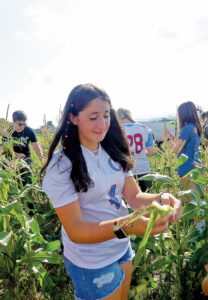
- Rylee Lane, 13, of Patton, pulls back the husk of an ear of corn she picked in the field at Yahner Brothers Farms. Mirror photo by Cati Keith
-
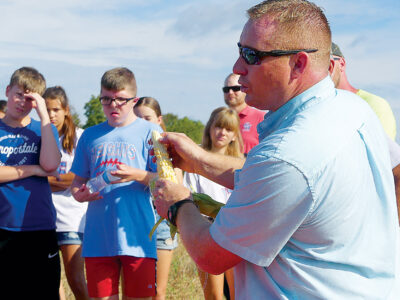
- Tommy Nagle, vice president of the Cambria County Farm Bureau shows an ear of corn that did not pollinate correctly causing it to have missing kernels to eighth graders from Cambria Heights Middle School. Mirror photo by Cati Keith
-
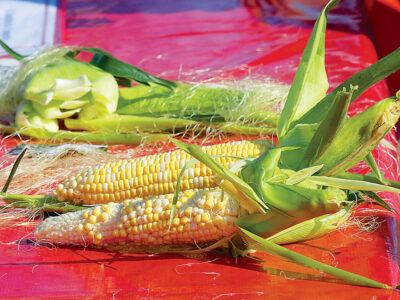
- Examples of an ear of corn that pollinated correctly can be seen at top, and the one below that did not pollinate correctly, which caused it to be missing kernels. Mirror photo by Cati Keith
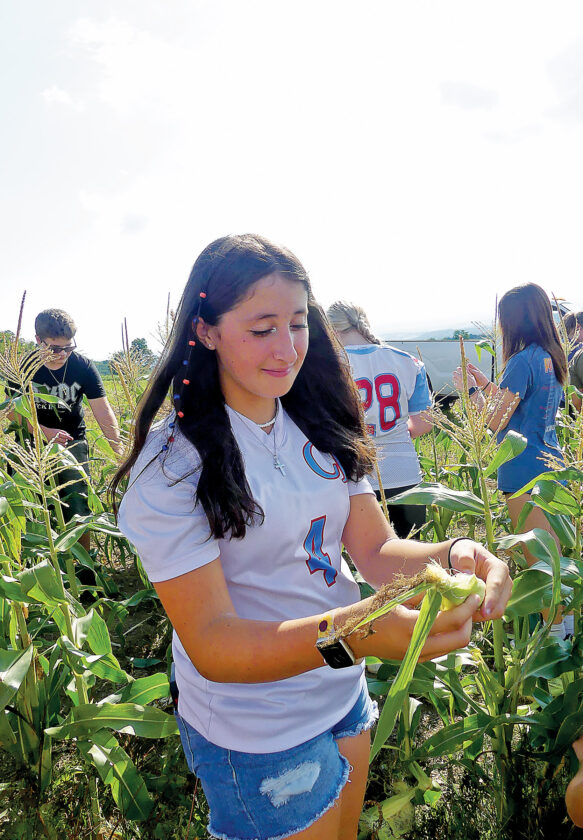
Rylee Lane, 13, of Patton, pulls back the husk of an ear of corn she picked in the field at Yahner Brothers Farms. Mirror photo by Cati Keith
PATTON — Students who watched corn being planted in the fields across from the Cambria Heights Middle School learned Thursday that sometimes Mother Nature just doesn’t cooperate.
Showing off ears of underdeveloped corn, Tommy Nagle said, “We can do everything right — the planter worked right, the seed was put into the ground, but Mother Nature did not cooperate.”
Nagle, Pennsylvania Farm Bureau vice president, was at Yahner Brothers Farms where the corn was planted in the spring. At that time, the then-seventh graders learned about all the work that goes into planting crops.
On Thursday, the now-eighth graders learned that farmers oftentimes have to make do with the results as the weather is out of their control.
The students, who were looking forward to having sweet corn for lunch, found that while dozens of ears were edible, overall, the four rows planted for them didn’t fare well because of how dry it was earlier in the summer.
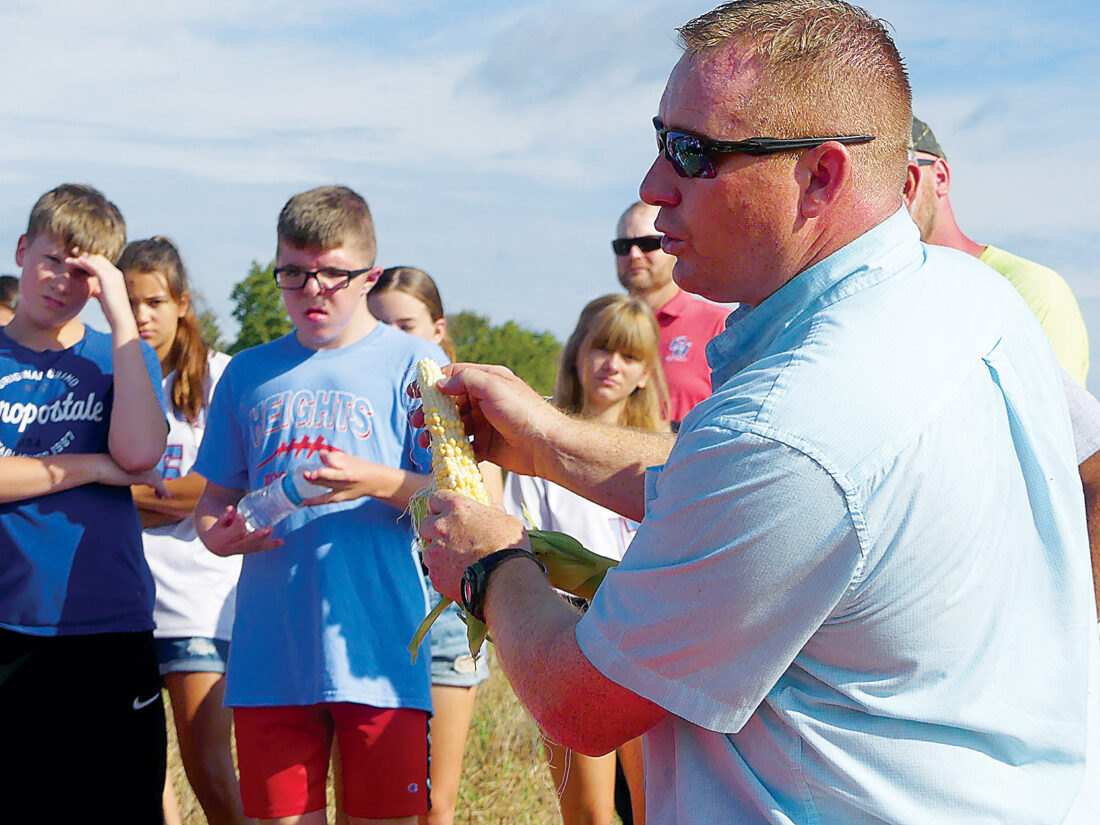
Tommy Nagle, vice president of the Cambria County Farm Bureau shows an ear of corn that did not pollinate correctly causing it to have missing kernels to eighth graders from Cambria Heights Middle School. Mirror photo by Cati Keith
It was a disappointment that offered a great hands-on lesson.
Food source fragile
Corn does not need bees to pollinate, because the tassel — the top of the corn stalk — has about 90,000 pollen spores, Nagle said.
Each one of those must link up to a silk — the fine “hair” in an ear of corn — in order to make a kernel of corn.
When that does not happen, it results in ears of corn with blisters where a kernel will never grow, he said, while peeling back the husk to show the students what he meant.
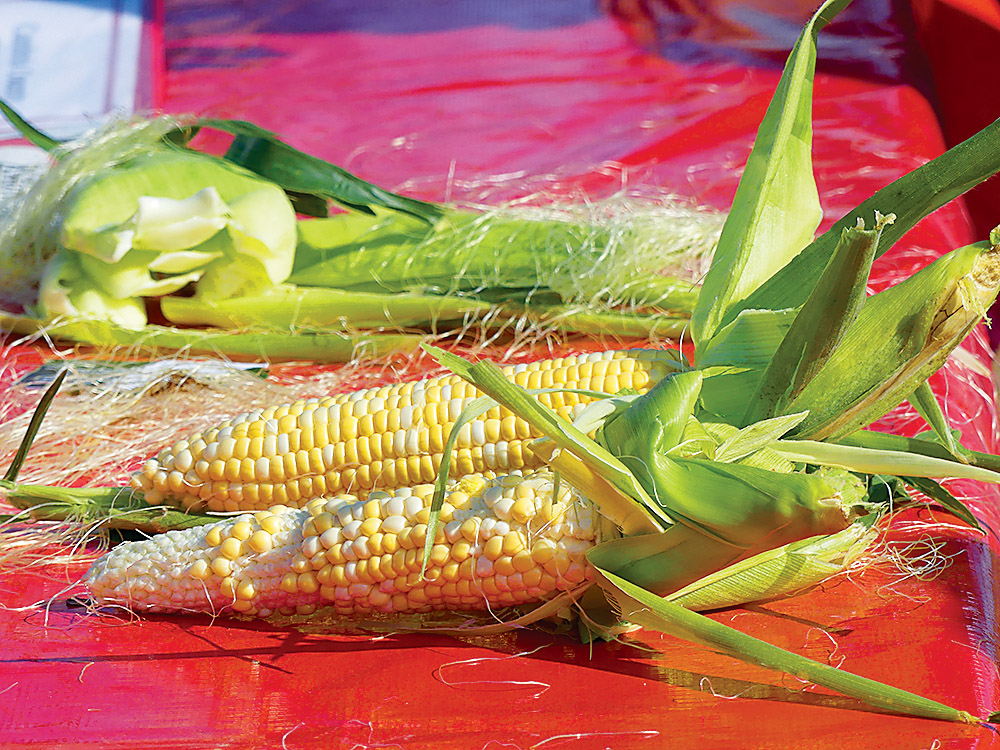
Examples of an ear of corn that pollinated correctly can be seen at top, and the one below that did not pollinate correctly, which caused it to be missing kernels. Mirror photo by Cati Keith
“Because of the bad pollination they had this year and the stress the corn plant was under, the process did not happen properly,” Cambria County Farm Bureau President Marty Yahner explained.
That’s important for everyone to know, he said, because the food found on grocery store shelves isn’t made in a factory, it’s made in a field.
“We need Mother Nature’s help and that is how fragile the food source is,” Nagle said.
He then asked the students if they remembered during the pandemic when there was not a lot of meat and vegetables in stores because of food supply shortages.
“You are fortunate that you don’t have to worry about this on a daily basis, but these are things that can happen,” he said.
When pollination happens correctly and the weather is just right, an ear of corn should be full of juicy kernels, he said, showing off a perfect ear.
Ethan Hoover, a Patton farmer, pulled up a corn stalk to show the roots that developed from the seed.
Hoover said he loves farming; to see a small seed turn into a source of fiber and energy for people is amazing.
While the sweet corn didn’t form as desired, “we did manage to get somewhat of a crop,” he said.
Students also learned about crop rotation and cover crops, with Yahner stating the nearby oats were harvested and wheat was planted to protect the ground from erosion.
“We are active environmentalists,” he said. “We try to do the right thing and make the land, soil and water clean and better for future generations.”
Yahner and his brother Rick are sixth-generation farmers with some younger family members showing an interest in being the seventh generation to operate the farm.
On a mission
After learning the corn didn’t turn out as planned, Yahner gave the students a mission to find the possible 70 ears of corn that matured correctly.
That was just what the students were waiting for as they headed into the rows to pull the corn and check for full ears.
“Picking the corn is fun,” said 13-year-old Rylee Lane.
Ben Wozniak, 13, said he found the whole experience interesting.
In the end, students still got to enjoy lunch at school thanks to a donation of sweet corn from Himmels and hamburgers by Yahners.
“We knew there was not going to be enough corn for everyone,” Yahner said.
Jarrod Lewis, Cambria Heights Middle School principal, said he was grateful for the Farm Bureau presentation and to the local farmers who provided the lessons.
“I’m glad they were able to give the students the experience of seeing the farmers planting the corn in spring and then being able to harvest in the fall,” he said.
Lewis hopes the students end up with a better understanding of what farmers do and what they go through to put food on family’s tables.
Yahner said agriculture education is important because people often take food for granted.
When the pandemic hit, everyone saw supermarket shelves going bare because the food chain is only as strong as its weakest link, he said, adding that those links can break pretty easily, and then food prices go up fast.
“If there was anything good to come out of the pandemic, I think people got a better appreciation for where their food comes from,” he said.
Mirror Staff Writer Cati Keith is at 814-946-7535.
Local News
Student journalists at Altoona Area, Tyrone Area, Bellwood-Antis high schools honored for work

Pride on display
Student journalists at Altoona Area, Tyrone Area, Bellwood-Antis high schools honored for work

Farm Bureau Region 4 director the area’s ‘go-to expert’
Pride on display
Student teachers left without stipends
Pennsylvania’s student teacher stipend program does not receive enough funding to cover the cost, leaving ...