Religious diversity blooms in Cuba
-
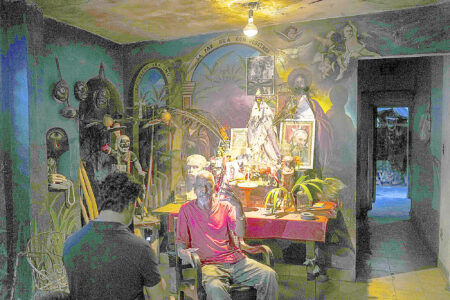
- Juan Gonzalez sits next to his altar adorned with Santeria and Catholic deities, along with a photo of the late Cuban leader Fidel Castro, at his home in El Cobre, Cuba, on Feb. 10. Diverse beliefs can be found mixed together on altars in Cuban homes, with the Virgin Mary sharing space with a ceramic Buddha and a warrior spirit from the Afro-Cuban faith. The Associated Press
-
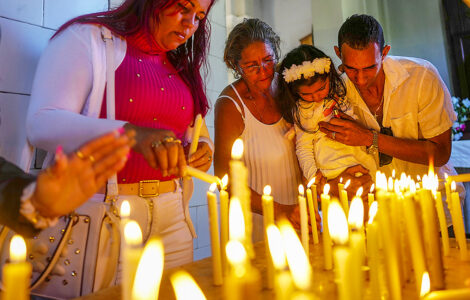
- People light candles in honor of Cuba’s patron saint, the Virgin of Charity of Cobre, at her shrine in El Cobre, Cuba, on Feb. 11. The Vatican-recognized Virgin, venerated by Catholics and followers of Afro-Cuban Santeria traditions, is at the heart of Cuban identity. The Associated Press
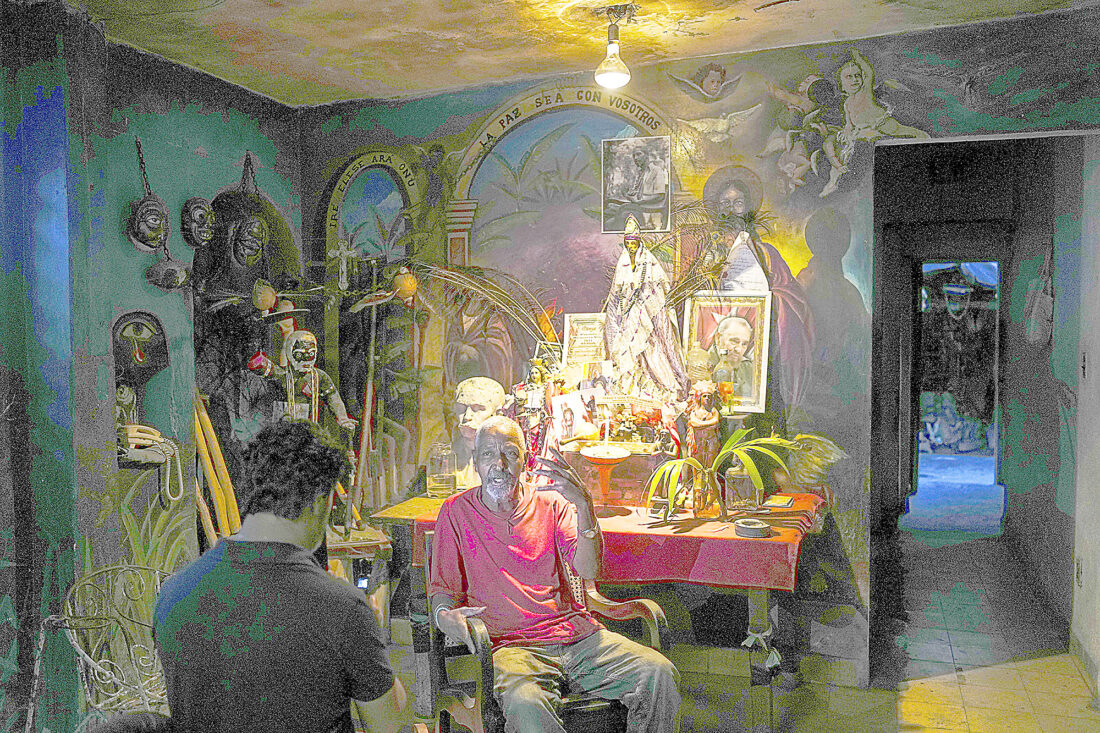
Juan Gonzalez sits next to his altar adorned with Santeria and Catholic deities, along with a photo of the late Cuban leader Fidel Castro, at his home in El Cobre, Cuba, on Feb. 10. Diverse beliefs can be found mixed together on altars in Cuban homes, with the Virgin Mary sharing space with a ceramic Buddha and a warrior spirit from the Afro-Cuban faith. The Associated Press
HAVANA — The 1959 Castro-led revolution installed an atheist, Communist government that sought to replace the Catholic Church as the guiding force in the lives of Cubans.
But 65 years later, religion seems omnipresent in Cuba, in dazzling diversity.
The bells toll on Catholic churches and the call to prayer summons Muslims in Havana. Buddhists chant mantras as they gather at a jazz musician’s home. Jews savor rice, beans and other Cuban staples for Sabbath dinner. Santeria devotees dance and slap drums in a museum filled with statues, paying homage to their Afro-Cuban deities.
It’s also visible in the growing ranks of evangelicals who worship across the island, in the faith of LGBTQ+ Christians who sing at an inclusive church in the seaport of Matanzas, or in the pilgrims who travel to the remote shrine of Cuba’s patron saint in the shadow of the Sierra Maestra mountains.
Critics say Cuba still falls short on religious tolerance. The U.S. State Department has designated Cuba a “Country of Particular Concern” for having engaged in or tolerated severe violations of religious freedom.
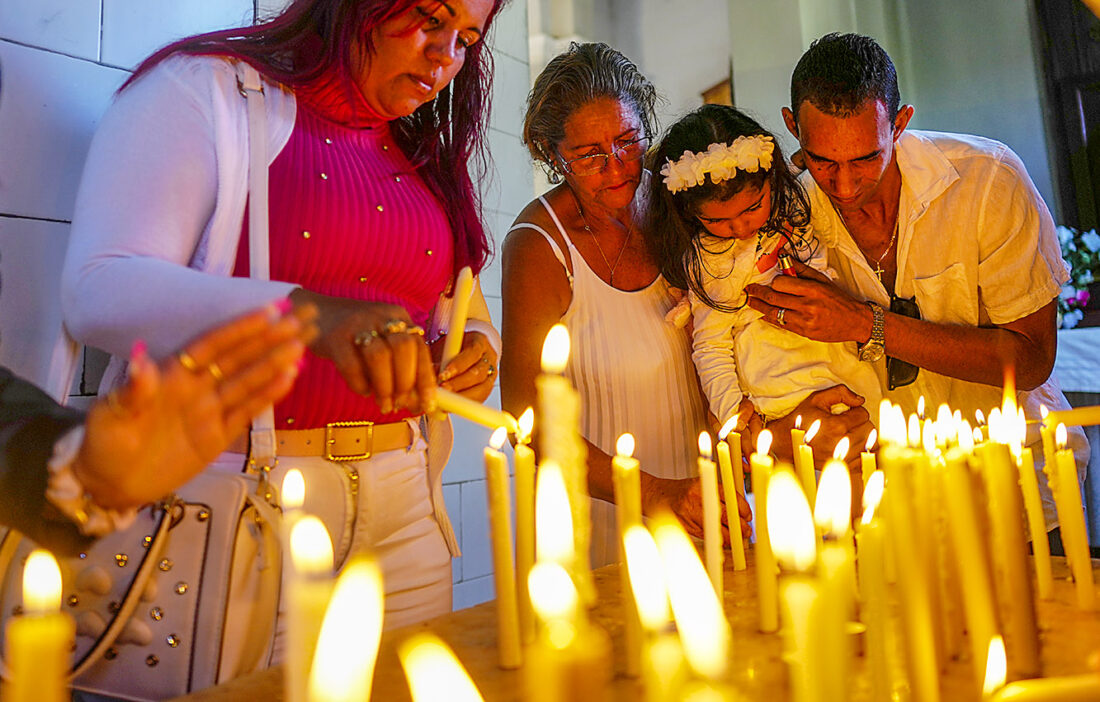
People light candles in honor of Cuba’s patron saint, the Virgin of Charity of Cobre, at her shrine in El Cobre, Cuba, on Feb. 11. The Vatican-recognized Virgin, venerated by Catholics and followers of Afro-Cuban Santeria traditions, is at the heart of Cuban identity. The Associated Press
Cuba’s constitution includes provisions for religious freedom and bans religious-based discrimination. But a recent State Department report says provisions in Cuba’s penal and administrative codes “contravene these protections.” The report says the Cuban Communist Party requires religious groups to be officially registered, “and membership in or association with an unregistered group is a crime.”
The report says the Office of Religious Affairs and the Ministry of Justice continue to withhold registration to some groups, including the Jehovah’s Witnesses and The Church of Jesus Christ of Latter-day Saints.
Some academics and religious leaders say more strides toward full religious freedom are needed, such as easing the process to build houses of worship, allowing access to state-owned media to spread faith-based messages, and reestablishing private religious schools. But there’s been significant progress; some call it a time of Cuban religious revival.
“I don’t know whether the religious revival has occurred in Cuba as a result of the (evangelical) Protestants involvement in the island, or as a result of the frustrations of the Cubans, or the result of a tolerance that the Cuban government seems to show toward religion,” said Jaime Suchlicki, former director of the University of Miami Institute for Cuban and Cuban-American Studies.
“Maybe a combination of all these factors have really revived religion in the island.”
More than 60% of Cuba’s 11 million people are baptized Catholic, according to the church. Experts estimate that as many, or more, also follow Afro-Cuban traditions such as Santeria that intermingle with Catholicism.
“Cubans are believers, but sometimes they believe in everything,” said Monsignor Ramon Suarez, chancellor of Havana’s Catholic archdiocese.