
Stream blockages concern residents
Prohibition against dredging can add to flooding risk
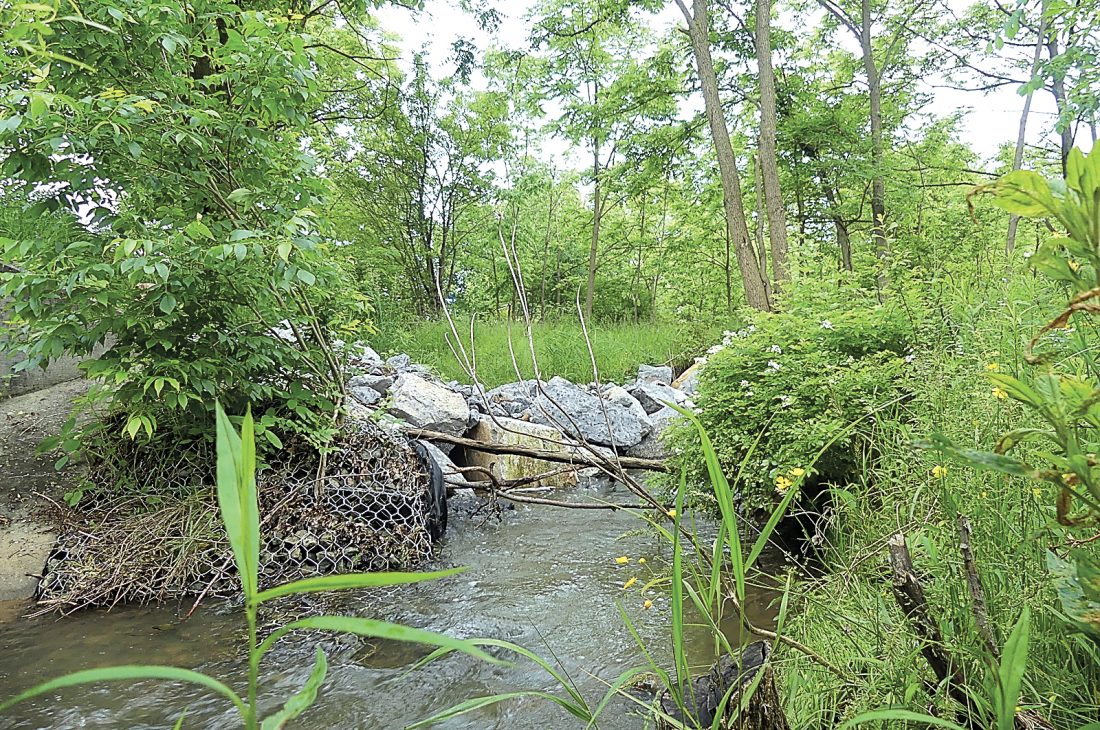
Some local residents are concerned about the debris built up in this tributary of Gillan’s Run and its potential to contribute to flooding adjacent properties. The Clean Water Act made it illegal for communities to dredge streambeds in hopes of encouraging free water flow and the prevention of flooding. Mirror photo by William Kibler
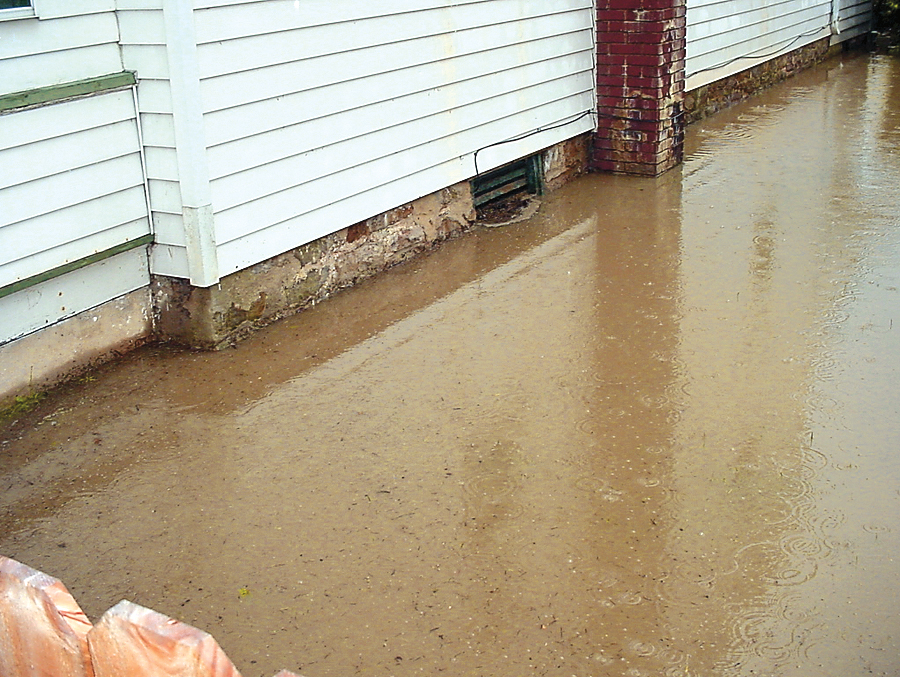
Floodwaters from a tributary of Gillan’s Run surpass the basement window of Duncansville resident Lou Tarczy’s home. Tarczy’s basement filled with 51 inches of water twice last year. Courtesy photo
Some local residents are concerned about the debris built up in this tributary of Gillan’s Run and its potential to contribute to flooding adjacent properties. The Clean Water Act made it illegal for communities to dredge streambeds in hopes of encouraging free water flow and the prevention of flooding. Mirror photo by William Kibler
Floodwaters from a tributary of Gillan’s Run surpass the basement window of Duncansville resident Lou Tarczy’s home. Tarczy’s basement filled with 51 inches of water twice last year. Courtesy photo
Trending
It's been about 30 years since it was legal for communities to dredge streambeds in hopes of encouraging free flow and preventing flooding.
Some people still long for that old permission -- even as many now believe the law prohibits any stream intervention, except by committing to the bureaucracy and expense of seeking a permit.
But as Duncansville's consulting engineer Tom Levine pointed out at a recent Borough Council meeting, property owners, including municipalities, have the right -- and in some cases, the responsibility -- to remove debris that can cause flooding.
Levine's reminder was in response to borough resident Lou Tarczy alerting council to the presence of what he believed were two or three logs near the Route 764 culvert in an unnamed tributary of Gillan's Run -- which Tarczy believed would create a flood risk the next time the tributary runs high.
Levine advised council to ask borough workers to check out those logs the next day.
Municipal workers wouldn't be allowed to drive a backhoe into the stream to do such work, but would be allowed to park it beside and reach in, Levine said.
Under current rules, municipalities can take care of "imminent threats," but generally, that kind of work is for property owners to take care of -- even though some might lack the tools or inclination, Levine said.
The issue of debris removal takes on greater importance in urban settings, where debris-caused flooding is most likely to cause damage, said Donna Fisher, manager of the Blair County Conservation District.
The owners of properties adjacent to the stream usually own the ground underneath to the stream center -- although that can be tricky, depending on how deeds are written, Levine said.
Some deeds might say "to the center of the stream," so if the stream shifts, the line moves likewise, he said.
Other deeds might have originally indicated a boundary in the middle of the stream, but now might be based on a reference to a fixed point elsewhere, in which case a shift in the stream means the boundary line no longer runs with its middle, Levine said.
The Clean Water Act ended the standard practice of dredging streams in the late 1980s, Levine said.
Before that happened, equipment operators would typically deepen channels by 3 feet or so, Levine said.
Since then, those streams have been filling in, "trying" to get back to their natural state, Levine said.
Over the intervening years, some channel bottoms have risen by 2 feet, leaving less room for floodwater, which can inundate basements in homes constructed in locations that were safe when the streambeds were lower, Levine said.
Discharge points now buried below streambeds are evidence of the fill-in, Levine said.
Tarczy's basement on the 500 block of 14th Street in the borough filled with 51 inches of water twice last year, once in July and once in August.
It happened after debris washed down from upstream caught on the Route 764 culvert of the Gillan's Run tributary, forcing water to run over the banks and into a neighbor's bowl-shaped yard, from which it spilled through Tarczy's basement window, which was open to keep that room dry, Tarczy said.
The first time, his family lost between $15,000 and $20,000 worth of tools, paintings, computers and canning supplies, Tarczy said.
The second time, there was nothing to damage, because it had all been pitched, he said.
Tarczy wishes the old methods were still legal.
They may have caused problems downstream in Chesapeake Bay, but when you have 51 inches of water in your basement, it's hard to worry about the Chesapeake Bay, he said.
Landowners may have the right to keep obstructions out of streams, but it doesn't seem practical to rely on landowners alone to keep communities flood-safe, given the variety of landowner capabilities, equipment and motivation, their accessibility to the streams on their properties and the kinds of obstructions they can encounter, according to Tarczy.
A fit landowner whose house is low-lying may have the ability and incentive to remove a modest size log, but a widow whose house is on high ground might not care about similar debris that has collected on hers, it would seem.
Mirror Staff Writer William Kibler is at 949-7038.
Stream maintenance guidelines
The state Department of Environmental Protection's "Guidelines for Maintaining Streams in Your Community" offers the following information:
The following actions require no DEP notification, pre-approval or permit:
Removing manmade material like litter and construction debris or woody debris like trees, logs or brush, using hand or power tools, chains and winches or even heavy equipment, provided the heavy equipment remains on the bank and doesn't dig into the streambed.
Cleaning out culverts.
For governmental bodies and other owners of property with bridges and culverts that required a permit to construct, removing gravel and flood debris from around those bridges and culverts in accordance with the terms of those permits. This is not only a right, but a responsibility, DEP spokesman John Repetz said.
The following might require DEP notification, verbal pre-approval or permit:
Removing gravel bars from the channel using heavy equipment and placing it out of the floodplain.
The following require permits and may not be allowed at all:
Redirecting the flow of a stream by reshaping gravel bars or moving gravel to the streambank.
Armoring streambanks with concrete, construction debris or other impervious material.
Relocating a stream.
Dredging a stream.
The following are myths:
Dredging will eliminate floods: It actually destabilizes channels, alters flows unpredictably and causes rapid sedimentation and more damage downstream, destroying streambanks and accelerating erosion.
Streams that move should be put back: Streams move over time naturally and always seek to reconnect with their floodplains, while channelized streams are "unhealthy" and won't stay channelized for long.
DEP won't allow routine maintenance: Routine maintenance is actually required under many DEP permits for structures like bridges and culverts.
Permits may not be available, will take too long to obtain or will cost too much: Much work requires no permitting; some work can be permitted quickly and cheaply; and emergency permits are available when there's imminent danger.