
Consensus looks elusive at G20 talks
European objections to Russia cancel group photo
Trending
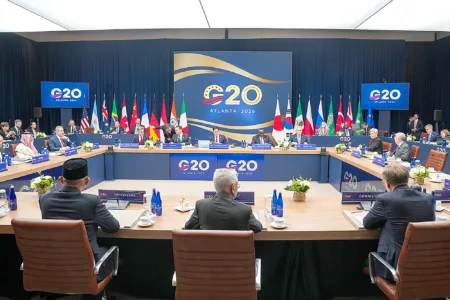
ATLANTA -- Top diplomats from the Group of 20 largest world economies appeared far apart on critical global security issues as they began meeting Friday in Atlanta, after European objections to Russia's participation forced the U.S. hosts to cancel the traditional group photo.
Secretary of State Marco Rubio pulled the plug after several European officials threatened to boycott or walk out of the snapshot that often kicks off such gatherings. But he still opened the talks with an appeal for unity on the issues that threaten international security and trade.
"We are in a critical moment," Rubio told his colleagues. "We are facing a series of interconnected economic and geopolitical crises."
He pointed to disruptions to global energy and food supplies, trade and freedom of navigation and said many are posing "severe threats to essential foundations of the global economic order."
Yet there was no sign that the G20 diplomats could come to consensus on many of the most contentious issues they face. Among them are the Russia-Ukraine conflict, the U.S.-Israeli war against Iran, U.S. tariffs and Chinese machinations in the South China Sea. All have contributed to spikes in the global cost of fuel as well as uncertainty about trade.
No joint statement expected from the diplomats' meeting
Diplomats who attended the opening session described it as cordial but said Russia's position on Ukraine is unyielding -- as is its opposition to Poland's membership in the G20.
Those disagreements, which also include the Trump administration's not inviting G20 member South Africa over the objections of others, will likely prevent the foreign ministers from producing a joint communique when the meetings wrap up Saturday, participants said.
That did not surprise Polish Deputy Prime Minister and Foreign Minister Radoslaw Sikorski, who was representing his country in its first time as a guest at a G20 meeting.
"We have wars going on and we have participants in those wars around the table, so it's very difficult to agree a common line," he told reporters.
Several participants, who spoke on condition of anonymity because they weren't authorized to discuss the closed-door talks, said all had agreed to try to overcome their differences despite the long odds and to work to make next month's G20 leaders summit hosted by President Donald Trump in Florida a success.
Russia's presence roils Europeans
Already poor prospects for the talks worsened when the Europeans balked at being photographed with Russian Foreign Minister Sergey Lavrov. Rubio decided to scrap the picture because he thought the controversy would be a distraction, according to two U.S. officials, who spoke on condition of anonymity.
Some G20 countries had already expressed concern that the U.S. invited Russia during its heightened attacks on Ukraine, especially after Trump pushed ties with Ukraine to new lows by waiving fresh sanctions on Moscow and temporarily limiting logistical and intelligence assistance.
However, the State Department announced Friday that it had approved a proposed $2.1 billion sale of Patriot air defense interceptors for Ukraine.
Lavrov, when asked about the planned three-way talks between Russia, Ukraine and the U.S. next month, told Russian reporters that Ukrainian President Volodymyr Zelenskyy's position regarding long-range strikes against Russia "doesn't help preparation for the talks."