
Superior Court upholds dismissal of SCI Huntingdon inmate’s petition
Piner challenged funding of drug investigations by Operation Our Town
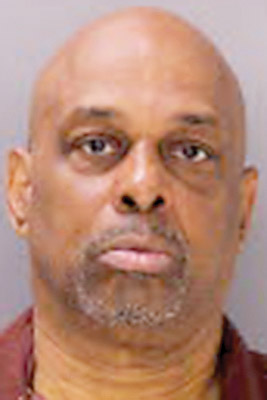
Piner
The Pennsylvania Superior Court has upheld a decision by a Blair County judge to dismiss a petition by a former Altoona man, Stephen Montier Piner, who challenged the funding of drug investigations by Operation Our Town.
Piner, 67, is presently serving a 20- to 40-year prison term after pleading guilty in 2015 to 32 drug-related offenses that included possession with intent to distribute, criminal use of a communications facility, dealing in proceeds of unlawful activity, participation in a corrupt organization and criminal conspiracy.
In his post-conviction petition, Piner contended he was denied the right to due process and a fair trial because Pete Weeks, who serves as Blair County’s district attorney, “received funds from Operation Our Town, a privately funded public interest drug interdiction and enforcement group.”
A panel of the Superior Court that included Judges Judith F. Olson, Mary P. Murray and Jill Beck late last week summarized Piner’s petition, stating that he “alleges he is entitled to a new trial because Attorney Weeks’ participation in Operation Our Town created a conflict with the prosecutor’s duty to seek justice, and (instead) incentivized the prosecutor to obtain convictions.”
Piner was arrested and prosecuted for his involvement with a group transporting large amounts of cocaine from Baltimore to Altoona.
The drugs were processed for street sale in a local bar.
Law enforcement, conducting Operation Last Call, made multiple arrests and essentially broke up the organization.
Among those arrested was Stephen Piner and a brother, Ken Piner.
Stephen was charged with multiple offenses, and in February 2015, he went on trial, according to the Superior Court opinion.
On the third day of his trial he entered guilty pleas to the charges against him and was sentenced by Blair County Judge Daniel J. Milliron to a term of 20 to 40 years. The sentence included a fine of $112,000, which was later dropped.
In the summer of 2017, Piner filed his first post-conviction complaint alleging the investigation that led to his arrest and lengthy prison sentence was the result of “conflict of interest” that included the judge, the prosecutor Dave Gorman and the then-District Attorney Richard A. Consiglio.
His initial complaint was dismissed in 2019.
In 2020, Piner filed a new post-conviction petition, again citing a conflict of interest among law enforcement that included judges, the district attorney and police officers.
He reported that all of these individuals were associated with Operation Our Town, which provided funds to pursue drug-related investigations.
His petition was dismissed as untimely. Such a petition had to be filed within a year of his sentence becoming final.
Serving as his own attorney, Piner made yet another attempt by filing his present petition in February 2024.
He once again sought a new trial based on Operation Our Town’s funding of drug investigations and prosecutions.
This time he emphasized exceptions to the one-year rule — “government interference” and “newly discovered facts.”
One of the newly discovered facts cited by Piner was a 2023 article in the Altoona Mirror in which the Blair County Chapter of the NAACP questioned the establishment of a special account for use by law enforcement to aid with drug enforcement operations.
The NAACP in the article demanded the DA’s Operation Our Town account be brought into the County’s General Fund and that all records be subject to public scrutiny.
Weeks, in that same article, explained that the fund in question is used to pay, for instance, overtime to police officers conducting drug oversight.
He emphasized that he didn’t control the account or make decisions concerning expenses.
Piner in his petition stated the relationship with the DA’s office and Our Town “is fraught with ethical and possible legal issues.”
Another source of new information alleged by Piner came from a former Blair County drug dealer, Thomas Rhone, who like Piner was serving time at SCI Huntingdon.
Rhone, pursuing his own appeal, obtained a stipulation from Weeks that his salary as a drug prosecutor was funded through Operation Our Town.
Piner also attached to his appeal an invoice by a former investigator for the Blair County Drug Task Force to pay officers who were allegedly “targeting” Stephen Piner and his brother Ken using Our Town funds.
In December 2024, Blair County Judge Wade A. Kagarise dismissed Piner’s post-conviction complaint without a hearing. The judge concluded, “Piner was not entitled to relief.”
The judge stated Piner’s petition was untimely.
Piner then appealed the lower court decision to the Superior Court, contending the Blair judge abused his discretion by deciding not to hold a hearing and ruling that Piner did not prove either government interference or new facts as exceptions to the timeliness rule.
The Superior Court panel, in an opinion written by Beck, stated Piner’s appeal was “untimely on its face,” having been filed six years after his judgment of sentence became final.
The opinion stated Piner failed to show government interference in his case, noting that his petition “alluded to general nefariousness by the government (the NAACP report),” but did not show any actions by the government that prevented him from filing his claim.
As to Piner’s charge that the DA’s “entanglement with Operation Our Town created a conflict of interest (Our Town having funded Weeks’ salary when he served as assistant DA)” was not a new fact to Piner, according to the opinion.
The appeals court concluded the NAACP report was “simply another, albeit more specific, source for the same general allegations that (Piner) leveled himself in the past.”
“Glaringly absent from Piner’s petition is any explanation of the efforts he employed to obtain information upon which the claim is based,” the opinion stated.
And, it noted, Piner gave no explanation why, with his own due diligence, he could not have found out the information on his own (rather than citing a newspaper story).
He failed to meet his burden of “pleading the applicability of any exception to the (post-conviction) time bar,” the opinion ended.
Piner is presently incarcerated in SCI Huntingdon.
Local News
Motorists cautioned ahead of Big Boy visit
The presence of the Union Pacific’s Big Boy steam locomotive in the region between July 8-11 is generating a ...

Superior Court upholds dismissal of SCI Huntingdon inmate’s petition
Ebensburg Borough Council OKs increase in parking rates
EBENSBURG — During Monday’s Ebensburg Borough Council meeting, officials approved increases in hourly parking ...

State watchdog’s elder abuse probe kept secret

Multi-vehicle accident on Frankstown Road
Huntingdon man killed in crash in Franklin County
A Huntingdon County man was killed in a one-vehicle accident in Franklin County on Thursday. According to state ...