
Healing the Wall: Volunteers restore local memorial to those lost in Vietnam War
Volunteers restore local memorial to those lost in Vietnam War
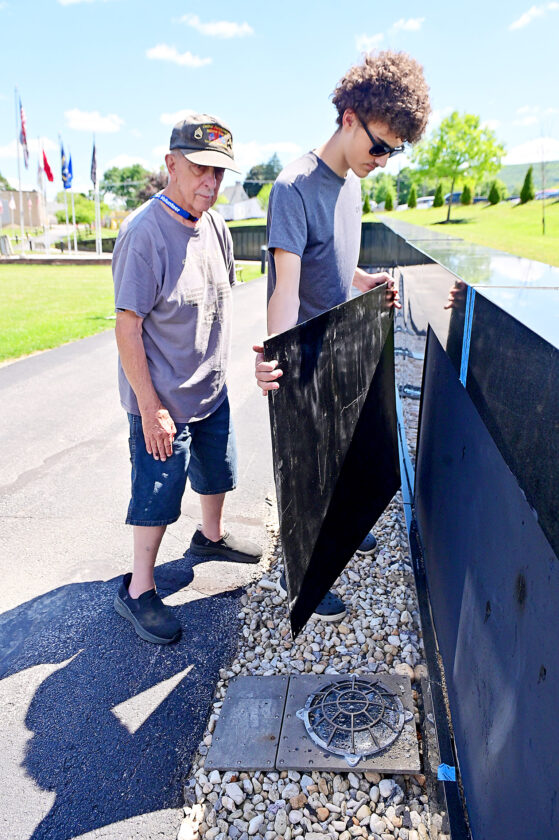
Veterans Memorial & Monument Committee chairman Ken Tedora (left) and volunteer Jack Clay, 15, remove a panel of the Wall That Heals in Altoona on Wednesday. Mirror photo by Patrick Waksmunski
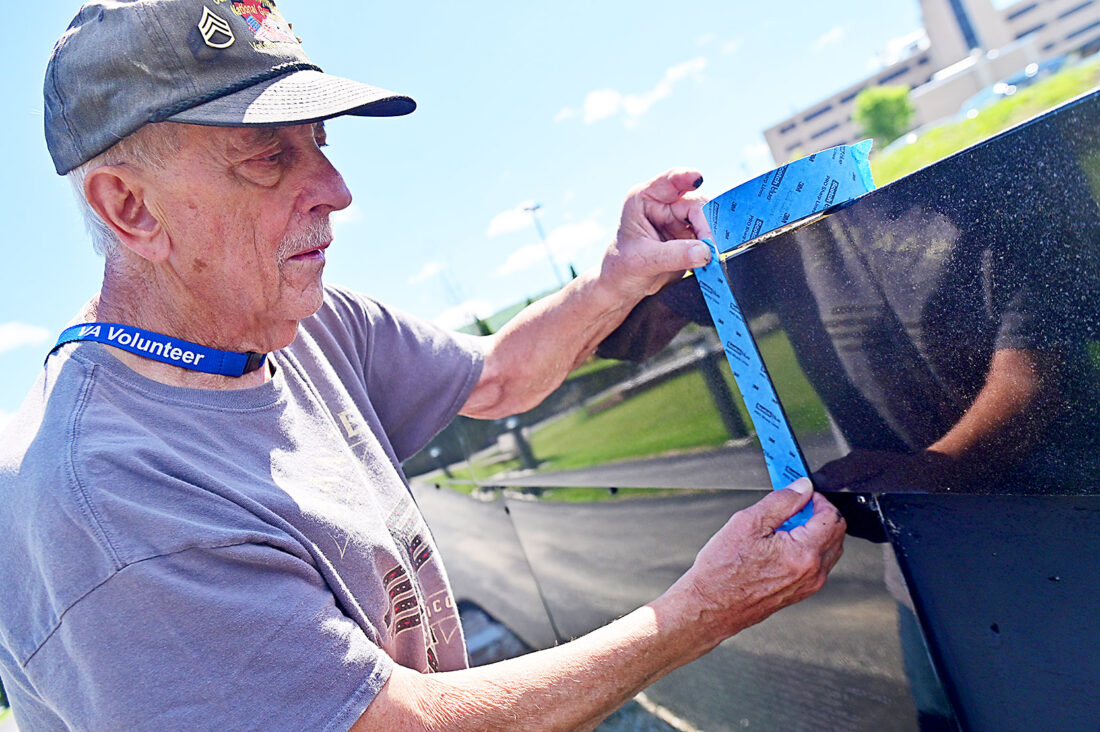
Veterans Memorial & Monument Committee chairman Ken Tedora masks before chalking between granite slabs atop the Wall That Heals in front of the James E. Van Zandt VA Medical Center in Altoona on Wednesday. Mirror photo by Patrick Waksmunski
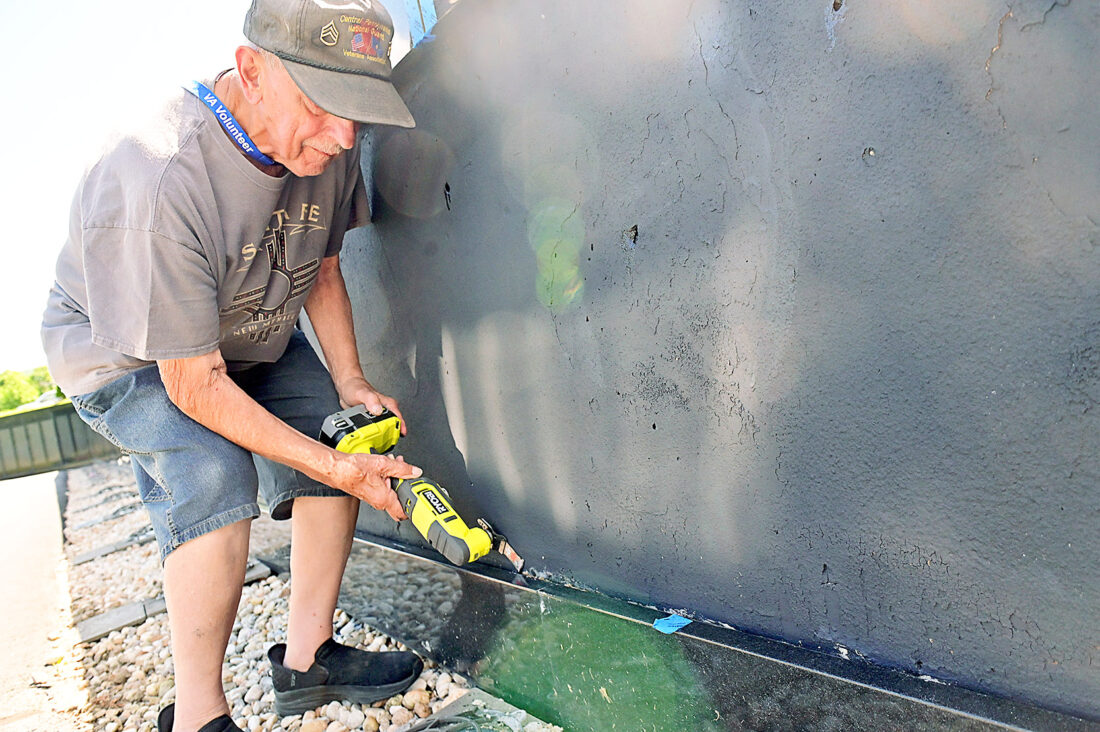
Veterans Memorial & Monument Committee chairman Ken Tedora removes existing joint material during repairs to the Wall That Heals in front of the James E. Van Zandt VA Medical Center in Altoona on Wednesday morning. Mirror photo by Patrick Waksmunski
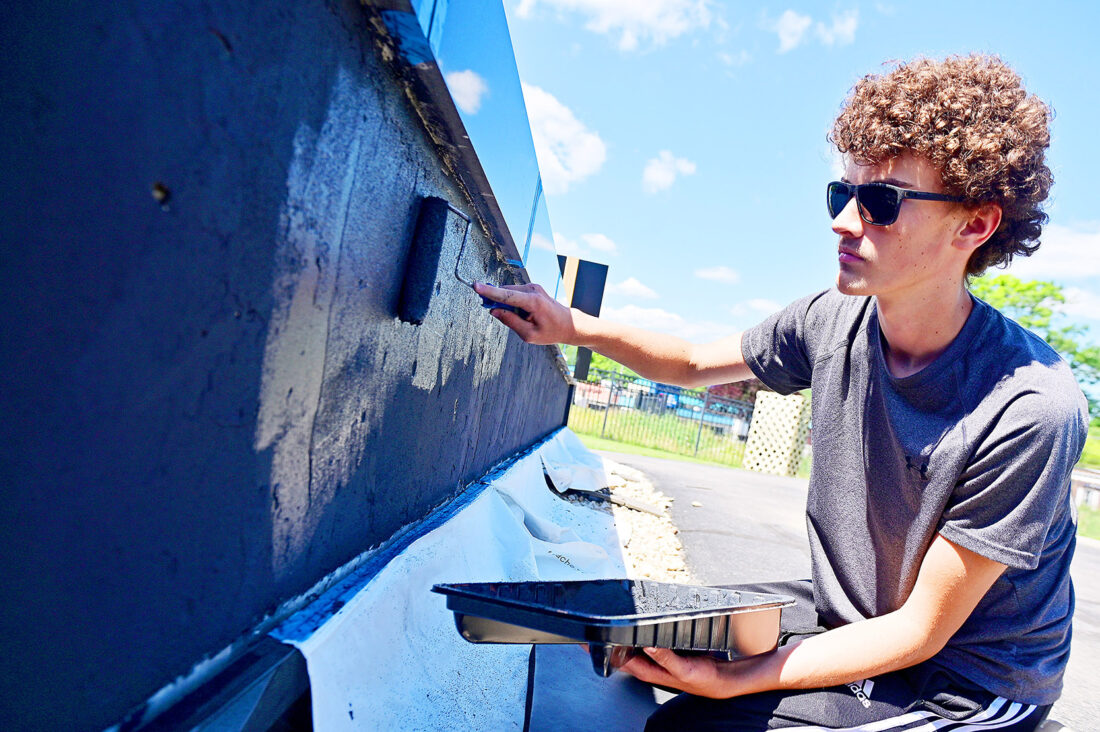
Volunteer Jack Clay, 15, of Hollidaysburg applies concrete weather proofing to a section to the Wall That Heals without its panels. Mirror photo by Patrick Waksmunski
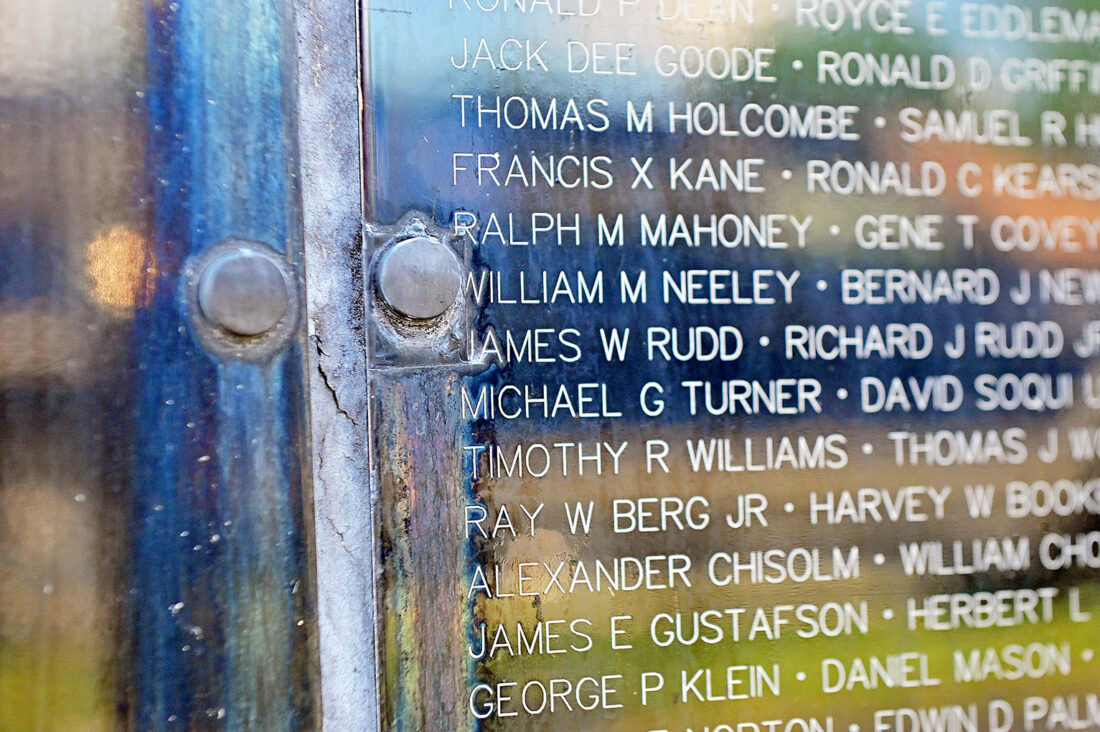
An expanded gap from previous repairs has to be remedied. Mirror photo by Patrick Waksmunski
Veterans Memorial & Monument Committee chairman Ken Tedora (left) and volunteer Jack Clay, 15, remove a panel of the Wall That Heals in Altoona on Wednesday. Mirror photo by Patrick Waksmunski
Veterans Memorial & Monument Committee chairman Ken Tedora masks before chalking between granite slabs atop the Wall That Heals in front of the James E. Van Zandt VA Medical Center in Altoona on Wednesday. Mirror photo by Patrick Waksmunski
Veterans Memorial & Monument Committee chairman Ken Tedora removes existing joint material during repairs to the Wall That Heals in front of the James E. Van Zandt VA Medical Center in Altoona on Wednesday morning. Mirror photo by Patrick Waksmunski
Volunteer Jack Clay, 15, of Hollidaysburg applies concrete weather proofing to a section to the Wall That Heals without its panels. Mirror photo by Patrick Waksmunski
An expanded gap from previous repairs has to be remedied. Mirror photo by Patrick Waksmunski
Trending
Ken Tedora of the Central Pennsylvania National Guard and Veterans Association has helped refurbish local veterans monuments and the grounds around them with and without help from other association members for years.
Since last year, with the assistance of the son of a Van Zandt VA Medical Center employee, Tedora has been working on the Wall That Heals, the half-size replica of the Vietnam Veterans Memorial in Washington, D.C., that was installed on the Van Zandt grounds at the turn of the current century when local veterans raised money to buy a traveling exhibit that was being retired and the medical center converted its panels into a permanent installation.
Last year, working while prone behind the memorial on the lawn that comes nearly to the top of the wall, Tedora raked out and replaced several inches of deteriorating mortar from the joint between a course of dark granite blocks and the top of the concrete wall that carries the metal panels inscribed with the names of the slain veterans of the war.
This year, Tedora has begun the more involved job at the front of the memorial.
It involves removing the panels -- many of which have been pushed out from behind by freezing and thawing water that had come through the mortar joints under the granite -- scraping glue from the panel backs and from the wall, repointing the front of the top mortar joint, then replacing the panels.
The panels are stainless steel, about an eighth of an inch thick, painted glossy black, according to Tedora.
Each panel is held by three screws across the top and three across the bottom, with each screw inserted into a plastic expansion plug.
The three at the top were anchored into the mortar joint between the granite blocks and the wall and weren't holding well because the mortar is deteriorated.
The three at the bottom were anchored in the concrete wall and were holding well, but they were hidden by a piece of molding at the bottom of the panels and embedded in caulking, which made it hard to remove the panels.
Tedora had to scrape out the caulking, then use a reciprocating saw to cut off the heads of the screws to remove the panels.
He plans to drill new holes both at the top and the bottom of the panels, attaching them at the top to the wall, rather than the mortar; and attaching them at the bottom above the molding plate, so they're accessible.
He plans to touch up the old screw holes with glossy black paint.
Tedora has removed 10 so far, starting at the right-hand side of the memorial.
The panels on both ends are short, growing taller in the middle, mimicking the casualty levels of the war itself, which started small, grew in scope, then diminished before ending in 1975.
The smallest panels weigh about 10 pounds, he said.
He estimated the ones in the center weigh about 70.
He can use some additional help -- four or five additional workers would be ideal, Tedora said.
There is work that can be done in cooperation with others, and there is work that can be done alone, as long as Tedora can explain what needs done before it begins, he said.
Anyone interested in helping can call Tedora at 814-942-5683.
Leave a message if no one answers.
Eleven of the larger plates are not the originals installed at the creation of the local memorial, according to Tedora.
They were replacements from several years ago for plates that were torn off and damaged in a windstorm, he said, citing a management employee from the hospital.
There are 47 panels in all, Tedora said.
The 12-by-12 granite blocks on top are secure, as each is anchored to the top of the wall with a pair of rebar pins.
Tedora is redoing the joints between the blocks with black caulking.
Tedora's lone assistant so far has been Jack Clay, son of John Clay, voluntary services supervisor at the hospital.
"He's a great help," Tedora said.
Van Zandt leadership is thankful for Tedora's efforts.
"For over a year, Ken has worked tirelessly on this project, consulting experts and collaborating with other volunteers to carefully restore and replace damaged sections of the wall," wrote hospital spokeswoman Rachel Prichard in an email. "Thanks to Ken's unwavering commitment, this monument -- once intended as a temporary tribute -- continues to be a permanent fixture at our medical center and in the Blair County community."
The hospital's Center for Development and Civic Engagement (CDCE) is coordinating with Tedora on the project. The CDCE is accepting calls at 814-943-8164 from those who want to donate money for supplies or their time to help with the project.
Mirror Staff Writer William Kibler is at 814-949-7038.