Duncannon sees benefit from state recreation push
Town uses unique location to create hub of outdoor entertainment
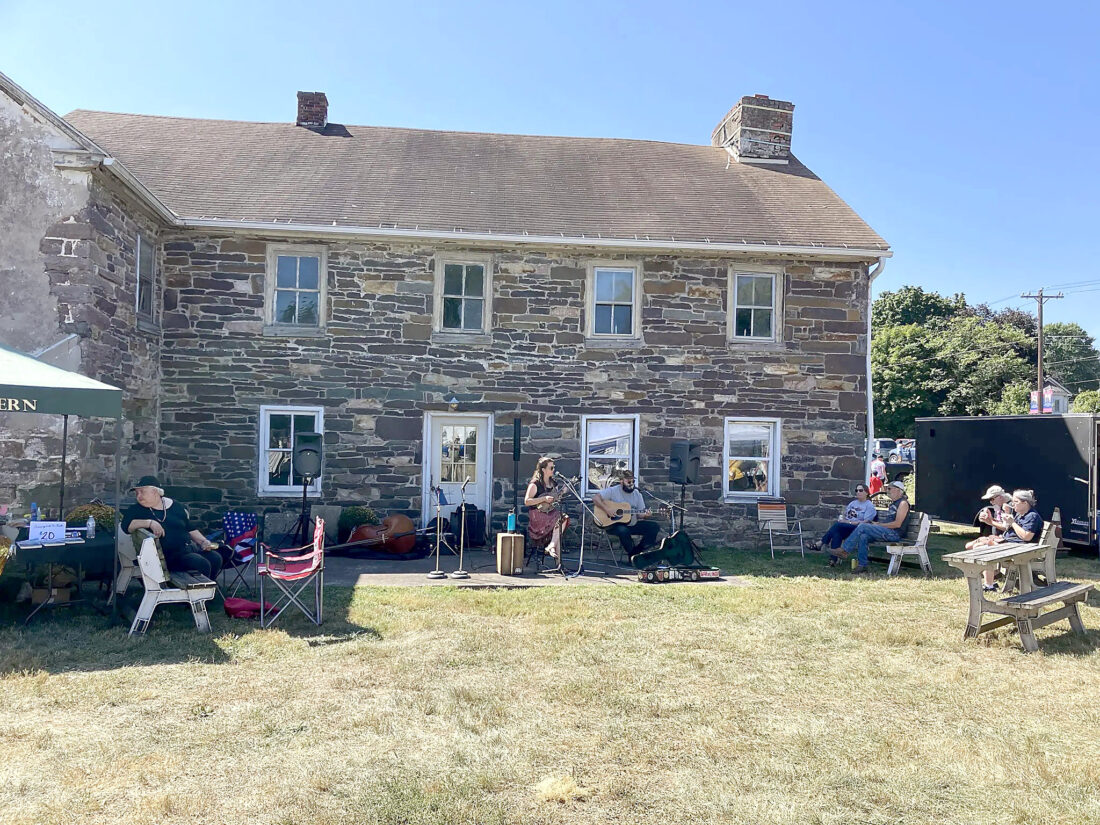
Musicians perform outside the Clarks Ferry Tavern in Duncannon near Harrisburg. Photo by Robert Swift/CapitolWire
The town of Duncannon, where a major waterway and multi-state hiking trail meet, is well situated to take advantage of Pennsylvania’s efforts to boost outdoor recreation as an economic driver.
One-half hour north of Harrisburg, Duncannon is at the midpoint of the Appalachian Trail running from Maine to Georgia.
The Appalachian Trail crosses the Susquehanna River over the Clarks Ferry Bridge and runs several blocks through town before ascending to scenic overlooks of spectacular mountain scenery.
Duncannon is a Susquehanna River town located just south of the confluence of the Susquehanna and Juniata River, one of its major tributaries.
Kayakers follow the state-designated Susquehanna Water Trail past town. Nearby Haldeman Island is a state gameland and viewing spot for bald eagles.
And that’s not all.
Historic gateway town
Dunncannon boasts a proud heritage as a frontier gateway town and transportation hub for ferries, bridges, canals and railroads.
The town was an important crossing point from the east side of the Susquehanna River to the west side from the 18th century onward.
The town’s past, present and future was evoked last month at the Pioneer Day event at the 1798 Clarks Ferry Tavern and Inn undergoing restoration.
Musicians played by the fieldstone tavern while vendors sold foods and crafts. Local groups promoting both natural and human heritage handed out literature.
A major effort is underway to restore Clarks Ferry Tavern as a welcome and interpretive center.
The nonprofit Friends of Clarks Ferry Tavern is renovating the tavern’s rooms for various uses, including exhibits on the area’s history, information about tourism-related businesses and an office for the Duncannon Appalachian Trail Community Advisory Committee.
Clarks Tavern started as a river ferry site in the 1760s. John Clark opened the tavern about 1789 as a nighttime stopover for travelers crossing the Susquehanna on his ferry.
The tavern business profited from the westward migration picking up after the Ordinance of 1787 opened up the vast Ohio region for white settlement.
“With an ever-increasing number of pioneers heading west, the Clark family found an economic niche helping to fill the transportation and hospitality needs of these migrating people,” wrote author Victor Hart in “Crossing with the Clarks.”
During the early part of the 19th century, Duncannon benefited from advances in transportation with the Pennsylvania Main Line Canal, a succession of bridges at Clarks Ferry and the arrival of railroads.
Clarks Ferry Tavern’s best days were behind it after the Civil War.
Duncannon borough bought the tavern in 2012 to save it from demolition. The tavern is now owned by the nonprofit Friends of Clarks Ferry Tavern.
A $500,000 state Redevelopment Assistance Community Program grant helped launch the restoration work. A $500,000 federal grant from the Appalachian Regional Commission followed.
Tavern, Appalachian Trail coexist
The restored tavern will serve as a gateway to visitors exploring the surrounding region, said Ryan Kirkhoff with the friends group.
“Duncannon is the major gateway to the rest of Perry County,” he said.
With the Appalachian Trail bringing hikers right by the tavern, the friends group works together with the community trail committee, he said.
Duncannon’s status as an Appalachian Trail Community is celebrated with a town festival in June.
Today, Appalachian Trail hikers find the same kind of local hospitality that the Clarks Ferry Tavern offered at the Doyle Hotel built in 1905.
The hotel features overnight accommodations and a restaurant with specialities like borscht soup on the menu.
This is the kind of economic activity sought in Gov. Josh Shapiro’s plan to boost the outdoor recreation economy.
Shapiro created a state Office to Outdoor Recreation and a business alliance to lead the efforts.
The industry’s economic output is valued at $19 billion with more than 168,000 jobs supported statewide, according to the administration.
Local News
Blair County Prison warden commends officers for effort to halt smuggling
Southern Alleghenies Museum of Art marks milestone with Golden Gala
The Southern Alleghenies Museum of Art will be shining bright June 13 with its Golden Gala commemorating 50 years ...

‘Matriarch of Hollidaysburg’ Pat Gildea was dedicated to serving others
Contour Airlines launches seasonal flights to Myrtle Beach from Altoona-Blair County Airport
A taste of summer is only a flight away for area residents, as Contour Airlines is now offering seasonal service ...

Working ahead: Academy of Sacred Music workshops prepare for ‘Messiah’ performance