
Renovated Kress building celebrates reopening in downtown Altoona
Downtown fixture gets massive makeover
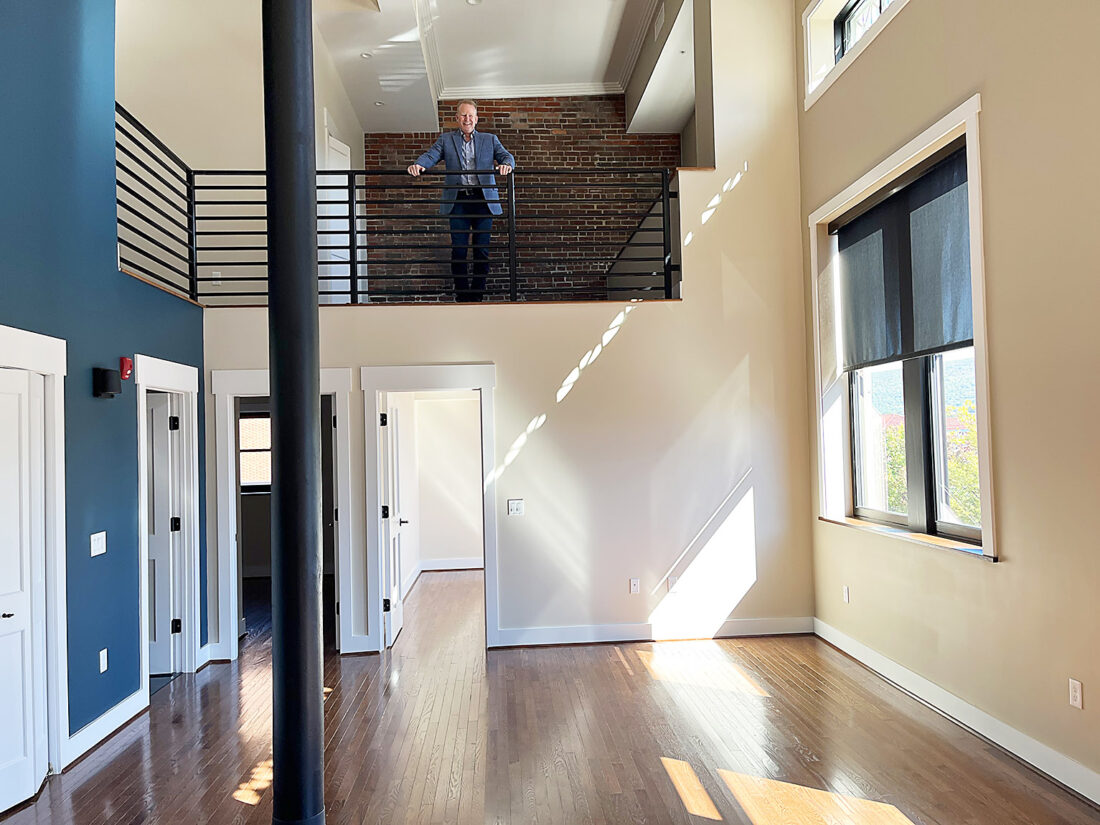
The Kress building along the 1400 block of 11th Avenue has undergone a two-year renovation from dilapidated structure to a mix of commercial spaces and five apartments. Mirror photos by William Kibler
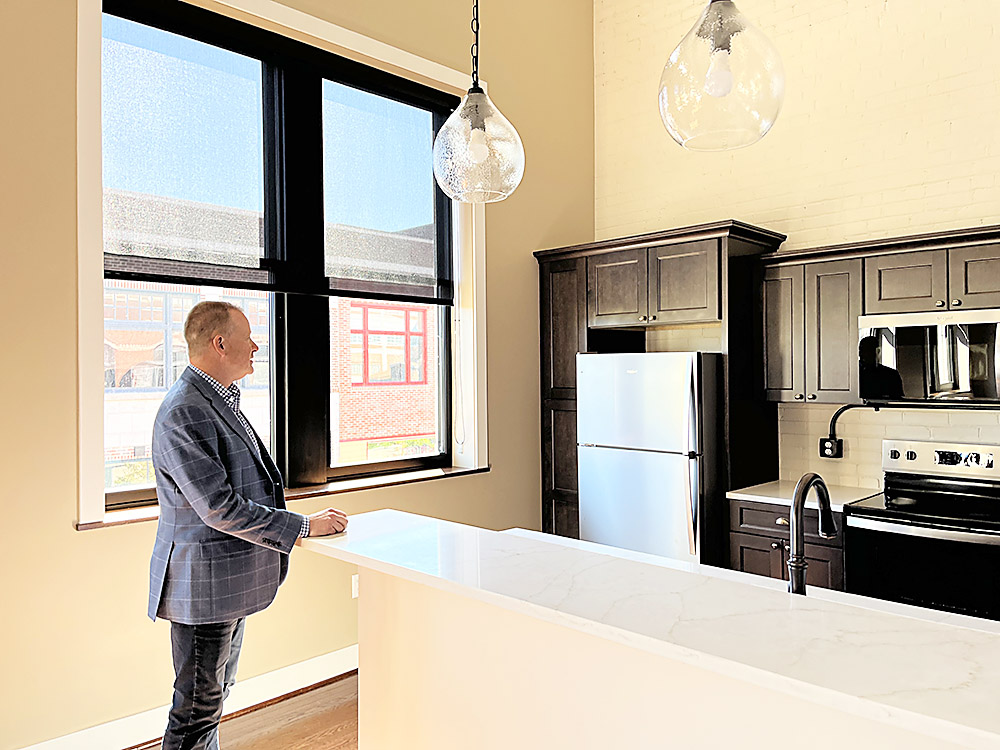
Ron McConnell, historic building tax credit consultant for American Chestnut Real Estate Group, the Kress building ownership group, discusses a kitchen area in one of the building’s apartments. Mirror photo by William Kibler
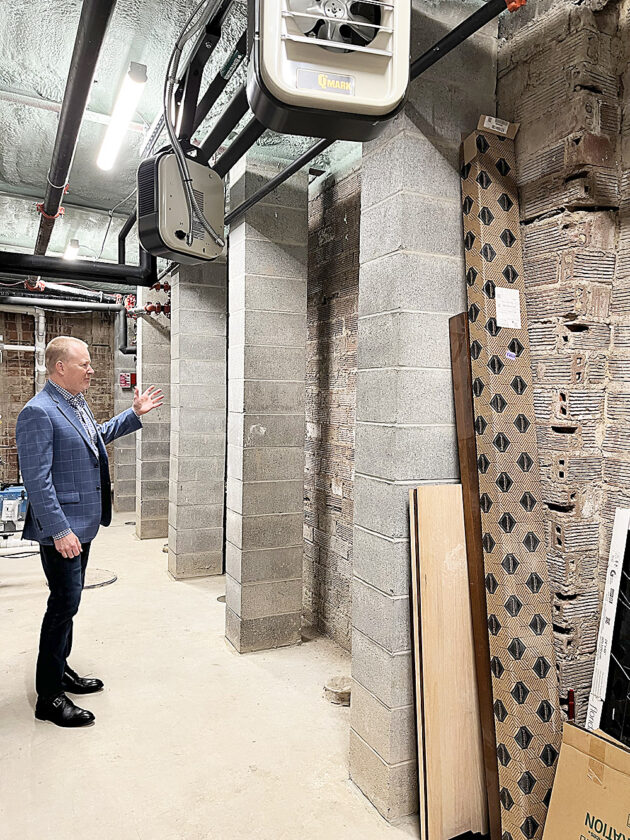
Consultant Ron McConnell stands in the Kress building’s former “coal bin” area under the sidewalk along 11th Avenue. Mirror photo by William Kibler
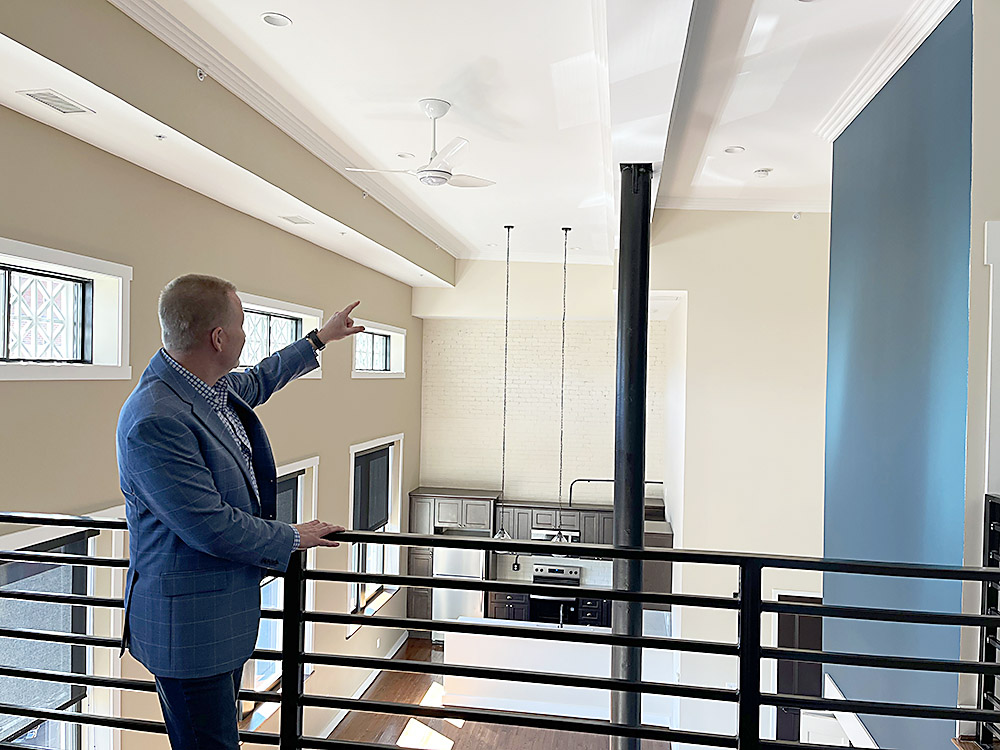
Ron McConnell, historic building tax credit consultant for American Chestnut Real Estate Group, discusses renovations to the Kress building. Mirror photo by William Kibler
The Kress building along the 1400 block of 11th Avenue has undergone a two-year renovation from dilapidated structure to a mix of commercial spaces and five apartments. Mirror photos by William Kibler
Ron McConnell, historic building tax credit consultant for American Chestnut Real Estate Group, the Kress building ownership group, discusses a kitchen area in one of the building’s apartments. Mirror photo by William Kibler
Consultant Ron McConnell stands in the Kress building’s former “coal bin” area under the sidewalk along 11th Avenue. Mirror photo by William Kibler
Ron McConnell, historic building tax credit consultant for American Chestnut Real Estate Group, discusses renovations to the Kress building. Mirror photo by William Kibler
Trending
The Kress building on the 1400 block of 11th Avenue downtown was built in 1922 to sell inexpensive items: it was a five-and-ten-cent store.
The building's nearly completed renovation has been anything but inexpensive: a local ownership group has invested "many millions" in the project, according to Ron McConnell, the group's consultant on historic-building tax credits, who gave the Mirror a tour Thursday prior to a dedication ceremony.
It was a "massively labor-intensive" job to transform the two-story structure from "the worst building I ever saw" to one containing what may be the five swankiest apartments in the region -- along with bringing proposed commercial spaces on the ground floor and basement to near completion, McConnell said.
Prior to the start of the project two years ago, a long-present hole in the roof at the back of the 50-foot-wide, 120-foot-deep structure had caused the deterioration and complete collapse of both the second and first floors at that end, McConnell said.
There were more pigeons residing in the building at that time "than people on 11th Avenue," and the birds insisted for a time on remaining -- resisting eviction with "hooting and hollering," McConnell said.
Now, though, things are spic and span.
There are five apartments, all completed -- a three-bedroom closest to the avenue and the rest with two bedrooms.
The apartments are arranged in a row from front to back, each stretching from a common hallway on the left side of the building, which butts against a taller neighboring structure, to the right side, where there are windows above the level of a shorter neighboring structure.
The apartments have ceilings nearly 20 feet high and lofts -- they're being advertised as "Lofts on 11th."
There are walnut-colored tongue-and-groove hardwood floors, walk-in showers with glass doors, washers and dryers in each apartment and separate storage rooms assigned to each apartment on the far side of the common hallway.
Four of the apartments are leased and two are already occupied.
The ground floor space is still unfinished but is leased and will be operating as a professional management office with 20 employees starting in June, according to McConnell, who declined to be more specific.
The ownership group -- American Chestnut Real Estate Group -- is still trying to lease the basement, which would be ideal for a dance studio, which it was at one point after the demise of Kress stores, McConnell said.
L.S. Fiore Inc. was the general contractor on the project with MH Electric as the electrical contractor and Montgomery Brothers Plumbing & Heating as the plumbing contractor.
EADS provided architectural services and was project manager.
The project complied with National Park Service guidelines to earn tax credits amounting to 20% of qualifying expenses, according to McConnell.
Earned through the Pennsylvania Historical and Museum Commission, those federal credits required that the project preserve, keep exposed or replicate key original features, including the hardwood floors, the steel columns and their "capitals" and solid ceilings -- although drywall is replacing plaster.
On the second floor, workers reused an observation deck from which Kress managers kept an eye on the sales floor.
Workers preserved the deck, but had to lower it by about a foot so there would be enough headroom in the loft that the deck is part of. That required cutting and resetting the supporting steel beams, McConnell said.
The front facade remains much like the original, although it required some repointing of bricks and white, decorative block that outlines the second floor windows.
The structure qualified for the historic building credits initially because it is within Altoona's historic downtown district, McConnell said.
The project also received $500,000 in state Enterprise Zone tax credits.
Loans and investor cash made up the rest of the financing, according to McConnell.
The project required the removal of the sidewalk on the avenue to expose space beneath the sidewalk that was originally a repository for coal used in furnaces that supplied heat to the building.
Essentially, the space under the sidewalks all along the avenue was a coal bin, according to McConnell.
The project was far more complex than would have been construction of an equivalent new building on virgin ground, McConnell agreed.
"That's why people don't (often) do these things," he said. "It's hard to make these things work, even with incentives."
The steel-framed, brick-cased structure was built initially for $40,000, according to newspaper articles provided to the Mirror previously by local historian Michael Farrow.
It had art deco elements -- and was a precursor to that architectural style coming into full flower later in that decade of the 1920s, Farrow said.
The building underwent a major renovation for $220,000 in 1952, according to an article provided by Farrow.
Kress was founded by Allentown-area native Samuel H. Kress, who lived from 1863-1955, according to kressfoundation.org.
His company developed 221 stores in 28 states, including 50-plus art deco structures built between 1929 and 1944.
They were designed by the firm's chief architect, Edward Sibbert, according to the website.
Sibbert's "masterpiece" was the company's seven-story marble flagship store at Fifth Avenue and 39th Street in New York City, which opened in 1935, according to the website.
Kress was an art collector and one of the major donors whose gifts helped launch the National Gallery of Art, according to online sources.
Mirror Staff Writer William Kibler is at 814-949-7038.