
Jaffa Shrine joins National Register of Historic Places, readies for capital campaign
Trending
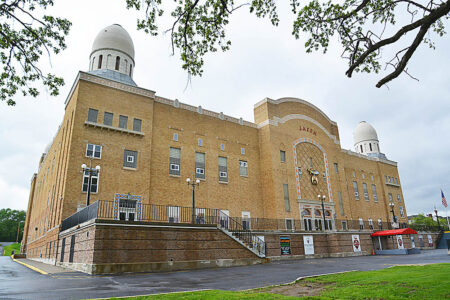
Supporters of the Jaffa Shrine on Broad Avenue recently succeeded in getting the building added to the National Register of Historic Places, which, based on current Shriners International bylaws, will allow the local Shrine to pursue 501(c)(3) status with the IRS, so it can raise money to preserve the structure.
Prior Shriners' bylaws designed to protect fundraising for the organization's hospitals prohibited local temples from becoming 501(c)(3)s, which can accept tax-deductible donations, but the updated rules exempt temples on the National Register from that prohibition, according to Jaffa Recorder Bob Baranik.
Following the six months to a year that it will take to get the IRS designation, the shrine will begin a capital campaign to upgrade plumbing, repaint brickwork, replace windows and upgrade seating and sound systems, according to Baranik and a news release from the office of city Mayor Matt Pacifico.
"A big laundry list of stuff," Baranik said. "We have many, many dreams."
The Jaffa has some savings, but not the kind of "nest egg" needed to launch the coming effort, according to Baranik.
It will be costly -- running to "millions," he said.
The plumbing work will be labor intensive because the pipes are concealed within the walls, he said.
The window replacements will demand custom work, he said.
In addition to enabling tax-deductible donations, the 501(c)(3) status will enable the local Shriners to obtain grants that were otherwise unavailable, Baranik said.
The Shriners intend to engage expert counsel to guide them through the IRS requirements, Baranik said.
It's possible that the shrine will create a foundation, he said.
The need for work on the huge structure "will be an ongoing thing," he added.
The building qualified for the register because of its age -- it was built in 1930 -- its distinctive "Saracenic" architecture and the notable Altoona architects who designed it, said local historian Michael Farrow.
Saracenic architecture is a combination of the Moorish, Arabic, Syrian and Egyptian styles, Farrow said.
The designers were architects Frank A. Hersh and Frederick Shollar of Hersh and Shollar, who also designed Keith Junior High School and the Altoona High School B Building, Farrow said.
The minarets on the Jaffa were patterned after those on the tomb of Sufdar Jang near Delhi, India, Farrow said.
The cornerstone of the Jaffa came from King Solomon's quarry in Jerusalem, he said.
There are Arabic inscriptions from Proverbs above the stage and above the front entrance: "The highest wisdom is the fear of God" and "Peace be unto you and unto you be peace," Farrow said.
The stage in the 5,000-seat auditorium is one of the largest between Philadelphia and Pittsburgh, he said.
A number of famous acts have performed on it, including The Beach Boys, George Carlin, Amy Grant, Wayne Newton, The Guess Who, The Oak Ridge Boys, Glen Campbell, the Doobie Brothers, America and Kenny Rogers, according to Baranik and concertarchives.org.
The Harlem Globetrotters have appeared in the auditorium numerous times, Baranik said.
The nomination for the register was a joint effort by Farrow, City Councilman Bruce Kelley and City Hall staff, "with the support and written endorsement" of Pacifico, according to the news release.
The local Shriners intend to "remain steadfast in our commitment to preserving this landmark and ensuring its success for generations to come," stated Potentate Gary Smith, as quoted in the news release.
Mirror Staff Writer William Kibler is at 814-949-7038.