Sheetz denies allegations of discriminatory hiring
For almost a year, the Blair County-based convenience store chain Sheetz Inc. and its related companies have been engaged in a court battle with the U.S. Equal Employment Opportunity Commission concerning the legality of the company’s use of criminal history information when hiring employees.
Federal authorities have contended Sheetz’s practices have had a disparate effect on the hiring of minority job seekers, but now Sheetz has filed an answer to EEOC’s civil rights complaint in which it admits criminal history information is considered in the hiring process, but denies the government charge that hiring is based on whether an applicant has “passed or failed the review.”
In the answer filed last Friday with the U.S. District Court in Johnstown by Sheetz attorneys Katelyn W. McCombs of Pittsburgh and Kimberly J. Duplechain of Washington, Sheetz took issue with the government’s claim that its hiring practices were discriminatory and that they violated Title Vll of the Civil Rights Act of 1964.
Sheetz denied the federal allegations and also denied the company is engaged in “any unlawful conduct.”
And the company categorically denied:
— That it refuses to hire applicants who have failed the criminal history review.
— That personnel who decide whether potential hirees have passed or failed the criminal history review are not required to contact job applicants before deeming them to have failed.
— That decisions to deny employment based on a criminal history review are not referred to a managerial or other company official for comment.
— That company officials are not required to inform job applicants rejected due to their criminal history as to a specific conviction or other circumstance that resulted in their not being hired.
— That there is no appeal process or procedure to “invite” job applicants to provide any additional information that either Sheetz or the applicants find relevant to the decision to deny employment prior to the decision being made.
The civil rights complaint was filed on April 17, 2024, in the federal District Court in Baltimore.
It charges that the use of criminal information obtained from the job applicant and from third party “vendors” has had an impact on the hiring of minorities — defined as Black, American Indian/Alaska Natives and multiracial applicants.
The lawsuit points out that Black applicants who are denied employment due to their criminal history are rejected at the rate of 14.5%.
American Indian/Alaska Natives experience a rejection rate of 13%, and multiracial applicants are rejected at the rate of 13.5%.
The rejection rate for white applicants who fail the criminal history review is 8%, the government charges.
The EEOC is seeking financial damages for the minorities who have been rejected due to the criminal history review process.
In its answer, Sheetz challenges those statistics.
The review of cases extends back to Aug. 10, 2015, around the time the EEOC in its Pittsburgh office received two complaints about the company’s hiring practices.
The defendants named in the government’s petition include Sheetz Inc., a convenience store chain with more than 700 outlets in Pennsylvania, Ohio, Maryland, Virginia, West Virginia and North Carolina
The workforce includes more than 20,000 employees.
The lawsuit also names as defendants two Sheetz subsidiaries, Sheetz Distribution Services LLC and CLI Transport.
The original lawsuit was filed in Baltimore, but Sheetz argued the venue for the civil rights action should be in western Pennsylvania, where the Sheetz corporate offices are located.
The lawsuit was eventually transferred to the District Court in Johnstown.
Judge Stephanie L. Haines is presiding.
In its answer, Sheetz stated, “Defendants admit they obtain information about external job applicants’ criminal justice history in part through questions on their job application forms and a background check conducted by a third party vendor who provides a report including criminal justice history information after one of the defendants (Sheetz, SDS, CLI) makes a conditional job offer of employment to external job applicant.”
Sheetz specifically denied that its hiring practices are causing disparate hiring of minorities and that it is in violation of the Civil Rights Act.
A mediation between Sheetz and EEOC is scheduled for June 6 before attorney Linda R. Singer. The session will be held in Washington.
Local News

Food, fellowship and fireworks: Heat doesn’t stop Main Line Mania festival
What does America mean to me?

Creating history: AAHS students, teachers paint mural depicting iconic images of city
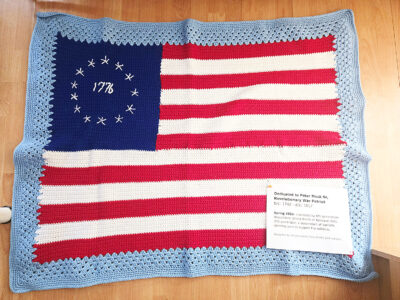
Afghan pays tribute to Revolutionary War Patriot from Bedford County
Election laws still point of debate in Pennsylvania
Pennsylvania wrote the founding documents. It has spent 250 years arguing over what they mean. In courtrooms and ...