
Spirit of optimism: Growers say drought shouldn’t affect this year’s tree crop
Trending
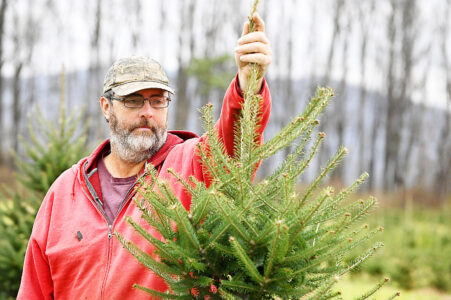
The weather forecast may not reflect it, but it's beginning to look a lot like Christmas -- at least for the state's Christmas tree growers.
While Thanksgiving remains more than a week away, Christmas tree sales begin this weekend for Sellers Tree Farm near Bedford and Tait Farm Christmas Trees near Boalsburg. JB Tree Farm near Alexandria will start Christmas sales after Thanksgiving, on Friday, Nov. 29.
This year, the supply looks good, thanks to successful plantings several years ago, growers said.
Gerrit J. Strathmeyer II, president of the Pennsylvania Christmas Tree Growers Association, said there could be shortages in the bigger trees, but supplies should be good in the 6- to 8-foot range.
Strathmeyer, whose family operates Strathmeyer Christmas Trees in York County, said the shortage in taller trees is the result of the recession in 2008-10, when some growers went out of business, resulting in fewer trees being planted.
It takes as little as four years and as much as 15 years for Christmas trees to reach desired heights for harvesting, according to the National Christmas Tree Association.
That time frame is important, as weather conditions over those growing years affect the final product -- resulting in shortages years later.
This year's drought might not be evident until five or more years down the road, said growers who were affected by the dry weather.
"I lost every seedling I planted," said Rick Koontz of Sellers Tree Farm.
Koontz put in about 4,000 seedlings this spring and said losing those seedlings will hurt his supply in about five years, though he'll try to recover with next year's plantings.
Koontz also started to lose bigger trees due to the continued dry weather, despite watering extensively, he said.
"By July 4, I watered all I could water. ... We were really watering," he said. The area did receive five inches of rain from the remnants of the second hurricane this summer, "but the drought had done a lot of damage," he said.
Still, the three-quarters of an inch of rain received Sunday, Nov. 10, "made me feel good," he said, as that rain helped to hydrate the trees coming into the harvesting season.
Strathmeyer agreed that this year's loss in plantings will affect the inventory and supply six to eight years down the road.
"In July and August in York County, we went seven weeks without rain," he said. "That can cause trees to dry out more quickly."
Tait Farm was also impacted by the drought, which caused the trees "not to hold their needles as well," said manager Emily Zink. "With drought, you can expect up to a 30 percent loss. We lost a lot of the smaller trees that we planted last year but we have a 20,000 tree inventory," she said.
She also credits the Nov. 10 rain for providing moisture when it was needed.
The rain "was a blessing, we were cheering when it was raining," Zink said. "It was perfect timing. The trees are drinking what they need."
JB Tree Farm saw minimal damage from the drought, said co-owner Evelyn Bookhammer.
"We lost a few seedlings in the field and even one or two larger Fraser fir, but mostly where soil conditions are rocky," Bookhammer said.
The drought seen in some areas didn't touch Eagle Street Estate Christmas Tree Farm in Morrisdale, Clearfield County.
"We had a lot of rain up here in my area. In July and August, we had about eight or nine inches and we had an early growing season," said owner Jim Holencik. "I've been very blessed."
Holencik said he didn't have any trees die due to drought, and the farm didn't experience dry weather until mid-September.
As for the early growing season, "We had budding in the first week of May, that usually doesn't occur until Memorial Day weekend," Holencik said.
Holencik sells Christmas trees wholesale and will have a retailer coming this week to purchase 1,500 Fraser firs. The trees will end up in the York and Dover areas, he said.
The retailer takes all the trees in a week, in usually one or two days, Holencik said. "He has a crew that comes and cuts them down and bales them so they will be fresh."
Despite the challenges brought on by the drought, Christmas tree growers said they'll have plenty of trees available this year.
"We plan to have a good supply of trees in the normal range with some larger trees on the lot and by special order," Bookhammer said of JB Tree Farm.
Of those trees, Bookhammer said Fraser fir and Douglas fir are the biggest sellers.
"They have a great smell, good needle retention, are strong enough for ornaments and have a great shape," she said.
Zink of Tait Farm said Canaan fir trees make up about 90% of sales. These trees are very similar to a Fraser fir, they look about the same and have great needle retention, she added.
Strathmeyer said his farm grows both Fraser and Douglas fir trees, noting the Fraser fir can hold heavy ornaments, has a green blue hue and is layered very well.
Douglas fir, he said, is good for lighter ornaments and is medium green with no blue hue.
Sellers Tree Farm offers choose and cut Christmas trees in Fraser, Concolor and Douglas fir varieties, as well as blue spruce.
Despite challenges Christmas tree growers face, the industry is vital to the state.
According to the most recent USDA Census of Agriculture, Pennsylvania ranked second in the number of Christmas tree farms and fifth in the number of Christmas tree acres.
"That's a sign of the real Christmas tree industry's resilience and consistency," said Marsha Gray, executive director of the Real Christmas Tree Board. "We meet demand. We sell what we harvest. And we keep planning a decade ahead."