
Wife not guilty of husband’s murder
Jury finds Williams guilty of involuntary manslaughter
Trending
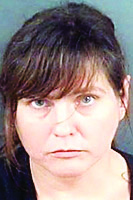
CLEARFIELD -- After six days of testimony, a jury determined Wednesday that a Clearfield County woman was not guilty of first- or third-degree murder for her husband's death, but she was found guilty of involuntary manslaughter.
The defense for Kimberly Sue Williams, 48, of Morrisdale, claimed that Ronald Williams Jr., who was bedridden after a stroke six years before, shot himself in the head on March 14, 2019, because he was depressed and obsessed with death.
During the trial, the prosecution produced evidence that Ronald Williams Jr. sent a message just hours before his death saying if something happened to him, that an autopsy should be done and he wanted to change his will, which benefited his wife. Kimberly Sue Williams was due to inherit more than $1 million from a trust fund set up for his care.
She was also allegedly having an affair with a man in North Carolina.
The jury took about two hours to arrive at the verdict. Kimberly Williams was also found not guilty of the additional charges of aggravated and simple assault, but guilty of recklessly endangering another person.
After the verdict was read, Kimberly Williams' attorney Steven P. Trialonas asked President Judge Fredric J. Ammerman to set bail for her as she has been in custody without bail for about 20 months. He noted that because she has no prior record, the standard sentence for involuntary manslaughter is only six to nine months.
District Attorney Ryan Sayers responded that there was a concern that she would return to North Carolina, where she was found when she was charged with the crimes, and suggested she instead be sentenced as soon as possible.
Ammerman set her bail at $5,000, straight.
In his closing arguments Wednesday morning, Trialonas created doubt about much of the evidence in the case, since it was originally believed to be a suicide and he said important items were not preserved as they should have been for a homicide.
There also were inconsistencies in some of the testimony when compared to previous statements or reports.
Trialonas told jurors that if they felt it was just "highly likely" or "probable" that she was guilty, that was enough doubt to acquit her.
First Assistant District Attorney Leanne Nedza, in her closing, reviewed additional evidence that indicated Kimberly Williams was thinking about killing her husband, including an admission that she said she had pointed a gun at him.
A few months earlier, she had commented in a message to her boyfriend that she had given Ronald Williams Jr. several medications and didn't understand why he wasn't dead.
In March 2019, Ronald Williams Jr. started to feel "something was wrong" and sent a message to his daughter saying, "I think she is trying to kill me." He also asked her to contest the will if something happened to him.
With this information, Nedza questioned why he would commit suicide when he was concerned about changing his will.
"Is he going to kill himself before he knew his kids would be taken care of?" she asked.
Physical evidence in the case included traces of gunpowder residue on Kimberly Williams's hand and back, while Ronald Williams Jr. had none, not even in his wound. There was no blood on the barrel of the gun, and a pathologist determined that the shot in the head that killed Ronald Williams Jr. came from further away than the length of Ronald Williams Jr.'s arm, even though the gun was found gripped in his hand with his arm across his body.
Williams will be sentenced within 60 days.