
City using LED fixtures to replace streetlamps
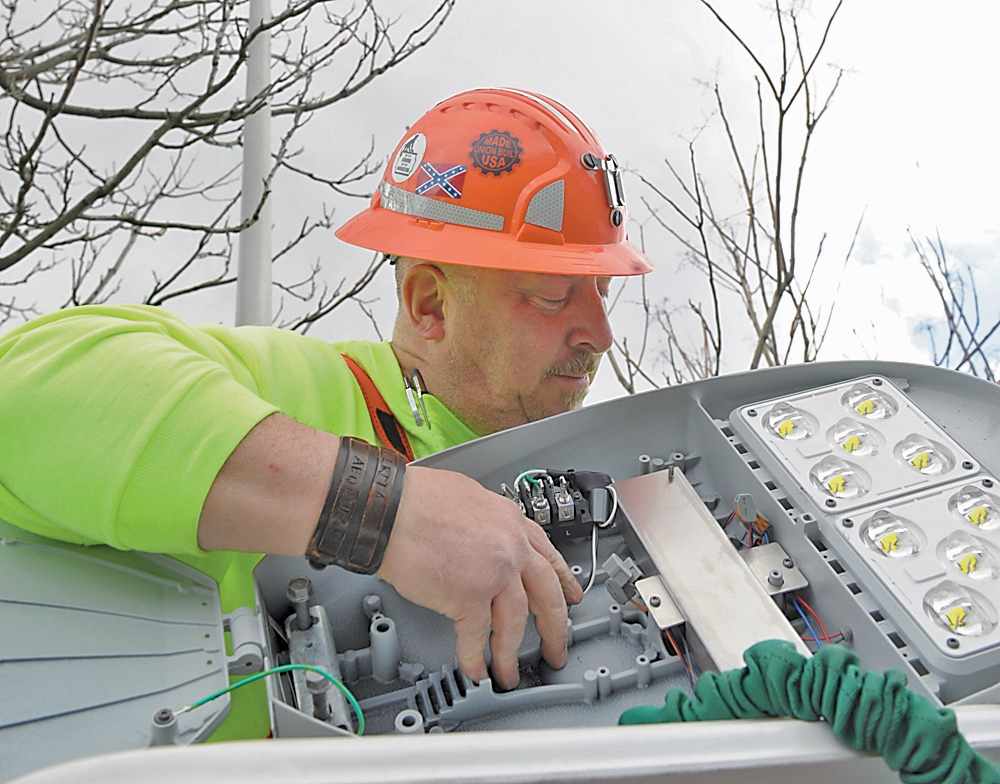
Scott Campanaro, part of a crew of city electrical workers, prepares another LED streetlight for installation on Friday along 10th Avenue. Mirror photo by Gary M. Baranec
-

- Scott Campanaro, part of a crew of city electrical workers, prepares another LED streetlight for installation on Friday along 10th Avenue. Mirror photo by Gary M. Baranec
-
- Workers install LED fixtures in one of the about 100 streetlamps that will be converted from incandescent bulbs on Friday in Altoona. Mirror photo by Gary M. Baranec
The city is replacing its incandescent streetlamps with Light-Emitting Diode fixtures and bulbs, which pay for themselves within about eight years because they use far less energy.
The project is unfolding slowly — having begun about 2010, it will take about nine more years to complete at the current pace, according to Nate Kissell, director of the Public Works Department.
The city has been focusing on gateways, and this year, in-house electrical workers are replacing about 100 streetlamps on 17th Street at a cost of about $50,000.
Last year, those workers replaced lights on Logan Boulevard.
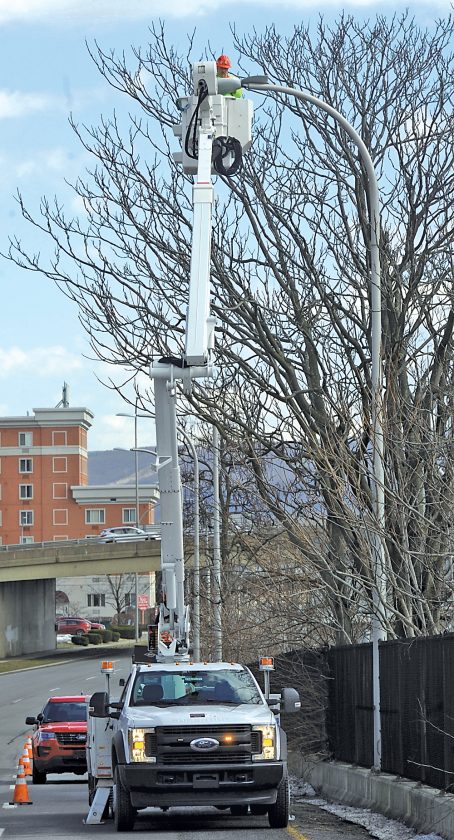
Workers install LED fixtures in one of the about 100 streetlamps that will be converted from incandescent bulbs on Friday in Altoona. Mirror photo by Gary M. Baranec
There are about 3,000 streetlamps in the city, and workers have converted a little more than half to LED, with the remaining incandescents consisting mainly of sodium lamps, with some mercury vapors and a few metal arcs.
Stretching the project out enables the city to benefit from the decreasing price of the LEDs, said Kissell and Eric Wills, a lineman.
It has also ensured “a cyclical” replacement pattern, without which the lights could go bad at once, Kissell said.
The LEDs last longer than the incandescents, according to Kissell and Wills.
They can go for 25 or 30 years, except for the photo cells, which need to be replaced about every 10, Wills said.
Among incandescents, the fluorescent sodiums need replaced approximately every four years — the bulbs at least, Wills said.
Only 10 percent of the electrical energy that goes into the incandescents converts to light, Wills said.
The rest is wasted as heat, he said.
With LEDs, 50 percent of the electrical energy goes into illumination, he said.
Because of this, LEDs require 60 percent less energy to produce the same amount of light — with each incandescent consuming 100 watts of power and each LED, only 42, Wills said.
At this point, the city’s annual electricity bill for streetlights is about $220,000, Kissell said.
The LED fixtures also “drive the light down,” so there’s less spillover, helping to keep the sky darker for starwatching, Wills said.
He appreciates that, especially given the noticeably greater difficulty of seeing those stars in this area in recent times, he said,
The money for the LED replacements comes from the city’s capital budget.
All the traffic signals handled by the city’s electrical workers — there are 105 signaled intersections, including some in Logan Township — have been converted to LED, Wills said.
Mirror Staff Writer William Kibler is at 949-7038.
Local News
Roadwork
Snyder Township, Tyrone delays expected Minor delays will continue on Route 453 in Tyrone Borough and Snyder ...

At 250, the Declaration of Independence still sparks hard questions
Expansion of a new nation started with trip on Ohio River

Uphill battle
Roadwork: Reservoir Road work begins
Senate boosts penalties for illegal trucking schools
The state Senate approved legislation Wednesday stiffening the penalties for illegal trucking schools but only ...