
Nevada tribes get electronic voting
Trending
SCHURZ, Nevada -- Members of the Walker River Paiute Tribe have watched the boundaries of their land recede over time along with the waters of the lake that are central to their identity, threatening the cultural symbol that gave the tribe its name -- Agai Dicutta, or Trout Eaters.
Not wanting to cede their voice, tribal leaders have been making a push for expanded voting rights. That effort includes filing a lawsuit on behalf of all Nevada tribes seeking polling places on tribal lands and access to early voting.
"Tribes shouldn't have to keep filing lawsuits just to vote on their own lands," said Elveda Martinez, 65, a tribal member and longtime voting advocate. "It should be more accessible."
The state has now granted the Walker River Paiutes and other tribes in Nevada a new right that advocates hope will greatly expand voting access for a community that gained U.S. citizenship only a century ago.
Voting on reservations across the country has historically been difficult, with tribal voters sometimes having to travel dozens of miles to their polling place. Slow mail service and lack of a physical address, common on tribal lands, have proved challenging.
The new process -- the ability to cast ballots electronically -- has the potential to significantly boost turnout among all tribes in Nevada. But what some see as a small measure of justice to equalize voting rights raises security concerns for others, with implications far beyond Nevada's 28 tribal communities as the nation braces for what is expected to be another close and contentious presidential election in November.
Under the plan, tribal members in Nevada who live on a reservation or colony can receive a ballot electronically through an online system set up by the state and then return it electronically. While not speaking specifically about Nevada's system, experts warn that such voting -- when a completed ballot is sent back either by email, through an online portal or by fax -- carries risks of ballots being intercepted or manipulated and should be used sparingly, if at all.
"At this point in the United States, it's a relatively small number of ballots that are coming through that way," said Larry Norden, an election expert with the Brennan Center for Justice. "But we should be very concerned -- both from actual security risks but also from a public confidence point of view -- about expanding this."
'High-risk activity'
While electronic voting may be limited at the moment, it's available across much of the country to specific groups of voters. More than 30 states allow certain voters to return their ballots either by fax, email or an online portal, according to data collected by the National Conference of State Legislatures and Verified Voting, a nonpartisan group that studies state voting systems.
In most cases, electronic ballot return is available only to U.S. military and overseas voters. But it's been expanded in recent years to include voters with disabilities in a dozen states. Nevada is believed to be the first to add tribes.
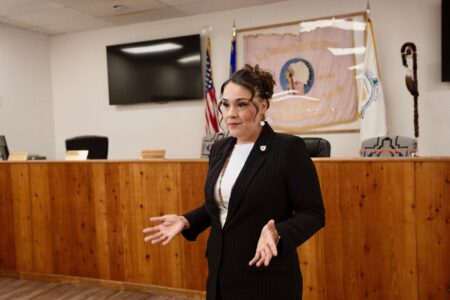
Cal Boone, the new tribal outreach coordinator for the Nevada Secretary of State's Office and a member of the Walker River Paiute Tribe, has begun meeting with tribes around the state to share details about the process, which he believes could ease a legacy of barriers that has left some reluctant to vote.
"In past years, tribes didn't have access to vote in multiple ways. You had to rely on the mail system to cast your vote or otherwise drive out to great lengths to vote," Boone said. "What we are seeing in Nevada is really powerful, and it really sets the stage for what other states throughout the country can be doing to help support tribes."
But the solution comes with risks.
In a 2020 memo to election officials, the FBI and other federal agencies assessed the risk of sending ballots electronically to be low, but allowing those ballots to be returned electronically was high. The memo highlights recommended security practices for systems that use internet or network connections.
"The information provided should be considered a starting point," the memo states. "Even with these technical security considerations, electronic ballot return remains a high-risk activity."
Earlier this year, the U.S. Cybersecurity and Infrastructure Security Agency, which is charged with helping protect the nation's election systems, said in an online post that the memo was being redistributed to ensure state officials and policymakers are "fully informed of risks" associated with electronic ballot return.