
Limits on plastic upset locals
Trending
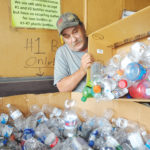
Since the beginning of the year, several hundred avid area recyclers who habitually set aside the kinds of plastic not collected by curbside programs have discovered that they no longer can take those materials to the Intermunicipal Relations Committee compost center near Buckhorn.
Some of those people are "pretty upset," IRC Executive Director John Frederick said last week at his office in City Hall.
Now the nearest facility that will accept plastics other than bottles -- which are generally type Nos. 1 and 2 -- is the Centre County Recycling & Refuse Authority in Bellefonte, Frederick said.
Kimberly Replogle of Altoona is one of those displeased recyclers.
"It's not the way it should be," said Replogle, who started taking all her plastics, along with other recyclables, to the Buckhorn because her hauler has a confusing curbside schedule. "We live in a metropolitan area, and there should be recycling."
But she doesn't plan to drive to Bellefonte to continue the habit.
The source of the problem is a Jan. 1, 2018, directive by China's Ministry of Environmental Protection prohibiting the importation of many recyclables, including the hard-to-recycle plastic types No. 3 to 7, according to a March 15 article on earth911.com.
Frederick himself still sets aside those problematic plastics, including yogurt and margarine tubs and clamshell containers for berries and cookies, taking them to the Bellefonte site when he happens to be heading that way.
Otherwise, the alternative is to trash them.
Those plastics aren't heavy, but they tend to occupy lots of space, and represent a high percentage of discardable material from a modern household.
China shut off the problem plastics and other materials because much of what it had been taking from North America was badly contaminated with rubbish, and because China wants to build up its own domestic recycling, Frederick said.
Part of the issue in China is landfill space. China has four times the population of the United States, but only the same amount of territory, according to Frederick.
China's decision has caused a pileup of plastic here, according to earth911.
It's a problem, but it's one that should nudge the United States toward reform of its waste handling, according to earth911 and Frederick.
Unfortunately, U.S. industry has a dismal record of planning for the "end-of-life" for packaging material, Frederick said.
There are lots of plastics that could be recycled but aren't, because of a lack of markets, he said.
In some cases, there may simply not be enough of a certain type generated in a certain area, he said.
Type No. 5, polypropylene, is highly recyclable, but even a mid-sized city wouldn't produce enough to interest brokers -- who generally deal only in truckloads, he said.
In other cases, there is concern about cross-contamination of plastic types, he said.
Type No. 1, polyethylene terephthalate or PET, which is used for clamshells that hold those berries and cookies, is highly recyclable, Frederick said.
But almost identical-looking clamshells for salads made of No. 6 polystyrene, are not nearly as recyclable, and the two types can't be processed together, because they have much different melting points, Frederick said.
It doesn't help that the recycling symbols on the packaging to distinguish one type of plastic from another are small and hard to read.
"No one wants to take the chance" at recycling No. 1s for fear of contamination with No. 6s, Frederick said.
Similarly, recycling plants that accept No. 1 PET plastic bottles also could accept bubble packs made of the same material, except that similar looking bubble packs made of No. 3 polyvinyl chloride, known as PVC, would likely get into the mix, he said. PVC is "disastrous" if it contaminates the PET recycling process, Frederick said.
The problems are not insoluble, according to Frederick.
If the food and plastics industries would work together to design systems with the end-of-life for packaging in mind, "many of the problems would disappear," he said.
But that has to be done on the national level, he said.
Mirror Staff Writer William Kibler is at 949-7038.