
Radovanic’s storied career includes Quecreek, Flight 93
Trending
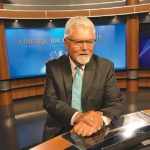
Courtesy photo / Marty Radovanic is wrapping up his 43-year career with WJAC this Friday. "Iáve had a wonderful career and enjoyed the
beauty of west-central Pennsylvania. My kids have such solid foundations, and thatás because they were born and raised here. I have absolutely no regrets," Radovanic said.
TV news in small towns doesn't typically lend itself to careers of 40-plus years on the air.
Marty Radovanic is an exception.
A fixture since 1974 at WJAC, Channel 6, in Johnstown, Radovanic is wrapping up his 43-year career this week.
He is grateful for his longevity and nostalgic about the events he's covered, such as the 1977 Johnstown Flood, the Quecreek mine rescue and Flight 93.
Friday's 6 p.m. newscast will mark his final broadcast.
Radovanic took time last week to chat about his career highlights with the Mirror's Neil Rudel.
Mirror: Do you feel fortunate to have spent your entire career in Johnstown?
Radovanic: Absolutely. The choice was kind of made for me because my wife is a Johnstown native. People here tend to stay. By default, I felt I was going to be here for a while, but what a place to raise my kids and now my grandchildren. It's one of the nicest places I've ever been. I've had a wonderful career and enjoyed the beauty of west-central Pennsylvania. My kids have such solid foundations, and that's because they were born and raised here. I have absolutely no regrets.
Mirror: What was the biggest story you covered?
Radovanic: I would have to say the rescue of the Quecreek mine, only because I did an on-air phone interview with Leslie Mayhugh, whose husband, Blaine, was one of the nine. After they discovered they were all alive, I did a live interview with her while we were on the air. I still have trouble talking about it. It was the most compelling, raw emotion. She thought her husband was dead. It is absolutely the most memorable. I will never forget that interview. To be part of that, I can still remember the chills, when Gov. (Mark) Schweiker said, "All nine are alive." We were all certain they were dead. I've covered three stories in my career that have all had national implications -- Quecreek, the Johnstown Flood (of 1977) and Flight 93. Any one of them would be a career for some. I also covered 10 presidential elections.
Mirror: You excelled at the big event. Did you approach those differently?
Radovanic: God blessed me with a gift to be in control and guide people through things. My ad-lib ability is a blessing from God. I just thrive on those things. We went live from 11 p.m. to 3 a.m. at Quecreek. I did not have a script. I loved that type of environment. That's why I love election night. It's not scripted. You can't really prepare. You just keep going. That's where I'm most comfortable.
Mirror: When you came to Johnstown, did you think it would be for the short term?
Radovanic: Absolutely. I thought I'd be here a year, tops. I was in radio at the time, and radio is a nomadic career. That was the nature of it. You want to get to the bigger markets. I figured I'd just be moving on and probably would have if I had not met my wife. We started dating a couple weeks after I came here.
Mirror: Along the way, how much did Johnstown grow on you?
Radovanic: It's home. I'm an Ohio native, but Johnstown's home. It's because of the people. In 43 years, I've met thousands of them -- the nicest, friendly, warm-hearted. And it's certainly resilient. It is now home, and it will always be home.
Mirror: Who are some of the people in the industry who influenced you along the way?
Radovanic: As a young man, Walter Cronkite had a big influence on me. I grew up thinking of a career in broadcasting while Vietnam was going on. I had respect for John Chancellor. Probably the person I took the most from was Tom Brokaw. I thought he was an average guy from North Dakota who was sharing with me what was happening. It was good, honest, true journalism -- not bombastic as you get today.
Mirror: Where do you see local TV news going over the next couple of decades?
Radovanic: I'm not sure it will survive, and I say that only because of the choices people have -- the explosion of digital. You can get everything you need in your hand. Local television is trying to stay up with that, but as the audience changes, I don't know. I think it will always have a place, but in little towns like this, it will be some hybrid of what it is now. It won't be the conventional delivery. There certainly never will be anyone else in a local market who will anchor the news for 43 years. I feel very confident in saying that.
Mirror: How much will you watch the local news?
Radovanic: As much as I do now, which is not at all. I read four, five newspapers a day, but when I'm off, I'm away from it. I'll check up on the web. I'll be aware of what's going on, but I won't watch. Retrospective coverage, I'll watch.
Mirror: Will people see you on the air again?
Radovanic: Not if I can help it (laughs). I'm a guy who never says never, but I have no plans. I'm hoping maybe the next time I'll be on TV, it will be my obituary.
Mirror: Can you provide a health report?
Radovanic: I've had two heart attacks since I've worked here, but my heart is strong. My cancer is gone for now, but with lymphoma, I will never be cured. But it's been gone for most for the last three years. The doctor tells me I'm good to go. My health is fine, other than the fact that I'm 65.
Mirror: How do you assess Johnstown's future?
Radovanic: It will always be the same type of community that it is -- a great place to live, wonderful people, excellent educational opportunities. The quality is life is wonderful, but I can't put a positive spin on what I see for the economy. I'm fortunate -- my son and daughter both have good jobs here, but do I think my six grandsons are going to live here for the rest of their lives? No, because the opportunities may not be here. If any community can survive, it is this one. Johnstown has always been resilient and a survivor. It's one of the best places in America, and I hope it survives. But I can't be overly optimistic about the opportunities being there.
Mirror: What are your retirement plans?
Radovanic: I know I'm going to do something. I'm not retiring-retiring. I'm going to get a job. I may write or do some internet work. Right now, I have no plans to be on TV again. I'm going to play golf as long as the weather stays nice. I have some painting to do. I'll take a seat and figure out what it is I want to do.
Mirror: Will your last broadcast be emotional?
Radovanic: The professional side of me will tell you no. The human side will tell you yes. I'm signing off after the 6, so I've got to come up with something to say. It will be emotional. How can it not be? You don't walk away from something like this without a sense of what you're walking away from. It won't be the job. It will be the people. Saying goodbye to Jen Johnson, who is a dear friend, and the people in the building will be difficult.