Climbing Mount Kilimanjaro a rewarding challenge both physically and mentally
Commentary
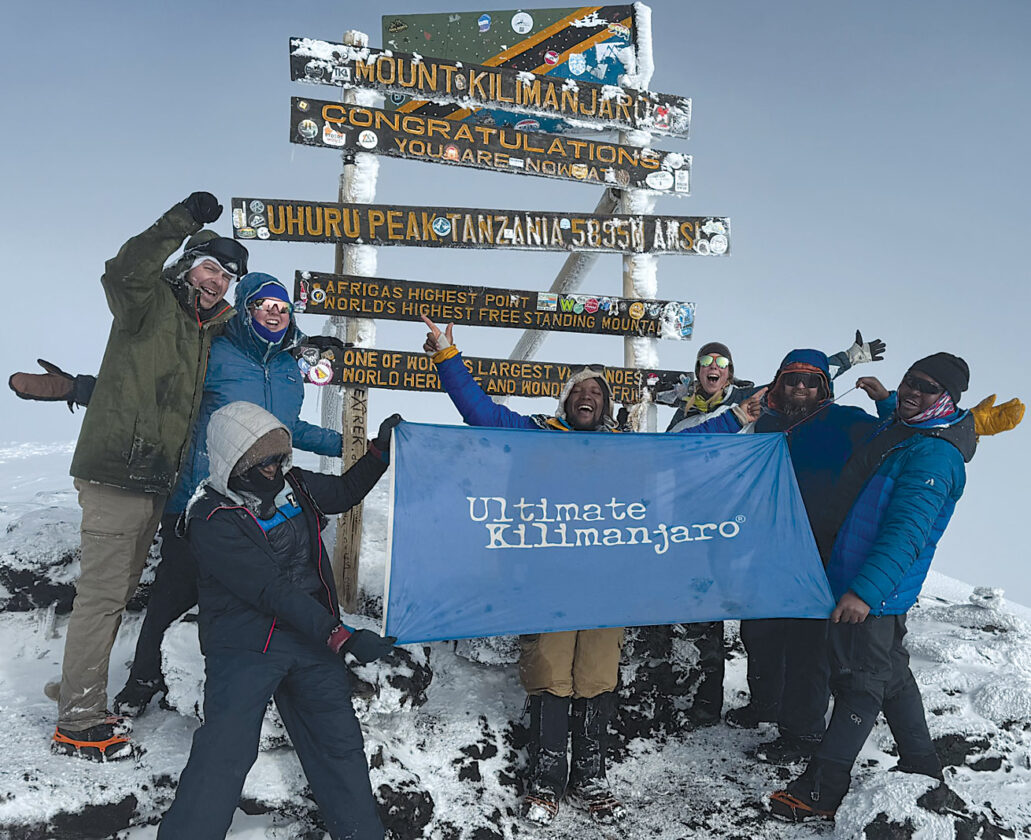
Courtesy photo Guides from Ultimate Kilimanjaro (holding flag) helped the group of four reach the summit of Mount Kilimanjaro.
KILIMANJARO REGION, Tanzania — Though it’s been a little more than a week since I reached the summit of Africa’s Mount Kilimanjaro with my cousin Kristen Otto, her sister Lauren and Lauren’s husband Marc Wisinewski, it’s still hard for me to believe how it all happened.
Seven years ago, I would not have considered myself much of an athlete and certainly not a hiker or runner.
But following the start of COVID-19, I began walking 10,000 steps a day which indirectly started me on the route to the roof of Africa.
For five years and eight months, I walked at least 10,000 steps per day including while on vacations, long travel days or days I just didn’t feel like getting out of bed.
Developing that mentality of making something happen despite the surrounding issues is something that benefitted me greatly on the side of Mount Kilimanjaro during our eight-day trek, which began March 17.
The climb is not only a test of physical endurance but mentally challenging as well.
You begin in a rainforest that can reach temperatures of 90-plus degrees and end in a wind tunnel filled with snow in clothes you can not adjust because they are frozen to your body.
Hikers may start the climb with hiking pants and a T-shirt, but there are plenty of other things to consider when preparing your backpack you’ll carry with you each day.
How much weight do you want to carry, and how will it impact your ability to climb the steep rock patterns which require focus with each step to avoid falls and injuries?
Water bladders are a must, and a full one is often up to three liters. As we learned on the trek, rain clothes are essential, especially during Africa’s rainy season, which is happening currently and stretched back into February this year, leaving much of the trail washed out in many places where hikers are forced to tread up overflow rain waters rather than a solid path.
Dressing light and covering up as the hike wears on is also a question of choice, because at the lower elevations of the mountain, mosquitos that carry malaria and other diseases are still a threat even with the medications recommended ahead of time such as typhoid and Hepatitis A vaccinations, anti-malaria pills and diamox to battle altitude sickness.
Each day presents its own challenge.
Following the first day’s rainforest hike, the second day of the Lemosho route has the largest elevation gain other than summit night. From there, you slowly work your way up and down in altitude to build tolerance but in doing so may find it hard to sleep at higher elevations, which is needed to keep your energy, especially if you lose your appetite due to altitude issues, also a common reaction.
Each morning and evening, our guide would give us an oxygen and resting heart rate test. If your oxygen level dipped below 85, it was monitored closer and if it fell below 80, you would most likely be taken off the mountain. Heart rate was expected to be below 100 while resting, though knowing the result could end your dream of reaching the top can artificially spike that number if you aren’t careful to control your emotions.
Fortunately thanks to the company my cousin selected, Ultimate Kilimanjaro, we had help with all of these challenges. The food was excellent and plentiful, we were given every opportunity to rest and given good advice on what to wear and bring with us on the trail and on summit night — a 10-hour trek in the dark which begins around 11 p.m. with headlamps lighting only a few feet in front of you before complete darkness — our guides added gear such as cramp-ons to help our footing in the snow and carried unfreezable drinking bottles with them for when our water bladders froze and no longer could circulate water. When the sun came up, realizing the danger that came with light reflecting off the snow, our guide even put sunscreen on our faces rather than have us put ourselves at risk by taking our gloves off and applying it.
The payoffs you get can vary.
There were days when due to the rainy conditions, we missed out on spectacular views. A group making the trek from Wales that made the summit about an hour before us saw nothing at the top but clouds and a snow-covered, frozen summit sign.
Fortunately after taking it step by step for a night that seemed at times like it would never end, we were greeted by a rainbow as we approached Uhuru Peak, the tallest point of the world’s highest free-standing mountain, and the clouds broke to provide an incredible view of the surrounding glaciers and surrounding landscape we had just traversed to reach our goal.
All of the steps to get there — like running in every Blair Regional YMCA race for six years and spending every day of February on the stair stepper at the Tyrone Fitness Club — were worth it in that moment of sunshine on top of the world.
Just a word of advice, though — don’t forget to do some quad training! Going down nearly the entire mountain on the final day made me very happy that I had a three-day safari in which I was sitting in a vehicle for the most part to recover and take in the rest of the beauty of Africa.
Michael Boytim can be reached at mboytim@altoonamirror.com or 814-946-7521. Follow him on Twitter @BoytimMichael.
Sports Columns
Climbing Mount Kilimanjaro a rewarding challenge both physically and mentally
Recalling first day of trout season

Williamsburg shows it belongs among elite girls basketball programs
‘Phenomenal moment’ for Saint Francis basketball: Mike Iuzzolino, Joe Anderson honored
For Pry, return to Va. Tech for football is ‘refreshing’