
Trending
Last week, I noticed an all-too-familiar sight for this time of year -- a dead deer along the roadside.
Of course, a road-killed deer is a common occurrence, but this particular one was along Valley View Boulevard between 16th and 17th streets. While this location is not too far from some woodlands, it is also well within the Altoona city limits and one of the busiest thoroughfares in town. It was also a harsh reminder for drivers that encountering a deer on the highway just about anywhere, day or night, is a distinct possibility right now.
Statistics from the auto insurance industry show that Pennsylvania is regularly one of the leading states for deer-vehicle collisions each year.
That is no surprise because deer are plentiful almost everywhere in the state and so are roads in and around the forest where they live. That combination means road-killed deer are a common sight all year long, but the top month for deer-vehicle collisions is November for several reasons.
The deer herd is at its largest right now because this spring's crop of fawns are about six months old. Does and their young often travel together in small family groups and typically cross highways in single file, which often increases the probability of disaster with an oncoming car. Yearling bucks leave their family groups in the fall to establish a new home range.
Research has shown that these young bucks will travel five to ten miles from where they were born in this quest. A trek of ten miles just about anywhere in Pennsylvania is likely to cross dozens of roads and an unwanted encounter with a car. Shorter days and the return to standard time mean more folks will be driving or commuting to and from work during darkness or low-light periods when deer tend to be on the move.
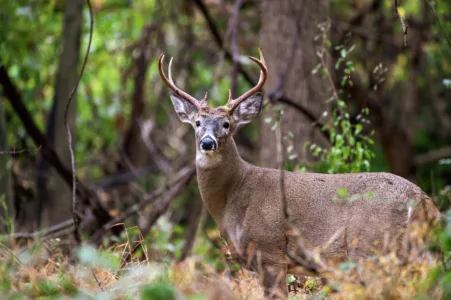
One enormous factor for the spike in deer-vehicle collisions is the peak of the rut, the breeding season for deer, typically occurs for about two weeks from early to mid-November in Pennsylvania. During the rut, even the wariest old bucks abandon their natural caution and succumb to the urge to mate, and they prowl about relentlessly for receptive does. And both bucks and does will do some crazy things when distracted by their breeding rituals, like bolting across a busy highway at any time of the day or night.
For drivers who have the misfortune to hit a deer, there are some rules and regulations that must be complied with at the scene of the accident. If the deer is severely injured but still alive, however, be aware that you may not legally "put it out of its misery."
As harsh as that sounds, that is the Game Commission's position on the situation because doing so could subject you to fines and penalties for illegally killing a deer. Call 911 and have them send Game Commission personnel or a local law-enforcement officer to dispatch the animal, especially if the deer is near the highway and could present a hazard to other motorists.
It is permissible for a road-killed deer to be taken for the meat. If the driver does not want the animal, another passing motorist may claim the carcass. Only Pennsylvania residents may take road-killed deer and after doing so must call the Game Commission at 1-833-PGC-HUNT or 1-833-PGC-WILD within 24 hours to report the incident and receive a free permit number allowing you to possess the carcass.
The head and hide of a road-killed deer should be kept for at least 48 hours unless instructed otherwise by a local game warden. Deer-vehicle collisions are not required to be reported to the Game Commission if you are not taking possession of the deer.
It is illegal to remove the antlers from a road-killed buck unless you are taking possession of the carcass. If a road-killed buck is taken for the meat, the antlers must be turned over to the Game Commission. It is unlawful to give to another person the whole or edible parts of a deer killed on the highway. It is also illegal to take possession of a road-killed deer and use the carcass to bait coyotes.
Another issue for picking up road-killed deer in our area are the rules related to chronic wasting disease that prohibit the removal of high-risk deer parts, essentially the head and backbone, from any of the established Disease Management Areas (DMA) or Established Area (EA) in Pennsylvania. Most of south-central Pennsylvania is now designated as part of DMA 2 or an EA. Complete information regarding high-risk parts and DMA maps is available on the Game Commission website: www.pgc.pa.gov.