
New tech changed course of fishing
Outdoors commentary
Metro
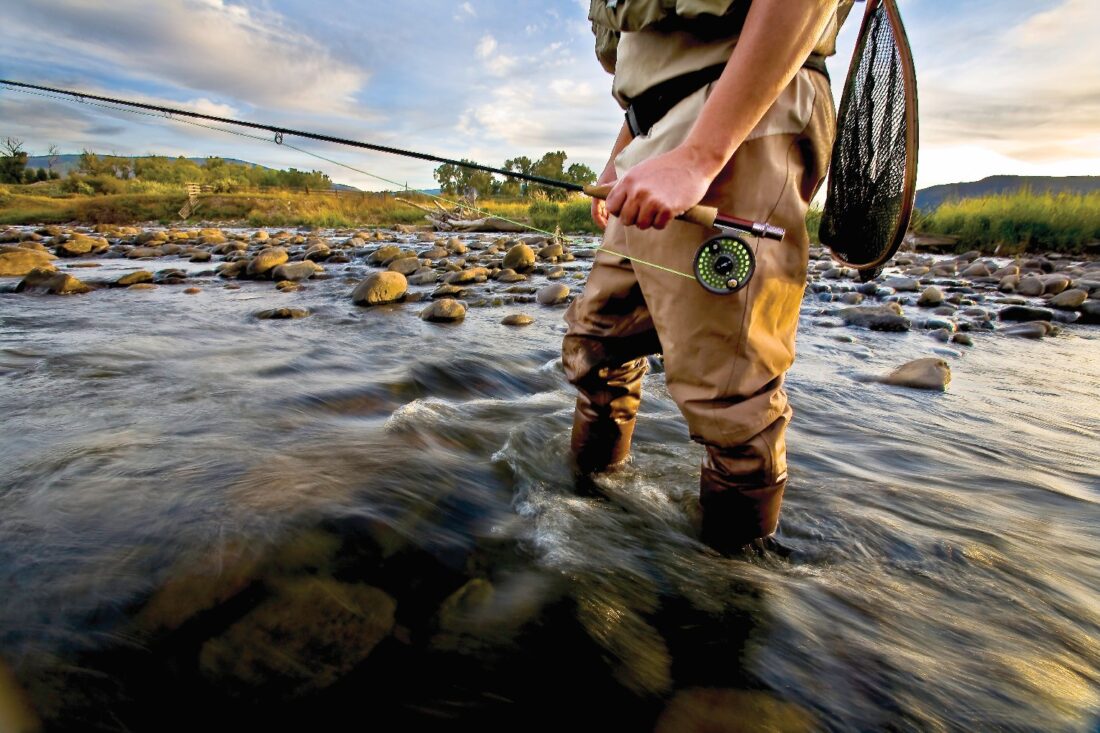
While doing some research on a personal project during the past several months, I have had the opportunity to re-read some of my old favorite fishing books. Reconnecting with some favorite authors who were important in shaping my early angling efforts such as Ray Bergman, A.J. McClane and Ernie Schwiebert was both a pleasure and a revelation. As someone who has always appreciated the rich history and tradition of freshwater fishing, especially for trout and bass, it became clear to me how much fishing changed in the second half of the twentieth century, particularly during 1950s, 1960s and 1970s.
In the two decades following World War II, the United States experienced unprecedented economic expansion and transformation. Returning soldiers re-entered the workforce, fueling demand for housing, consumer goods, and automobiles. The GI Bill supported homeownership and higher education, cultivating a growing middle class. Industrial production shifted from wartime materials to consumer products, and advances in technology and infrastructure, such as the construction of the Interstate Highway System, boosted productivity and mobility. The era was marked by sustained growth in GDP, low unemployment, and rising wages. All that post-war prosperity also created a sizable population of folks with more free time and the extra income and mobility to enjoy it. Fishing emerged as a popular form of recreation for more people than ever.
The spinning reel originated in Europe in the 1930s but didn’t gain a real foothold in America until after the war. One of the biggest problems with the first spinning reels was the lack of suitable lines for them. The answer was nylon, a synthetic polymer invented by DuPont in 1935. Nylon was another of the era’s technological breakthroughs, and the commercialization of nylon began in 1939, revolutionizing textiles with its strength and elasticity. Nylon quickly found applications in parachutes, rope and military gear during World War II. After the war, nylon’s versatility fueled its expansion into everyday products like clothing, carpets, toothbrush bristles and eventually fishing line.
Where would we be today without spinning tackle? Before the advent of the spinning reel, freshwater fishermen had two basic choices: fly tackle or bait-casting tackle. Most fly gear back then was designed for trout fishing at short range with small, lightweight flies. Bait-casting gear, on the other hand, was better suited to casting heavier lures weighing 1/4 ounce or more. Casting with either fly or bait-casting tackle required significant practice to master.
Spinning tackle filled the very large niche between fly and bait-casting tackle. Lures weighing as little as 1/16 ounce or even lighter can easily be cast on spinning gear with the proper combination of line and rod. Spinning tackle will also handle heavier baits and lures, making it a most versatile method. But one of the most appealing aspects of spinning has always been that even a first timer can become a reasonably proficient caster with just a few hours practice, making spinning tackle a perfect choice for entry-level anglers.
The development of nylon for spinning line also became a boon for fly fishing as well with the use of nylon monofilament for fly leaders. Before nylon monofilament, the leader material of choice was natural silkworm gut. The silk glands of a silkworm caterpillar were extracted from the insect and drawn into strands about 22 inches long. These strands were dried and then drawn through dies to produce smaller diameters. Individual tapered leaders were constructed by knotting together strands to fashion a leader of the desired length and diameter. Gut was only about 25 percent as strong in comparable diameters as the nylon material we use now. It was also stiff and wiry when dry and had to be soaked for up to an hour to make it liable enough to fish with. Thankfully, the stuff was obsolete before I started fly fishing. But reading about the experiences of fishing with it from some of the old masters, if I had been forced to use gut leaders as a young fly fisherman, I might have switched to golf instead.
Two great revolutions in rod-building technology also changed fishing tackle dramatically. The first of those was in the 1950s when fiberglass replaced split bamboo. Like any new technology, the use of fiberglass for fishing rods had its growing pains. Some of the early rod designs were heavy with somewhat clunky actions. Others experienced high rates of breakage. But seeing the potential of the material, manufacturers solved the problems, and fishermen benefitted immensely with the availability of reliable fiberglass rods for any possible application.
Fiberglass dominated the world of rod building until a few companies began experimenting with graphite in the mid-1970s. This space-age fiber is lighter and stiffer than fiberglass and had the potential to construct incredibly high-performing casting tools. Many of the first graphite models were significantly more expensive than most fiberglass equivalents, but enough anglers were willing to pay for the increased casting performance, so graphite found a market. Within a few years, the average price of many graphite rods had come down somewhat, and graphite became the dominant rod-building material it is today.
Virtually every type of fishing gear has evolved for the better over the past 50 years from boats to waders to fishhooks. Fishermen always seem to be on the lookout for anything that will help them catch more or bigger fish. And the folks who make the gear seem more than willing to help with that quest.
Outdoors
Getting through the cold winter
The regular deer season comes to a close this weekend, but because I’m composing this column with several days ...
The first one
Saying farewell to an old friend
Unexpected phone call leads to lifelong friendship
Turkey season has arrived at long last
Small game hunting evokes big memories
Squirrels, rabbits, ruffed grouse and ring-necked pheasants are the four primary species of small game for ...