
Westminster Dog show celebrating 150 years
NEW YORK — When some Gilded Age gentleman hunters organized a New York event to compare their dogs, could they have imagined that people would someday call it the World Series of dogdom or the Super Bowl of dog shows?
Of course they couldn’t. The World Series and the Super Bowl didn’t exist. Nor, for that matter, did the Brooklyn Bridge or the Statue of Liberty.
But the Westminster Kennel Club’s dog show did, and still does. With the 150th annual show set to start Saturday, here’s a then-and-now look at the United States’ most famous canine competition.
“The trappings, the window dressing, you know, changes over time. But what’s at the core, what’s the heart of it, which is the love of dogs … that has been the same,” says club President Donald Sturz.
The name
It comes from the Westminster Hotel, where the show’s founders liked to belly up to the bar and brag about their dogs. The hotel is long gone. The moniker stuck.
The dogs
The club’s “First Annual New York Bench Show of Dogs,” in 1877, was no small thing. It featured about 1,200 dogs of a few dozen breeds, ranging from pugs to mastiffs. They included an English setter valued at $5,000, at a time when an average laborer in New York made about $1.30 a day. The Associated Press reported that “the bulldogs are represented by a number of noticeable delegates,” and a family of “Japanese spaniels” was “highly amusing.”
It wasn’t the first U.S. dog show, but it wowed and endured. Among U.S. sporting events, only the Kentucky Derby has a longer history of being held every year.
This year’s Westminster show boasts 2,500 dogs, representing as many as 212 breeds and 10 “varieties” (subsets of breeds, such as smooth vs. wirehaired dachshunds). Some likely hadn’t made it to the U.S. in 1877. Others didn’t exist yet anywhere.
But many are much the same as they were in Westminster’s early days, Sturz says. Some details — the length of muzzles, the thickness of coats — have shifted in this breed or that, and better canine nutrition may have led to “a little bit more size, or a little more bone” in some, he said.
Today, all the canines have champion rankings in a formalized sport with a complicated point system and official “standards” for judging each breed. They compete for best in show, a trophy that Westminster added in 1907. Earlier shows had no overall prize.
Hundreds of other dogs now vie for separate titles in agility and other sports, which kick off this year’s show on Saturday.
The vibe
When Westminster started, the dogs weren’t the only ones with a pedigreed air.
“Everybody was fashionably dressed and wore an air of good breeding,” The New York Times said of the 1877 show — and the paper was talking about the spectators, not the animals. Not to be outdone, some canines also were gussied up in lace collars and ribbons.
“It’s an elite event, but it’s one that we want everyone to feel that they can access and be a part of,” says Sturz.
National Sports
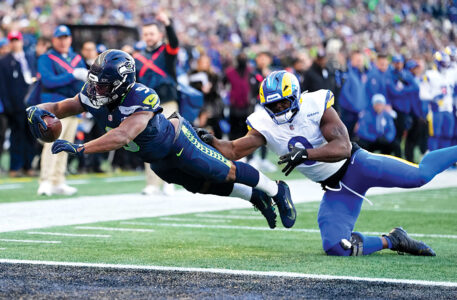
Seattle Seahawks’ Kenneth Walker III firing on all cylinders

Illness keeps Patriots QB Drake Maye out of practice

With NBA trade deadline looming, all eyes on Milwaukee Bucks’ Giannis Antetokounmpo
Sports at a glance: Athletics extend Jacob Wilson
The Athletics took another step Friday toward securing their potential opening-day Las Vegas lineup in 2028 by ...
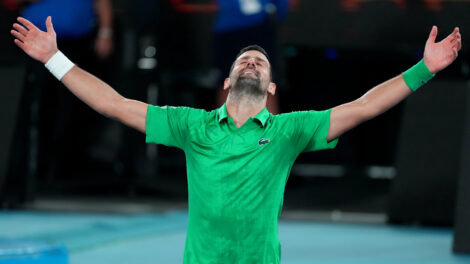
Novak Djokovic, Carlos Alcaraz to meet in Australian Open final
Westminster Dog show celebrating 150 years
NEW YORK — When some Gilded Age gentleman hunters organized a New York event to compare their dogs, could they ...