
Golf world needs to appreciate the word ‘stymie’
Trending
Stymie!
Most golfers today will probably recognize the word, but few may realize just how integral stymies were to the game and the important role they played until they were finally banned nearly 75 years ago.
As golf first developed in Scotland hundreds of years ago, nearly all competitions were head-to-head affairs, what we call match-play today.
These events were often fierce battles, and as sticklers for the rules, the Scots were adamant to always "play the ball as it lies."
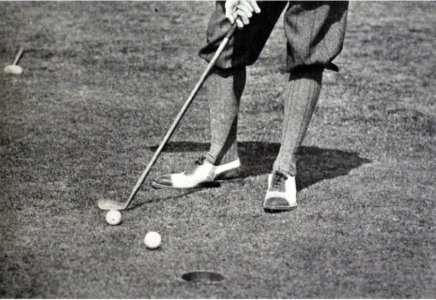
Since there was no "marking" allowed -- where a player could place a coin and pick up their ball -- the player furthest from the hole was always required to play even if they were blocked by an opponent's golf ball.
Being stymied, golfers had to learn how to hook or slice a putt if a ball was in their line of play. If a golf ball happened to be directly in front, a lofted club was often used by golfers in order to "jump" past their opponent.
Early golfers would spend countless hours practicing little shots, on and around the green, that would allow them to avoid blocked shots where an opponent had "laid a stymie on them."
Match-play strategy not only required the skilled shots to overcome a stymie, it also encouraged golfers to consider where their ball would end up if they happened to miss the hole. It was always best if you could end up blocking an opponent with a stymie of your own.
As time passed, some rules were modified to lessen the harshness of stymies. In 1744, Scottish rules began to allow that a ball could be marked and moved only when touching another ball. By 1812, the rule was again modified to allow a ball within six inches of the hole to be marked.
Even with these changes, the stymie remained in play and many matches were decided by instances where the path to the hole was blocked by an opponent.
In his famous grand slam year of 1930, Bobby Jones actually captured the British Amateur trophy after laying a stymie on Cyrill Tolley during the second round.
Locally, Tyrone's George Wilson wowed local golf fans in 1932 by lofting his ball and holing out for birdie after being stymied. In doing so, he secured a victory over Hollidaysburg's Jimmy Hunter in the Blairmont Club championship.
As time progressed however, golfers in the United States grew frustrated with the randomness that stymies seemed to create.
Many golfers developed an opinion that the rule did not promote skill in the game and began a push to eliminate the rule.
British golfers disagreed, feeling that stymies were an integral part of the game. In a 1942 interview, three-time British Open champion Henry Cotton claimed that stymies were a "vital part of the game" that required "great strategy and cerebral thought."
Through the 1940s, the USGA and the R&A golf organizations continued to debate the stymie rule. Finally, in 1952, both organizations finally came to an agreement to adopt new rules that would ban the practice.
Beginning in that year, all golfers would be allowed to request an opponent to mark their ball if it happened to be in the line of play -- thus putting an end to golf's infamous stymie.