
Trending
Nearly every golfer is familiar with the various names of today's golf clubs and the specific purpose for which they're used -- driver, 3-wood, wedge, 3-iron, 4-iron, 5-iron, etc.
They're all very common terms, even to the novice golfer.
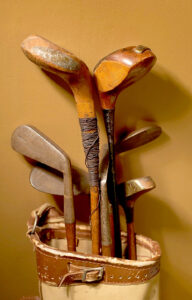
However, if you turn back the clock about a hundred years ago, the names used for the hickory-shafted and wooden-headed clubs of the time were much different.
Back then, the manner in which clubs were manufactured was entirely different too.
Instead of large companies like Taylor-Made, Callaway or PING mass-producing thousands of sets per year, each and every golf club was individually hand-made by an expert craftsman.
The "makers" of these clubs were typically golf professionals who had apprenticed for years in order to perfect their skills.
Local head pro Tom Norton, who ran Blairmont Country Club's pro shop during the early 1920s, was one of the best in the business. Some of Norton's hand-crafted masterpieces can still be found listed on various upscale, "antique golf" auction sites across the internet.
To get an idea of the unusual terms that were used to describe the clubs of more than a century ago, the following is a brief summary:
Play club: This club was the equivalent of today's driver and was used by golfers to "play away" from each tee box. This "play" club, like nearly every other club of the time, utilized a hickory shaft and a wooden head (typically persimmon).
Brassie: This club featured a slightly shorter shaft than the "play club," with a brass plate affixed to the sole for protection while driving on hard ground and roads. It's most similar to today's 3-wood.
Wooden cleek: Typically used out of long grass and sandy soil, similar to today's 4-wood.
Spoon: This club was used for moderately high-lofted shots over long distances. The earliest versions featured a concave face, hence the name "spoon." Equivalent to today's 5-wood.
Baffie: The highest-lofted wooden-headed club was called the "baffie." This particular golf club was very popular during the early 1800s but was eventually replaced by lofted iron clubs.
Bulger: The wooden-headed bulger was a common type of utility club. The "bulging" or convex face allowed for a straight and low ball flight.
Iron cleek: This was the longest of the iron-headed clubs and was most similar to today's 2-iron.
Mid-mashie: Another iron-headed club with a slightly shorter shaft. Equivalent to today's 3-iron.
Mashie: Similar to today's 5-iron.
Mashie-niblick: Resembled today's 7-iron.
Niblick: This term may be familiar to some golfers today as it is still occasionally used to describe a short iron. The original "niblick" most closely resembles today's 9-iron.
Putting cleek: While all early versions of the putter featured wooden heads, the early 1900s saw many players adopting metal-headed versions. An interesting, early rule of golf mandated that all putting clubs be heel-shafted. This rule was rescinded in the 1950s.
As the 1930s and '40s unfolded, large sporting goods companies began introducing steel shafts and forged iron-clubs which quickly became popular.
With these changes, the days of individually-crafted golf clubs soon disappeared -- and so too, did the unusual names of these beautiful works of art.