
Reality sets in for US soccer team
Guest Column
Trending
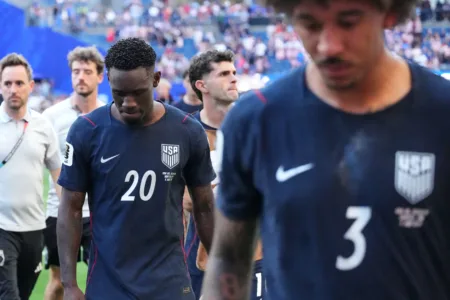
Any frustration associated with the failure of the United States Men's National Soccer Team to advance past the round of 16 in the World Cup should not be laid at the feet of the players.
The win over Bosnia and Herzegovina in the round of 32 was just the second-ever for the U.S. men in the knockout round.
While the members of the U.S. team contributed substantially to the promotion of the World Cup on home soil, they didn't ramp up hype of their own prospects.
Entering World Cup play, the U.S. was ranked 17th in the Top 50 FIFA Rankings.
So technically, the U.S. met expectations on the world scene.
The 4-1 loss to Belgium was dreadful, but it should not have been unexpected.
Clinging to hope that the U.S. would make a run at the title of World Cup Champion was based on wishful thinking, not logic.
It's totally acceptable for loyal, excitable, emotional and imaginative fans to harbor visions of grandeur for the underdog.
The problem is that the inevitable crushing disappointment can lead to disillusionment and apathy.
The U.S. benefited from a weak draw in group play and a round of 32 opponent that was ranked 64th before the start of the tournament.
The brief uproar over the loss to Belgium was rightly focused on the glaring defensive lapses and competitive disparity.
As noted in the Seattle Times, "Belgium was the better team by approximately three galaxies."
There's no shame in admitting that soccer is not our country's sport of first preference, no matter how many soccer moms populate suburbia.
We're never going to be masters of the universe in cricket, and there's no wringing of hands over that.
We concede the Winter Olympics to the Nordic countries and take a pass on rugby.
U.S. relevance in the domain of World Cup soccer is an aspiration accompanied by heartache.
Pirates fans understand the price of embracing unrealistic expectations.
It has almost become a tradition for spring training excitement to morph into ambivalence by the All-Star Game.
By early June, the impulse is to cover one eye when watching Pirates games.
The Bucs are the epitome of the old saying, "hope for the best and prepare for the worst."
Granted, expectations are tempered in the Steel City. It's the rare individual who buys season tickets to lock up seats for the World Series.
However, the dream of a wildcard spot in the playoffs keeps Pirates fans turning out and tuning in.
At least for the first half of the season.
If there's any fanbase that merits sympathy, it's the star-crossed diehards of the Dallas Cowboys.
That legion is still living off the three Super Bowl championships of the early '90s.
For three decades throughout Cowboys Nation, each season has been viewed as a preordained return to glory through the prism of unjustified optimism.
Just like a push in poker, going all in for the favorite team can be a high risk, no rewards proposition.
The folks who jump on board the U.S. men's soccer bandwagon when the World Cup rolls around every four years hedge their bets. They are conditioned to easily digest the disappointment of a round of 16 defeat.
A healthy dose of skepticism is not the equivalent of betrayal, disloyalty or unfaithfulness.
In sports, skepticism is the perfect defense mechanism against unrealistic expectations.
Jim Caltagirone writes a monthly column for the Mirror.