Magulick touched the lives of those he taught, coached

Magulick
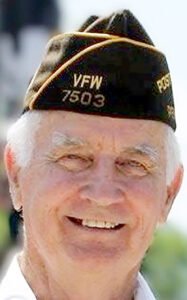
Steve Magulick enjoyed a long, successful and productive life, both personally as a husband, father, and grandfather, and professionally, as a high school teacher and football coach.
Magulick, a Northern Cambria legend who passed away this past Monday at the age of 92, had a positive and enduring influence on countless people, and is remembered with great fondness and reverence.
Former long-time Northern Cambria football coach Frank Paronish enjoyed the privilege of playing the game under Magulick’s direction, and many years later, benefiting from Magulick’s expertise when the latter served as an offensive coordinator on Paronish’s Colts teams.
Paronish graduated from Northern Cambria in 1977 and was the senior captain on the Colts’ football team. Magulick, who was also a long-time physical education teacher, also taught Paronish as one of his students in school.
“He lived a good life, and he touched my life in a lot of ways – both as a teacher and as a coach,” Paronish said of Magulick, who began his head football coaching career in 1966 at Tyrone, where he spent nine seasons, and continued it in his hometown of Northern Cambria, where he coached 18 seasons, and, with 98 wins, is still the all-time winningest coach in the Colts’ football history. “He was a really great person who taught us all about football and about life.”
Magulick is survived by his wife of 69 years, Dolores (Deoskey). They are the parents of three grown daughters. They also have 12 grandchildren and 13 great grandchildren.
Former long-time Tyrone High School athletic director Pete Dutrow was a junior varsity football coach on Magulick’s staff at Tyrone, and said that family was very important to Magulick.
“Steve was a good man, a good family man, and a tremendous football coach,” Dutrow said. “Our coaching staff back then was a very close-knit group of guys who got along well, and when one of us needed something, the rest of us were always there to help.”
Magulick — who served as a United States Marine in the Korean Conflict — graduated from Lock Haven State University, after quarterbacking that program to the 1957 Pennsylvania Scholastic Athletic Conference championship and its only undefeated football season in school history.
As a high school football coach, Magulick was an innovator, according to Paronish. Magulick joined Paronish’s coaching staff in 2001 and implemented a creative offensive game plan that helped the Colts to reach the District 6 Class 1A championship game in 2003.
“Back in the day, we had always been a smash-mouth kind of football program” Paronish said. “Coach Magulick was a very meticulous game planner who always focused on perfecting the small things, but he also liked to open things up offensively.
“By the time the 2003 season had arrived, he had put together one of the finest double-slot offenses that was so hard to defend, and which fit our program very well,” Paronish added. “His preparation for games was always outstanding.”
Paronish served two tenures as head coach at Northern Cambria, and Magulick was on his varsity staff during the first tenure.
“He became a facilitator and a mentor, and we all just kind of grew from him,” Paronish said. “He had so many successes in football and when you take somebody who is that knowledgeable about the game, and you bring them on to your staff, that has an immediate effect on your staff and on your team.”
Although he was in his 70s when he served as the Colts’ offensive coordinator under Paronish, Magulick’s ability to establish a rapport with the players never waned.
“He was up in age when he came back to be an assistant coach, but I don’t think that he ever skipped a beat in his ability to connect with the kids,” Paronish said. “They respected him, and he respected them as well.”
Magulick, who quarterbacked the former Spangler High School team to its only undefeated season, back in 1950, was inducted into the Northern Cambria Community Hall of Fame in 2015.
“He was a very soft-spoken man, but when he did speak, you needed to listen because what he spoke about was something that needed to be said and needed to be incorporated,” Paronish said.
Local Sports

Williamsburg Blue Pirates get best of rival Juniata Valley Hornets
Jim Swaney’s Bellwood-Antis Lady Devils defeated at Bishop Guilfoyle
Men: Penn State at Purdue
SATURDAY Tipoff: 2 p.m., Macken Arena, West Lafayette, IN Records: Penn State (9-6, Big Ten 0-4); Purdue ...
Magulick touched the lives of those he taught, coached

Malkin returns to Penguins with game-winner