
Priest keeps ministering to migrants and deportees
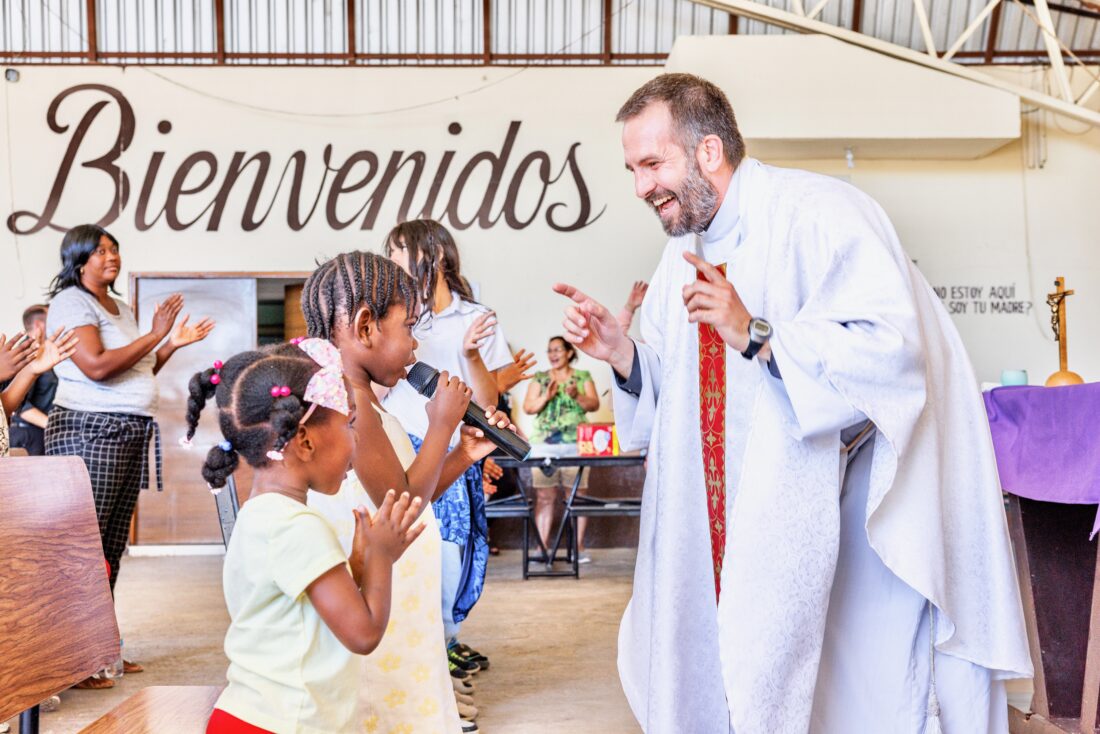
The Rev. Brian Strassburger smiles as Alcala Bouilly sings into the microphone during Mass at Casa del Migrante on March 19 in Reynosa, Mexico. The Associated Press
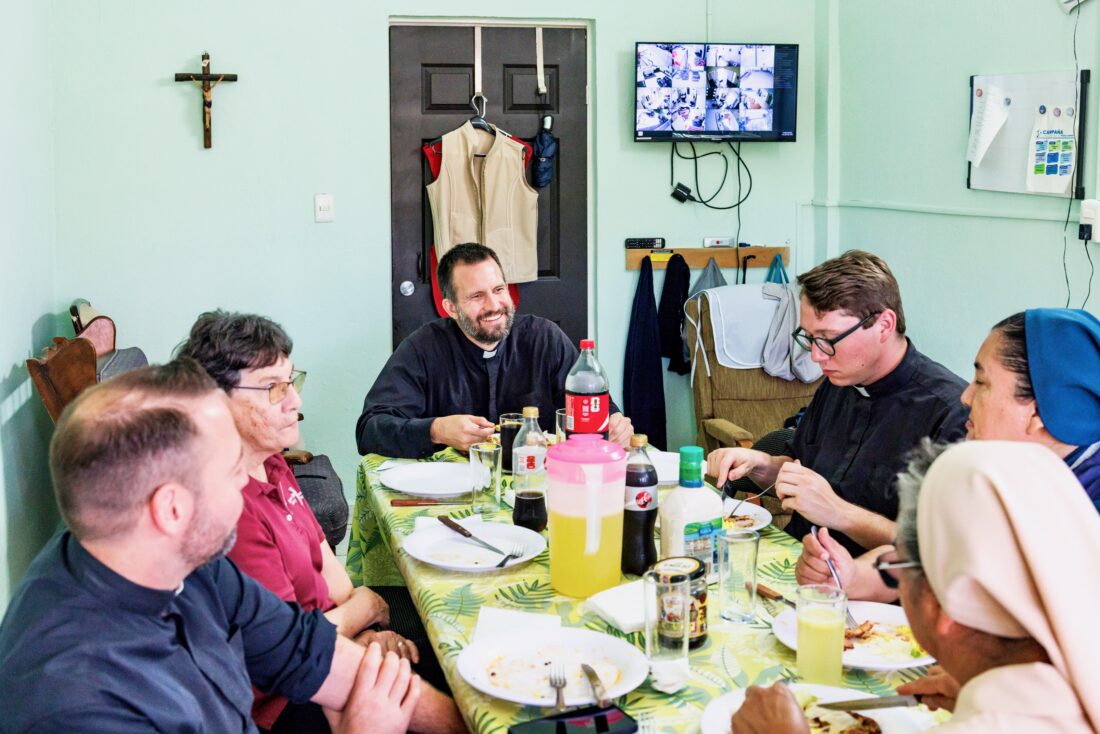
The Rev. Brian Strassburger enjoys lunch alongside fellow Jesuits and religious sisters at Casa del Migrante on March 19 in Reynosa, Mexico. The Associated Press
The Rev. Brian Strassburger smiles as Alcala Bouilly sings into the microphone during Mass at Casa del Migrante on March 19 in Reynosa, Mexico. The Associated Press
The Rev. Brian Strassburger enjoys lunch alongside fellow Jesuits and religious sisters at Casa del Migrante on March 19 in Reynosa, Mexico. The Associated Press
Trending
Over the past five years at the U.S.-Mexico border, the Rev. Brian Strassburger has gone from ministering to throngs of asylum-seekers in overcrowded shelters to celebrating Mass with detained and deported migrants.
But while border crossings have drastically shrunk under President Donald Trump's administration, the Jesuit priest said his mission remains centered on embodying the Christian message "that God is accompanying you on your journey."
"And the journey, whether it's northbound or southbound, involves a lot of suffering," Strassburger added. "We have a faith that speaks to us amid that suffering. We have a God who says, 'I want to be one of you.'"
Based in the Rio Grande Valley in Texas, Strassburger heads the Del Camino Jesuit Border Ministries, a trio of Jesuits who have been providing Mass and other sacraments to migrants on both sides of the U.S.-Mexican border since 2021.
Border crossings drop under Trump
Back then, thousands of migrants crammed into bare-bones shelters daily before and after crossing the border in record numbers.
Nearly 2.5 million people crossed the border illegally or came legally through a system for those seeking humanitarian protections from May 2023, when Joe Biden's administration ended COVID-19 restrictions on asylum, until January 2025, when Trump declared a national emergency at the border at the start of his second term.
Strassburger celebrated Mass in packed shelters in McAllen, Texas, and just across the Rio Grande in Reynosa, Mexico, where many thousands slept in tents in makeshift shelters and hundreds more waited outside for a chance to cross into the United States even as the Biden administration started to impose restrictions.
He was there, at a shelter run by Catholic nuns, the day after the Trump administration canceled all border appointments would-be asylum-seekers had made through an app to enter the United States.
After celebrating Mass, he asked people how they were managing the news. Most said they were feeling devastated, terrified and deceived. But one woman raised her hand and said, in Spanish, "The last thing we lose is hope."
"Sandra, she doesn't place her hope in a smartphone app or in a presidential administration or in a government. She puts her hope in the Lord, and that is a hope that doesn't disappoint, even in the midst of the despairing moments of life," Strassburger recalled. "If Sandra can say that, in that day and in that moment, how can I lose hope in my own ministry here on the border?"
Priest's journey to ministry on border
The 41-year-old pastor's journey to the priesthood and border ministry was one of grace more than planning, Strassburger said.
Raised in Colorado by Catholic parents, he dreamed of becoming a dad, math teacher and basketball coach in a Jesuit high school like the one he attended. It was after college, while volunteering with the Augustinians -- among whom he met the future Pope Leo XIV -- that he first considered a religious vocation, especially when ministering to AIDS victims at a hospice in South Africa.
"I'd always thought a religious vocation or a priesthood was like this cross that you bear because God tells you you have to. He's like, 'Sorry, Brian, you're one of those ones who has to be a priest.' And you're like, 'OK, God,'" Strassburger said. "I started to think, what if the life of priesthood isn't this great burden, but actually the way for me to be my best self?"
In 2011, he entered the Jesuit novitiate and five years later, despite knowing no Spanish, he was sent to Nicaragua for more than two years. On his return, newly bilingual, he spent a summer at the Kino Border Initiative in the two Nogales -- the cities in Arizona and Mexico just across the fence.
That's where he found his mission, the ideal place for his ability to navigate a bilingual context and serve as a bridge. After ordination, his superior asked him to establish a Jesuit presence in the Rio Grande Valley, literally at the country's margins, the places where Pope Francis had urged the church to go.
"I couldn't have said yes fast enough," Strassburger said, adding that the local bishop then assigned him and another Jesuit a simple mission. "He said, 'Read the reality and respond to it.' And that's what we've been trying to do since then. And we identified very quickly the need for pastoral accompaniment of the migrant population."