
Hurricane remnants hit Southwest
Trending
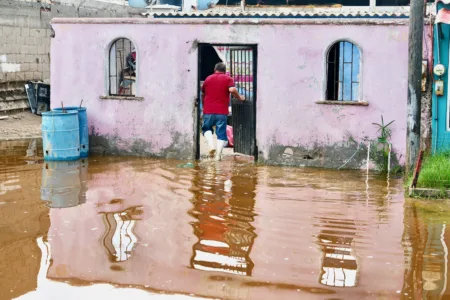
PHOENIX -- Hurricane Polo smashed into the western coast of Mexico on Tuesday, swamping coastal areas and toppling trees before the storm's remnants headed toward the U.S. Southwest, where heavy rains soaked the region and residents in small New Mexico towns were evacuated over concerns about a dam failing.
Polo struck the Mexican state of Baja California Sur in the morning with maximum sustained winds of 110 mph. It crossed the Gulf of California and weakened to become a tropical storm as it moved inland to the northeast, and its remnants were expected to reach the U.S. by Tuesday night.
North-central New Mexico, including Albuquerque and Santa Fe, could feel the brunt of the severe weather, with as much as 3 to 4 inches of rain through Wednesday and possibly more, forecasters said.
That is after storms rolled through parts of the U.S. Southwest overnight Monday, saturating the ground, which can make flooding worse.
Southwest US sees heavy rains, floods
Bands of rain continued to sweep across the U.S. Southwest, causing desert rivers to surge and usually dry arroyos to rage with floodwater.
The potential failure of the dam in south central New Mexico prompted evacuations in three small communities with hundreds of residents along the Rio Grande. People in Rincon, Salem and Garfield were told to seek higher ground immediately "before conditions worsen."
Nearly all of the region was under flood watches as the complex system of tropical weather -- with Polo the main event -- spread northeast from Mexico.
"Definitely looking at the chances for urban flooding," said National Weather Service meteorologist Carter Greulich in Albuquerque. "Don't drive through flooded roadways. Remain out of the arroyos, especially in our urban areas."
A person stranded on top of a vehicle in floodwaters west of Phoenix was rescued Tuesday morning. Video taken by Arizona Fire and Medical Services showed a helicopter lowering a rescuer to a person clinging to their overturned car. And in Zion National Park, a helicopter was used to rescue three people who had been in Heaps Canyon and went to high ground when it began to flash flood.
North of Phoenix, a truck was swept away in a wash in the New River area. The driver got out safely, Maricopa County sheriff's officials said.
The rocky, desert area typically gets less than 10 inches of rain annually with little vegetation to soak it up, making flash flooding a perpetual risk.
Near Zion National Park in Utah, the East Fork of the Virgin River raged with chocolate floodwater seen carrying a shipping container downstream.
In the small town of Orderville, Utah, where flooding began Monday night, Sabrina Dubay was driving home when her partner called and told her to stay away.
"The river came in and swept around the entirety of our house," Dubay said.
A camper, snowmobile trailer, and other items from Dubay's yard were swept away by the river. Neighbors and friends arrived to dig a trench around the house as the water rose around their home.
"It was coming in through our front doors," she said.
Flooding also was reported in southern New Mexico. An unusually soggy September across the region set the stage: When the ground is saturated, rainfall has nowhere to go but run off.
"Runoff is likely going to start much quicker and lead to those flooding impacts quicker," Greulich said.