
SoCal community digs out mud

Trending
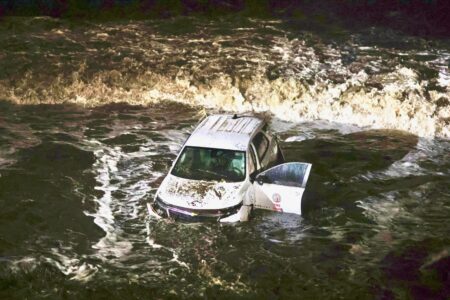
An emergency vehicle is hit by surf after being pushed into the ocean during a storm in the Palisades Fire zone Thursday in Malibu, Calif.[/caption]SIERRA MADRE, Calif. -- Residents of a Southern California mountain community near the Eaton Fire burn scar dug out of roads submerged in sludge Friday after the strongest storm of the year swept through the area, unleashing debris flows and muddy messes in several neighborhoods recently torched by wildfires.
Dry weather returned to the region but the risk of rock and mudslides on wildfire-scarred hillsides continued Friday since dangerous slides can strike even after rain stops, particularly in scorched areas where vegetation that helps keep soil anchored has burned away.
Water, debris and boulders rushed down the mountain in the city of Sierra Madre on Thursday night, trapping at least one car in the mud and damaging several home garages with mud and debris. Bulldozers on Friday were cleaning up the mud-covered streets in the city of 10,000 people.
"It happened very quickly but it was very loud and you could even hear the ground or feel the ground shaking," Bull Duvall, who has lived in Sierra Madre for 28 years, said of the debris flows.
Sierra Madre officials issued evacuation orders for areas affected by the Eaton Fire, warning that fire, police and public works personnel would not enter areas experiencing active mud and debris flows and anyone who remained in a home under evacuation orders would need to shelter in place until areas are deemed safe for city personnel to enter. Residents of the city also had to evacuate during the Eaton Fire, which destroyed 15 homes in the community.
In Pacific Palisades on Friday, some residents washed their mud-covered driveways and bulldozers worked to clear mud-coated roads not far from where, just weeks ago, officials moved abandoned cars after people fleeing last month's wildfires got stuck in traffic and fled on foot.
The vehicle of a member of the Los Angeles Fire Department was pulled out of the water in Malibu after it was pushed into the ocean on Thursday. A fire department employee was able to exit with minor injuries, department spokesperson Erik Scott said.
About 45 miles west of LA, the storm system produced a small tornado Thursday afternoon in the city of Oxnard that tore down power lines and fences and ripped off roofs at two mobile home parks, according to the National Weather Service.
Southern California reported 1 to 3 inches of rain in coastal areas and valleys and 3 to 6 inches across the coastal slopes on Thursday, said Mike Wofford, a meteorologist with the weather service.
The precipitation was badly needed, as much of Southern California remains in extreme or severe drought, according to the U.S. Drought Monitor. In neighboring Nevada, the weather service said it recorded a measurable amount of rain in Las Vegas, ending a streak of 214 days without precipitation.
More winter weather is descending on US
In the Portland, Oregon, metropolitan area, warming shelters stayed open Friday and officials were seeking volunteers to help staff them after the area saw 2 to 4 inches of snow and some ice. Most schools, city and county offices were closed Friday because of the weather. Major pileups on highways in Oregon and Washington injured at least 10 people on Thursday.
The West Coast storms are just the latest in a week of bad weather across the U.S. that cut power to tens of thousands.
Over the coming weekend, heavy snow was expected to shift from the mountains of the West into the Upper Midwest and Great Lakes while an icy mix spreads into the Northeast, the weather service warned Friday.
Severe weather was expected Saturday from east Texas into much of the Southeast and parts of the mid-South, where dangers could include tornadoes, flash flooding and widespread damaging wind gusts of 70 mph or higher.
"Tornadoes and destructive storms that strike at night greatly increase the risk of injuries and loss of life since many people are sleeping," said AccuWeather Chief Meteorologist Jonathan Porter. "It is crucial that families have multiple ways to receive severe weather alerts this weekend."