
Convicted killer’s appeal rejected
Rodgers serving 40-year minimum sentence in 1988 murder of Lascoli
Trending
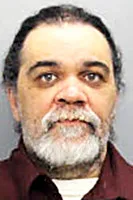
Despite having his latest appeal denied, an Altoona man is approaching eligibility to be released after being convicted in 1990 of stabbing a man more than 70 times and killing him.
When James "Frankie" Rodgers was 17 years old, he was accused of killing Pasquale "Patsy" Lascoli, 72, during a home invasion robbery the night or early morning of June 7-8, 1988.
Rodgers, in June 1990, was convicted of first-degree murder, aggravated assault and robbery and now, more than 38 years later, the Chief Judge of the Western District Court in Pittsburgh has rejected Rodgers' latest attempt to proclaim his innocence and vacate his lengthy sentence.
He is serving a sentence of 40 years to life, although he was initially sentenced to life without parole, despite being a juvenile at the time of the assault.
However, the U.S. Supreme Court, in Miller v. Alabama (2012), ruled that life without parole for a juvenile was unconstitutional.
Based on the Miller case, Rodgers received a revised sentence of 40 years to life on Jan. 17, 2020. He will reach his minimum sentence in 2028.
On the night of the attack, Lascoli was stabbed "at least 70 times" according to the recent opinion issued by Judge Cathy Bissoon, who rejected Rodgers' petition in a 49-page opinion issued two weeks ago.
The brutality of the murder and the age of the victim ultimately resulted in a change of venire for the trial, which meant the jury was impaneled in Lebanon County but heard testimony in the Blair County Courthouse.
Bedford County Judge Ellis W. Van Horn Jr. presided over the trial, which turned out to be among the first cases in Pennsylvania in which DNA was used to convict a suspect.
The victim's blood was ultimately found on clothing worn by Rodgers the night of the murder, while Rodgers' blood was detected on the inside pants pocket of the trousers worn by Lascoli the night of his death.
The pocket in which the blood was located was where the victim normally carried his wallet.
Through the many years of his imprisonment, Rodgers has filed appeals with Pennsylvania Superior and Supreme Courts, including a post-conviction petition that led to the questioning of jurors concerning their deliberations.
He also challenged his reduced sentence.
In 2023, he sought review of his case in the federal court.
Represented by attorney Kelly L. Culshaw of the Capital Habeas Unit and Kirk J. Henderson of the Federal Public Defender's Office, he raised 24 questions that focused on actions or inactions by his attorneys.
Many of his issues were defaulted because they were never presented to the Pennsylvania Superior Court for review and Bissoon rejected defense requests to review those issues.
She did, however, comment on a partial shoe print impression found at the scene of the murder, and on trial testimony by some of Rodgers' teen associates from that time.
The prosecution contended and argued to the jury that the shoeprint impression came from the victim's footwear, but, as the judge pointed out, a forensic consultant testified she was not provided with any physical evidence "such as the victim's shoes or the carpet padding containing the partial shoeprint impression."
Thus she was unable to confirm the prosecution's statement to the jury.
The defense contended many people were in the victim's home that night and that the impression was not that of the victim, indicating suspects other than Rodgers could have been involved in the murder.
Yet, this possible "misrepresentation" of the evidence by the prosecution however "does not disprove (Rodgers') involvement or presence at the scene," the judge stated in her opinion.
Two other issues raised by the defense, however, were reviewed in depth in the Bissoon opinion:
– The failure of his trial counsel to object to the jury review of what is labeled "Exhibit 205";
– The failure of the trial court to suppress statements made by Rodgers to a police detective when he was taken into custody after the murder, but before he became a suspect in the murder investigation.
Exhibit 205 was an admission form to the Blair County Juvenile Detention Home dated Aug. 17, 1987 -- 10 months before the Lascoli killing.
The form included personal information about the then 16-year-old, but it also lists why he was being admitted to the juvenile facility -- "for the offense of robbery."
Rodgers' defense counsel initially objected to the form being submitted as part of the evidence to be reviewed by the jury, but when it came time to send the exhibits to the jury for deliberation, the counsel did not object and the exhibit went to the deliberation room.
The Rodgers defense charged that his trial counsel was "ineffective" for not objecting to Exhibit 205 going to the jury.
In a court hearing involving a Rodgers' appeal to his conviction -- held 13 years after the trial -- many of the jurors were summoned for a hearing as to whether they remembered Exhibit 205, and five of the eight who were interviewed indicated they did have a recollection of the form that linked Rodgers to a prior robbery.
However, while some of the jurors remembered the exhibit, none indicated they were prejudiced by it.
The trial court, in reviewing the incident, found "that no jurors could say with any certainty they had seen Exhibit 205 during guilt phase deliberation."
The defense took issue with that assessment, but Bissoon indicated that she reviewed the transcript of the 2003 hearing and she upheld the trial court's conclusions.
The last defense issue Bissoon addressed was a defense charge that
Rodger's Fifth Amendment right against self-incrimination was violated when the trial court refused to suppress statements made by Rodgers on June 10, 1988, just two days after Lascoli's body was found.
Altoona Police Department Detective Mitchell Cooper on that day served a bench warrant on Rodgers for violation of his juvenile probation.
When Rodgers was taken to City Hall, Cooper noticed he had cuts on his "left pinky finger."
Rodgers, who was not yet a suspect in the Lascoli murder, was asked how he obtained the cuts.
The teen replied that he and a friend had been cutting cardboard, "fooling around with a knife."
Cooper, who was aiding in the investigation of the murder case, stated that because of the amount of blood at the scene, there was "the possibility of whoever was responsible ... may have been injured also."
He had checked city hospitals but found no reports of cuts that could be linked to the murder.
The detective said he spoke to Rodgers about the murder because he knew Rodgers' mother was an acquaintance of Lascoli.
Rodgers replied he knew Lascoli and had been to Lascoli's house with his mother.
The defense sought suppression of the discussion between the detective and Rodgers, but the trial court rejected the request.
Bissoon pointed out that at no time did the detective provide a Miranda warning to Rodgers, and, she emphasized, that no responsible adult was present during the conversation.
But, she noted the conversation was "not designed nor intended by Detective Cooper to elicit information from the defendant regarding the death of Patsy Lascoli."
"The custodial status of (Rodgers) on June 10, 1988, was in no way related to the investigation regarding the death of Patsy Lascoli," Bissoon concluded.
She ruled there was no violation of his constitutional protections against self-incrimination.
Rodgers, now 55, remains incarcerated in the State Correctional Institution in Somerset County.
The judge refused to grant Rodgers a "certificate of appealability" to her decision.