
Harnessing hope: Victory Therapeutic Horsemanship named Season of Sharing recipient for 2026
Local organization offers healing to veterans struggling with mental illness
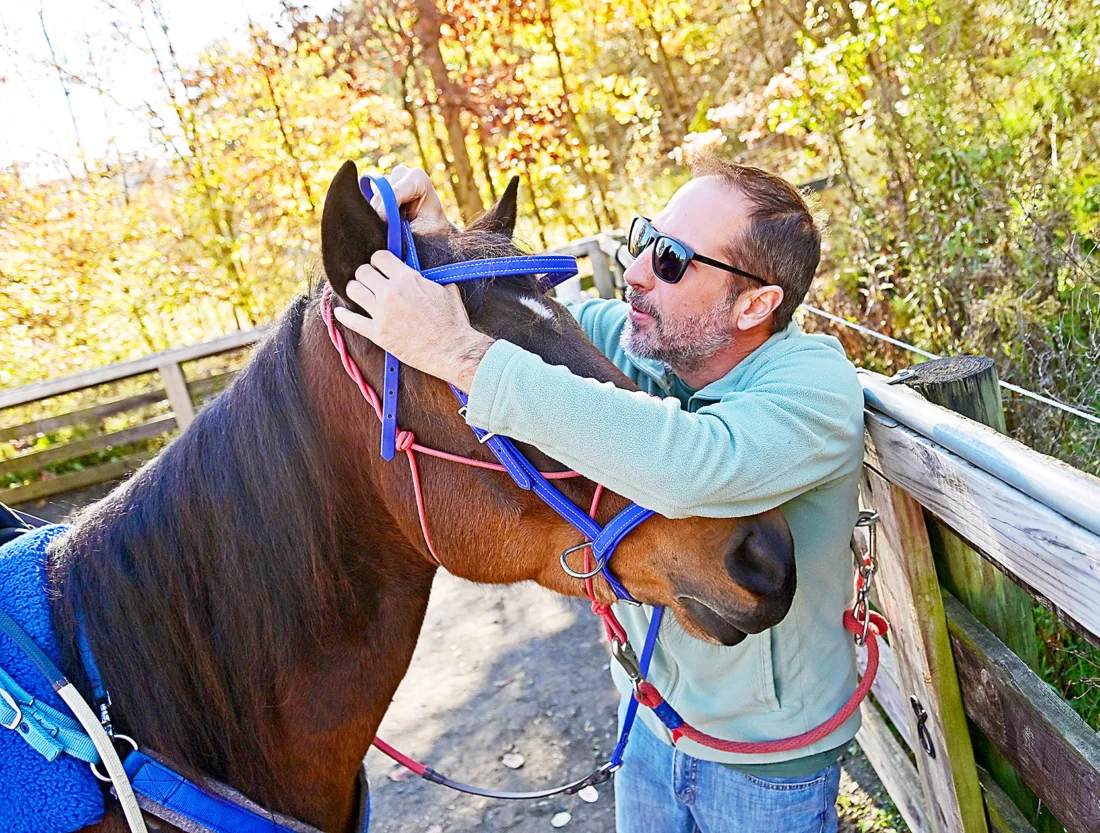
Veteran Michael Smith of Altoona places a bridle on Mojave at Victory Therapeutic Horsemanship in Tyrone. Mirror photo by Patrick Waksmunski
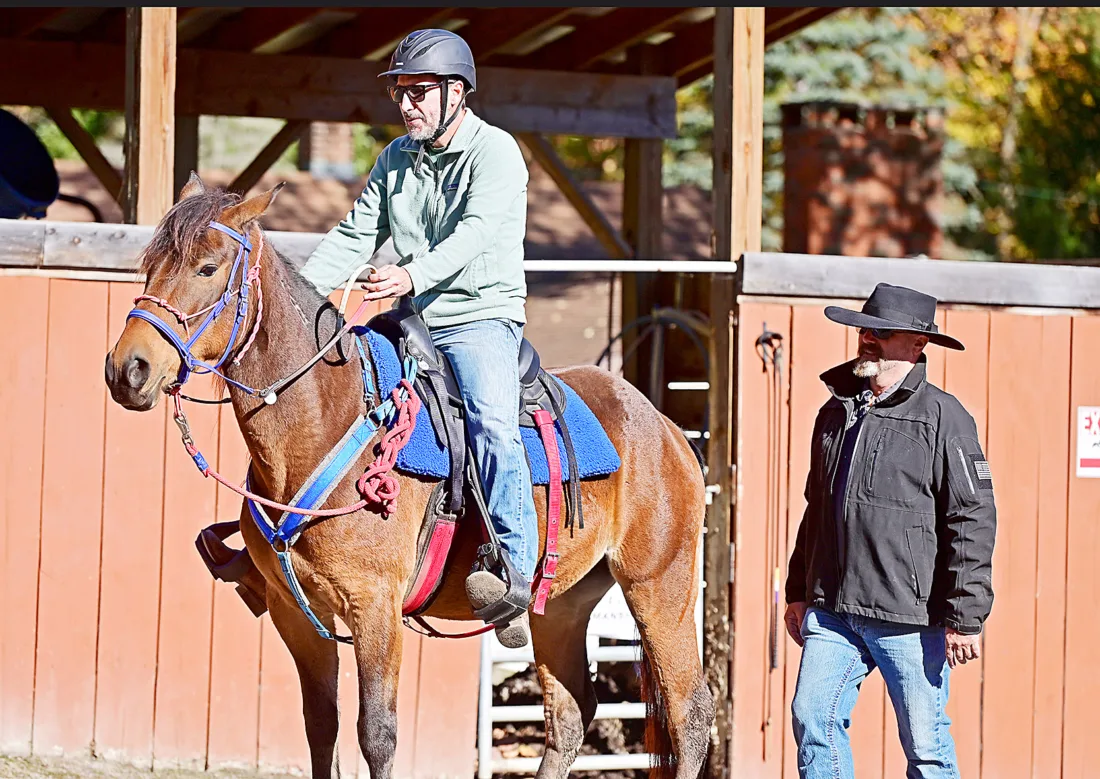
Victory Therapeutic Horsemanship founder/executive director John Zanella watches veteran Michael Smith of Altoona ride Mojave. Mirror photo by Patrick Waksmunski
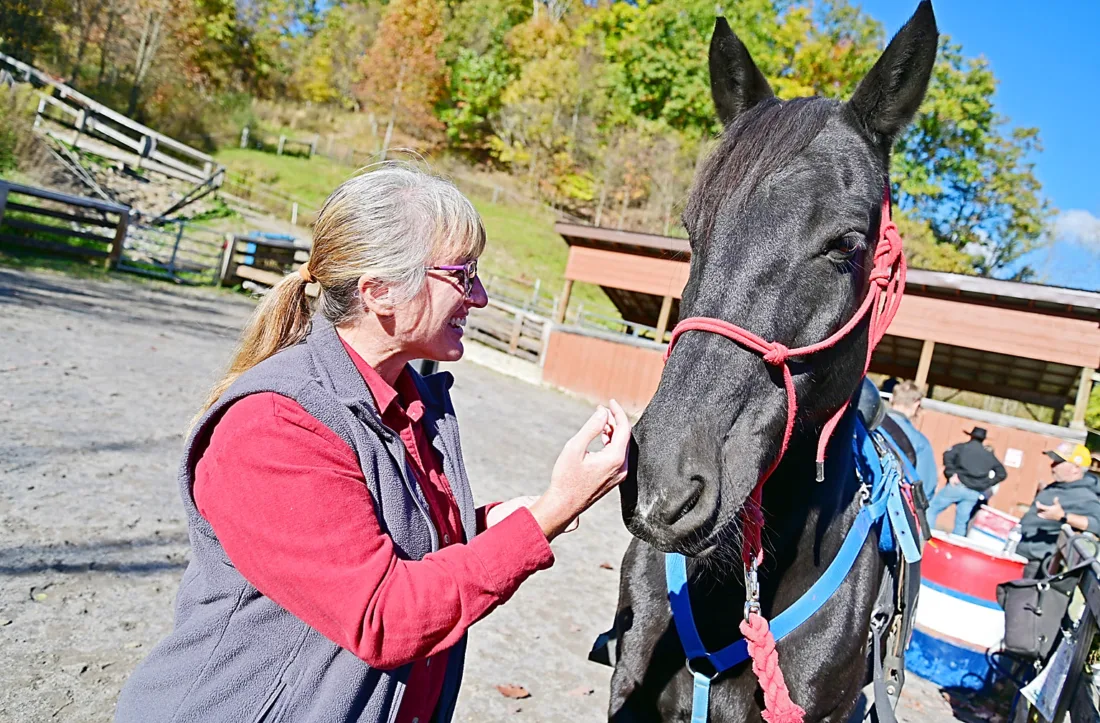
Victory Therapeutic Horsemanship deputy director Rebecca Davidson gives Bella Donna a love tap. Mirror photo by Patrick Waksmunski
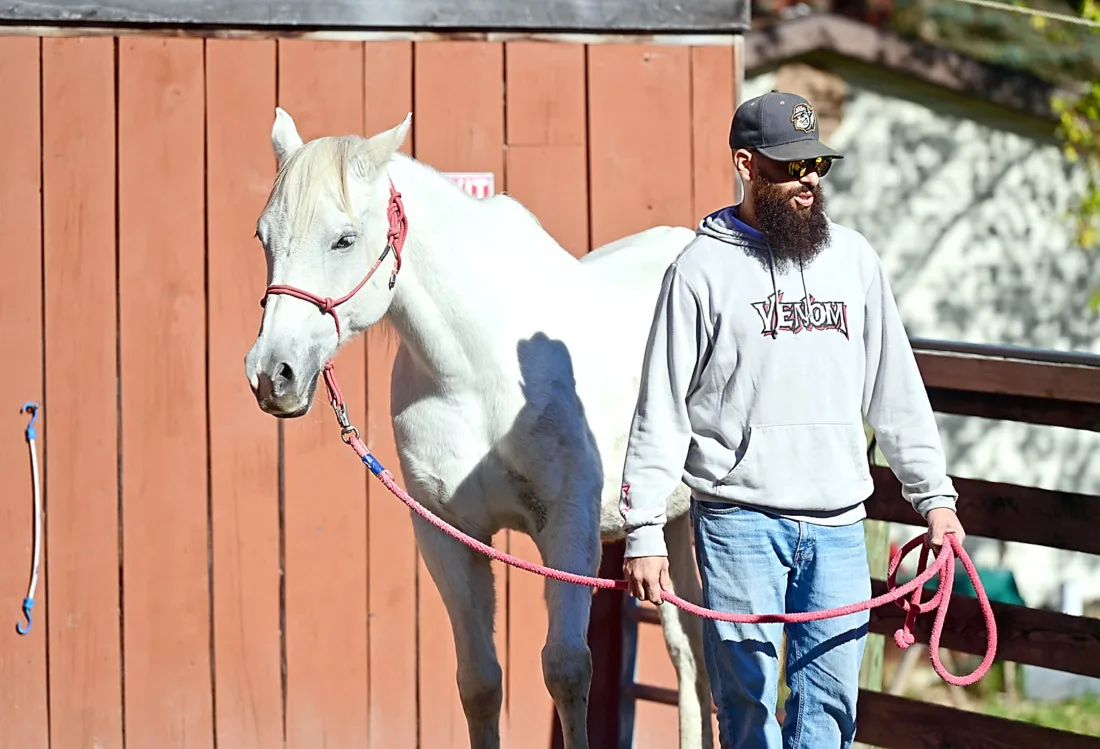
Army veteran Andres Rivera of Altoona leads Stratis. “Because they can feel your heartbeat about four feet away, it’s very important to breathe,” Rivera said. “Anything we do out here, you’re able to transition to your personal life.” Mirror photo by Patrick Waksmunski
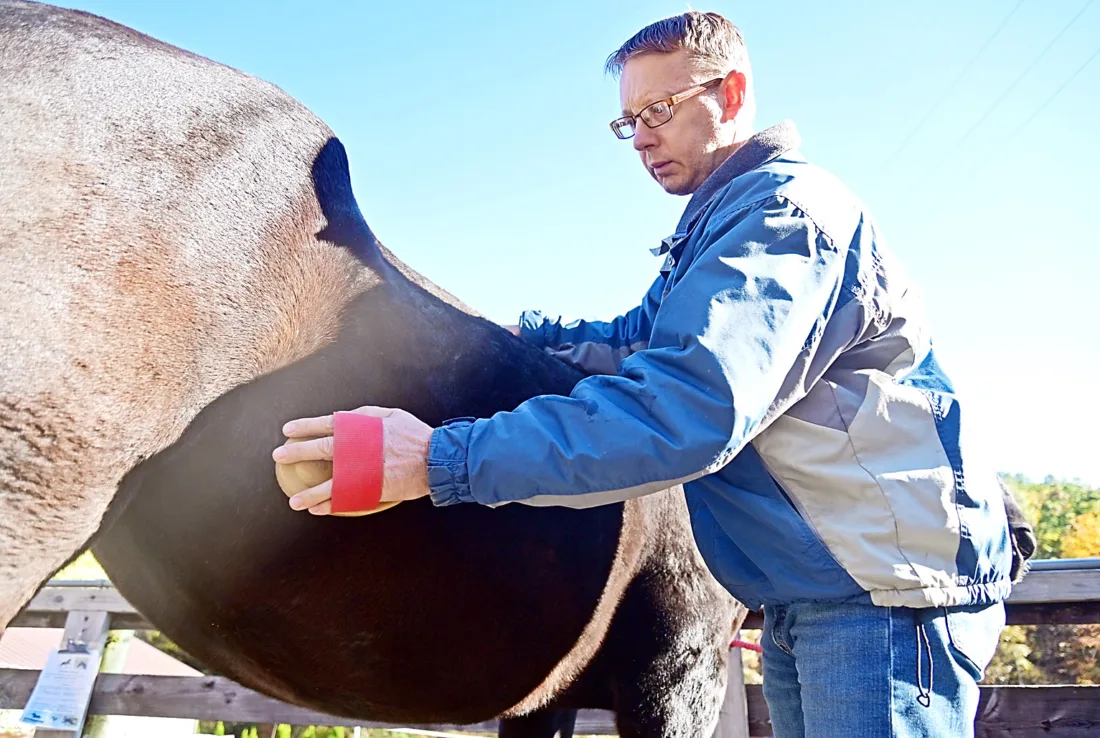
Veteran Dustin Misosky of Johnstown brushes Bella Donna. Mirror photo by Patrick Waksmunski
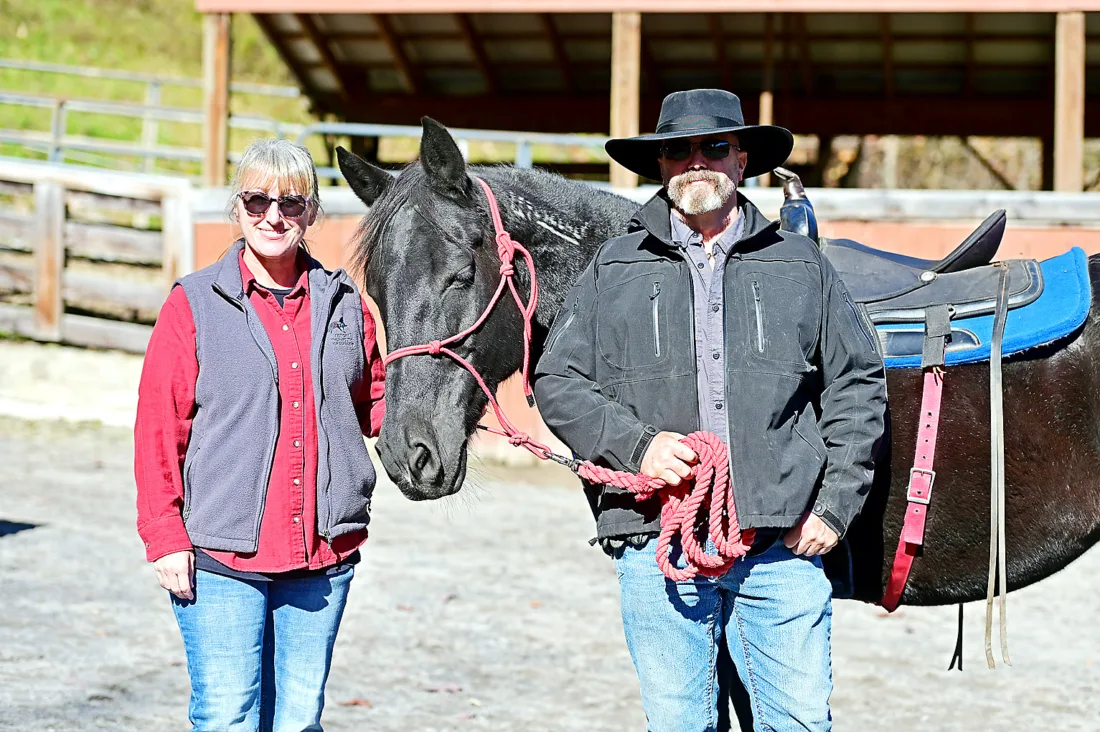
Victory Therapeutic Horsemanship deputy director Rebecca Davidson is pictured with founder/executive director John Zanella and Bella Donna. Mirror photo by Patrick Waksmunski
Veteran Michael Smith of Altoona places a bridle on Mojave at Victory Therapeutic Horsemanship in Tyrone. Mirror photo by Patrick Waksmunski
Victory Therapeutic Horsemanship founder/executive director John Zanella watches veteran Michael Smith of Altoona ride Mojave. Mirror photo by Patrick Waksmunski
Victory Therapeutic Horsemanship deputy director Rebecca Davidson gives Bella Donna a love tap. Mirror photo by Patrick Waksmunski
Army veteran Andres Rivera of Altoona leads Stratis. “Because they can feel your heartbeat about four feet away, it’s very important to breathe,” Rivera said. “Anything we do out here, you’re able to transition to your personal life.” Mirror photo by Patrick Waksmunski
Veteran Dustin Misosky of Johnstown brushes Bella Donna. Mirror photo by Patrick Waksmunski
Victory Therapeutic Horsemanship deputy director Rebecca Davidson is pictured with founder/executive director John Zanella and Bella Donna. Mirror photo by Patrick Waksmunski
Trending
TYRONE -- The Altoona Mirror's annual Season of Sharing fundraising campaign will impact a local program geared toward veterans adjusting to life after the military.
Longtime participant Michael Smith wrote on the Season of Sharing nomination form that Victory Therapeutic Horsemanship provides life-changing equine-assisted services.
"This organization personally saved and changed my life for the last eight years," he wrote.
Founded and run by a combat veteran, Victory Therapeutic Horsemanship is a 501(c)(3) nonprofit organization that uses grants and donations to provide equine therapy to local veterans battling mental illness.
The program has made considerable impacts on the lives of many local veterans, said Jodi Cessna, executive director of the Central Pennsylvania Community Foundation, which manages the Season of Sharing funding effort. She personally knew a veteran who volunteered for the program.
"They said they weren't sure if they'd still be with us without that organization," Cessna said. "That puts it into perspective."
Built on a hillside in Tyrone, the organization plans to expand its arenas, including a fenced-in section on flatland to accommodate disabled veterans.
Victory Therapeutic Horsemanship is open to disabled veterans of all ranks and ages who may regularly deal with mental illnesses following their service, such as post-traumatic stress disorder, depression and anxiety.
Starting at the entry level, veterans participate in 90-minute sessions over eight weeks before advancing to more difficult levels focused on building different skill sets. After completing five levels, participants are invited to volunteer at the ring in Tyrone.
Many veterans have reported leaving the ring feeling more relaxed, as they're encouraged to communicate with the program's horses.
"When our team met to review the applications for Season of Sharing, we found all of them to be very worthy," said Mirror Publisher Dan Slep. "Throughout the process, the team kept coming back to Victory Therapeutic Horsemanship. Helping our veterans is such an honor and learning what the program has to offer and their needs, we felt it was the right choice for this year's recipient of Season of Sharing."
Inspired by horses
Victory Therapeutic Horsemanship founder and executive director John Zanella said Equine
therapy saved his life about 20 years ago.
After serving in the Army for 18 years, Zanella had 12 deployments before he was medically discharged. During his medical evaluation boards, a board of physicians recommended an equine therapy program in his home state of Washington.
"I was pretty skeptical that therapy horsemanship would ever work, and I went and gave it a fair shake," he said.
He entered the program with a clean slate, trying to continue without relying on his childhood experience of handling horses.
"It literally saved my life," he said. "It was the one thing I had going for me. I was the cliche, the broken old sergeant with too many deployments, PTSD and physical injuries."
During his time at the equine therapy program, he became a PATH-certified instructor. He eventually moved to Pennsylvania to live with his son, and he started working with horses again, noticing the need for a veterans' horseback-riding program in the area.
"There's this big void and this huge veteran population out here that was not being serviced," he said.
By veterans, for veterans
Zanella, with help from friend and now deputy director Rebecca Davidson, developed the idea for a horseback riding program in 2014 and officially launched it in 2015.
The first major step of launching Victory Therapeutic Horsemanship was securing funding, Davidson said, because they have no paid staff or personnel, and funds go directly to the program.
Starting at Harmony Horsemanship Center in 2015, the program moved to a horse facility in Port Matilda in 2016 before growing roots at an old barn property in Tyrone in 2017. She said the rings, trails and fencing didn't exist at first, so they had to raise a lot of money over the years to build the arena. Other existing stables were either updated or modified for office space.
"Each year is something," she said. "There's always a project to improve the facility."
Building a facility is one thing, but Davidson said spreading the word about their program was another.
While keeping their Facebook account updated, she and Zanella attended every outreach event they could, including programs sponsored by local Veterans Affairs facilities or other organizations that sponsor nonprofits. They also host outreach days each year where the directors sit at the Tyrone Area Public Library and offer information to interested veterans.
Starting with under 10 veterans, Davidson said they expanded over the years to serve 40 veterans a week. Some reside in Blair County, while others travel as far as Pittsburgh.
"It's become pretty much all veterans," she said, not including herself.
The COVID-19 pandemic changed their program, she said, as they transitioned to having only veteran volunteers who had also first participated in the program.
"I think that is a big draw for guys and girls to come in, because they know it's somebody who's like them and who's been through something similar," she said.
Victory Therapeutic Horsemanship requires each participant to complete five, eight-week program stages from March to November, Davidson said. Veterans start with introduction, basic, apprentice and intermediate before qualifying for advanced, a continuing group for those who stick with the program.
She said riders at the advanced stage don't know everything about horseback riding, but instructors can challenge veterans or help them perfect specific skills.
"As long as they're participating in the program and getting something out of it, they don't ever have to leave," she said.
Real results
Michael Smith has been with the program the longest, she said, with eight years of experience under his belt.
Smith, an Army veteran, found out about Victory Therapeutic Horsemanship through the local Veterans Affairs office and the local court system. Since then, he's learned how to combat his mental illnesses through equine therapy.
"I was struggling for a long time, and this is the only thing that worked for me," he said. "I'm very humbled and honored to be a part of this program."
While Smith rode his horse around the ring last Friday, Army veteran Andres Rivera was brushing his horse. He said this program isn't just about riding horses and navigating trails, but rather understanding horses and controlling your nerves when approaching one.
"Because they can feel your heartbeat about four feet away, it's very important to breathe," he said. "Anything we do out here, you're able to transition to your personal life."
With little experience working with horses, he signed up for the program in 2022 while searching for an alternative therapy that could spark real change in his well-being.
Over the past four years, he, along with his wife and four sons, noticed a change in himself.
"Night and day," he said. "I think it's a huge difference, and it's a necessity for me that I need to keep working on it."
One of the program's newest members, Mike Carper, is currently taking an introductory-level course with the nonprofit organization.
During his most recent class, he said they learned how to walk their horses around the ring, and "it wasn't like we came out here and put the saddle on and went out for a ride."
Living in Claysburg, Carper, a 12-year Army veteran, has many family members with military backgrounds from various American wars, so he said it's cool that he's connecting with horses the same way his ancestors did.
He's noticed a change in himself since he started the program.
"You can tell a difference just when you come in that morning, and you leave two hours later," he said. "Once you're around the horses more, you can see their signs of relaxation. When you're both relaxed, it's better for everybody."
Spreading goodness
Davidson has also noticed drastic changes within veterans who stick with the program.
"We've had veterans who, when they started, hadn't left their houses in weeks," she said. "Everything out in the world was a reminder of something."
Over time, she said they start to know their horses have their backs and will alert them if something is wrong. Knowing that people like them are enrolled in the program as well, veterans begin to soften their shells.
"We're not therapists," she said. "It's up to them if they want to tell us anything, but a lot of times they like that they don't have to do that."
As horses are a huge expense for the nonprofit, Davidson said they hope to build more arenas on the property and offer disabled veterans who can't commit to a long program a weekend equine therapy retreat instead.
Being a registered nonprofit, she said all of their funds go toward the program, which includes their seven horses, program insurance and hay, feed and veterinary care.
Gaining more Victory Therapeutic Horsemanship supporters is a huge challenge, Zanella said, which is why being this year's Season of Sharing recipient means so much to him and his program.
"Being selected for the Season of Sharing was a great honor and has the potential to do us quite a bit of good," he said.
Slep said donations -- both big and small -- will add up to help Victory Therapeutic Horsemanship assist veterans in our communities.
"We encourage our readers to help contribute in any way to help support this great cause," Slep said.
Mirror Staff Writer Colette Costlow is at 814-946-7414.