
Earth movers: Wild Ones restoring natural species to floodplain, creating community food forest
Wild Ones restoring natural species to floodplain, creating community food forest
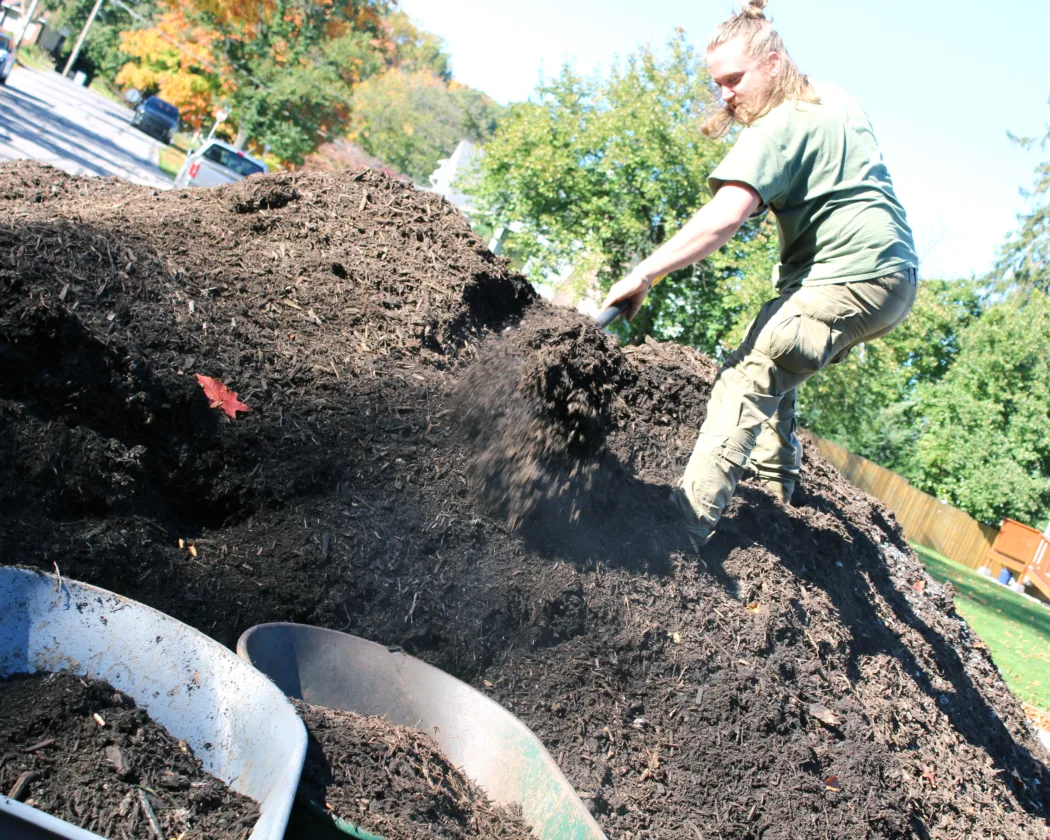
Mirror photo by Nate Powles / Wild Ones Ridge and Valley chapter President Chris Earle shovels mulch into wheelbarrows to lay the foundation for planting native species at Reciprocity Community Food Forest on Saturday.
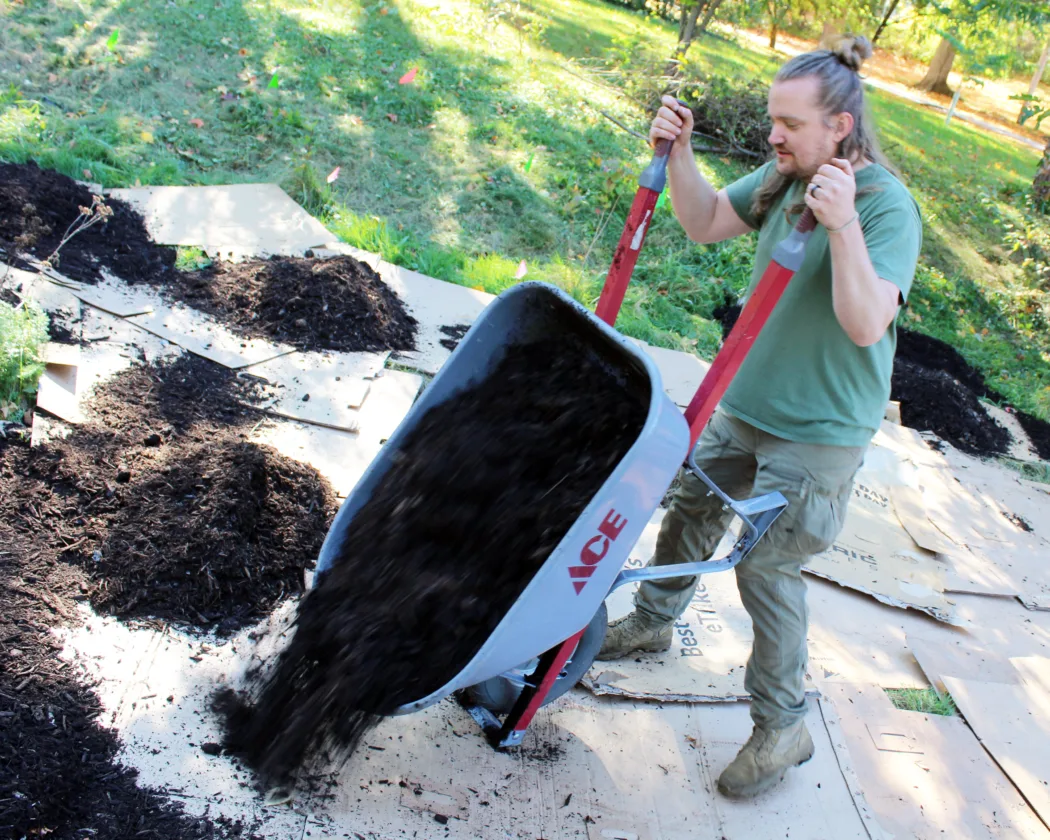
Mirror photo by Nate Powles / Wild Ones Ridge and Valley chapter President Chris Earle dumps mulch from a wheelbarrow to lay the foundation for planting native species at Reciprocity Community Food Forest on Saturday.
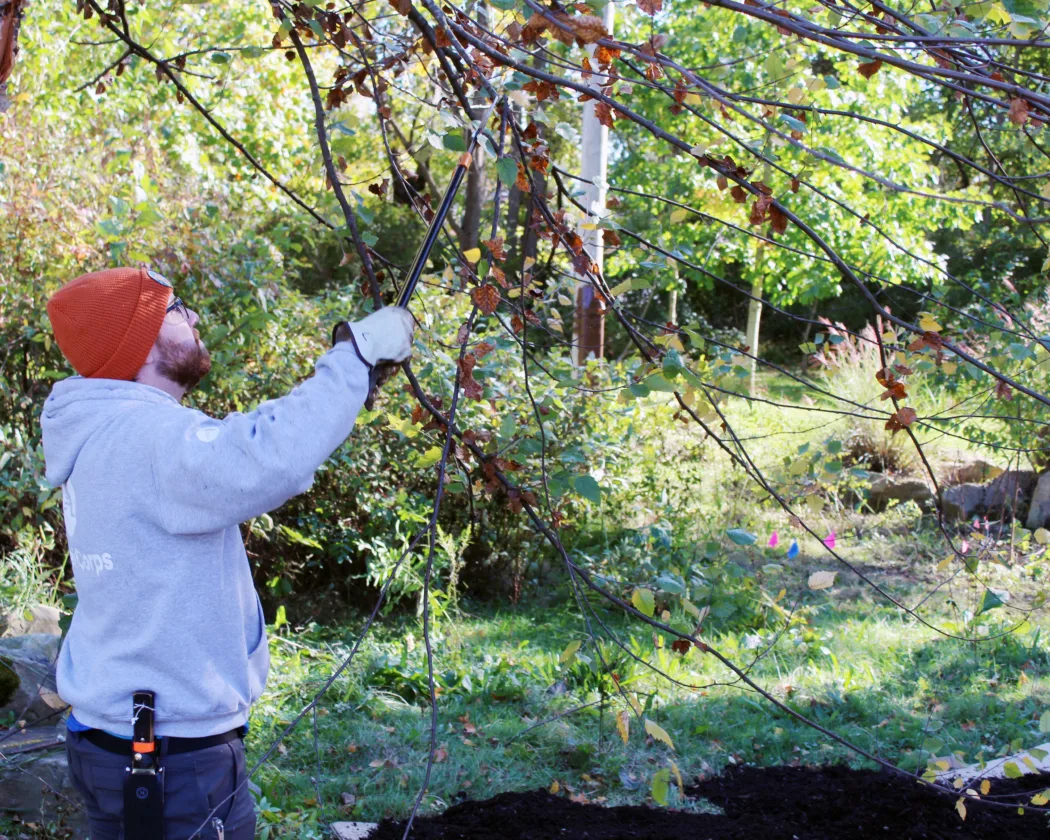
Mirror photos by Nate Powles / Wild Ones educator Tommy Butler trims tree branches at the Reciprocity Community Food Forest on Saturday.
Mirror photo by Nate Powles / Wild Ones Ridge and Valley chapter President Chris Earle shovels mulch into wheelbarrows to lay the foundation for planting native species at Reciprocity Community Food Forest on Saturday.
Mirror photo by Nate Powles / Wild Ones Ridge and Valley chapter President Chris Earle dumps mulch from a wheelbarrow to lay the foundation for planting native species at Reciprocity Community Food Forest on Saturday.
Mirror photos by Nate Powles / Wild Ones educator Tommy Butler trims tree branches at the Reciprocity Community Food Forest on Saturday.
Trending
Members of the local Wild Ones chapter hosted a rehabilitation project of their Browning Avenue site over the weekend, making progress toward their goal of starting a self-sustaining food forest for the community.
According to Ridge and Valley chapter President Chris Earle, the volunteer-run nonprofit received a 2026 grant from the Giant Company's Keep Pennsylvania Beautiful fund and is putting the money towards restoring the Reciprocity Community Food Forest along Browning Avenue, off of Logan Boulevard in Altoona.
Over two days of work, about 30 volunteers gathered to prepare the terrain and plant more than 720 individual seedlings of more than 30 native species to populate the formerly flooded area. They laid down cardboard to tamp down grass and placed mulch -- provided by the city -- on top.
According to Earle and group educator Tommy Butler, the neighborhood surrounding the 12,000-square-foot plain was a hotspot for flooding from the nearby river. Several properties formerly in the plain were condemned by the city and FEMA moved the families due to the damage from floods over the years.
"We adopted it to put in a food forest," Earle said. "We want to do a rehabilitation project once and not have to do this again. The goal is we establish these and then our organization is going to keep maintaining this place."
Wild Ones inherited the property from the city three years ago -- not long after the local chapter was established -- in the hopes of creating a community space that will become a habitat for regional plants and insects like the monarch butterfly, whose population had been in decline for several years prior to recently. Butler said more people have become interested in the survival of the monarch in recent years, leading to a significant revival of the species.
He said Wild Ones is planting milkweed at Reciprocity, as it is the only food source for monarchs, although it is poisonous for all other species. It gives them a natural deterrent to predators, as they become poisonous themselves.
According to Butler, it's not just the butterfly that has gone through a period of population decline.
"When was the last time you took a roadtrip and your windshield was covered with bugs?" Butler said. "For a lot of us, it's been a long time."
He said anywhere from 50% to 70% of the insect biomass has disappeared since 1970. That is mostly due to the loss of their native habitats, which is why he believes it's important for projects like the one at Reciprocity to restore those native plant species.
Birds have also suffered and declined in recent years for the same reasons, according to Butler. What's more, many people actually have unknowingly planted species that are harmful to birds, including heavenly bamboo -- or Nandina -- and burning bush.
"The heavenly bamboo is also colloquially to native gardeners known as 'bird murderer,' because it is a poisonous berry," Butler said. "We plant it all over the place and the birds think it might be food."
Gardeners should instead plant things like oak trees, dogwood or elderberry bushes, as they are highly nutritious for insects and birds. Oak trees, according to Butler, are "the number one keystone plant" because they support more than 430 different types of caterpillars alone.
Earle said part of the project includes a rain garden that will help with runoff and protect the surrounding neighborhood. Butler said the issue with the plain in the past was that it contained mostly standard grass, which has very shallow roots and cannot absorb much water, whereas the native species that the group is planting have much deeper roots and can absorb vast amounts of rain and water from the river.
"Long term, this will kind of reach a state of just maintenance, where our team just comes in and weeds it a couple times a year and removes any invasive plants that are coming in," Earle said, adding that it should become a self-sustaining environment once again.
The forest also features a wildflower meadow, a PawPaw grove, a blueberry section and several white oak trees.
Wild Ones has events throughout the year, typically at least one per month, even in the winter. The group hosts the annual PawPaw Festival in Duncansville, maple syrup tapping and maintenance at the Reciprocity forest and another adopted rain garden. Membership is $40 annually and more information about the nonprofit can be found on its website, https://paridgeandvalley.wildones.org.
Mirror Night Editor Nate Powles is at 814-946-7466.