
The gold standard: Van Zandt VA Medical Center a true asset for veterans, community
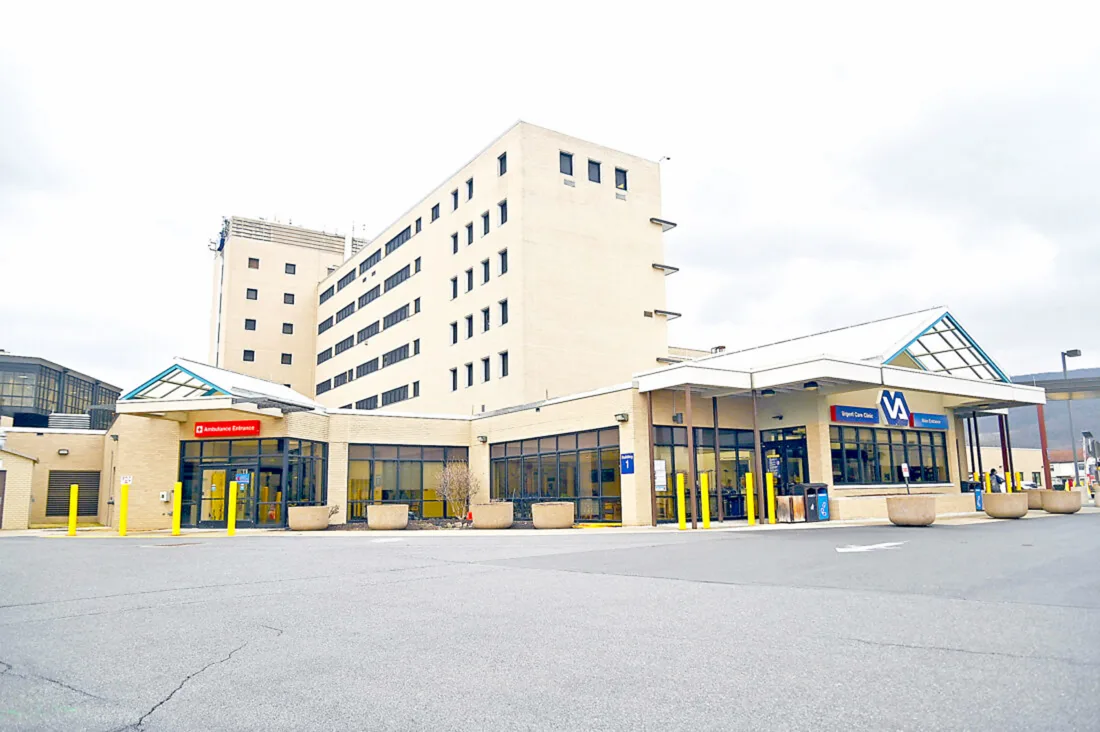
The James E. Van Zandt VA Medical Center is at 2907 Pleasant Valley Blvd., Altoona. Mirror file photo by Patrick Waksmunski
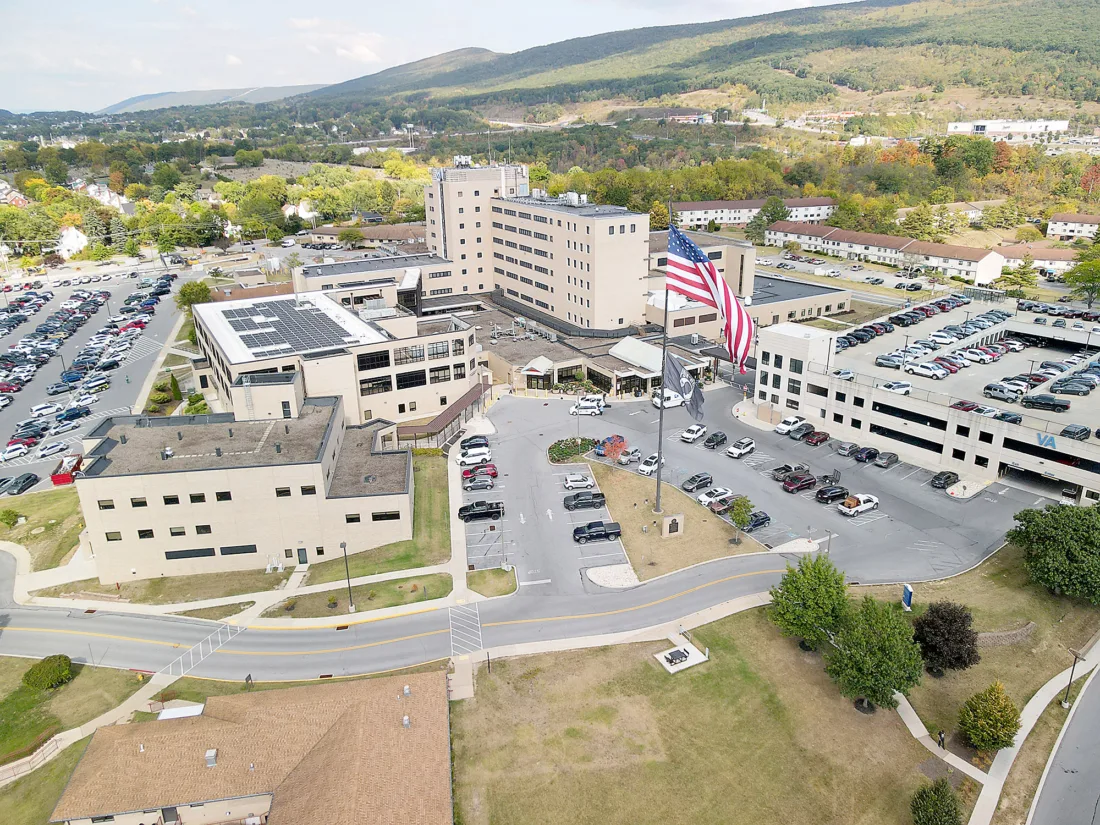
The James E. Van Zandt VA Medical Center is at 2907 Pleasant Valley Blvd., Altoona. Mirror file photo by Patrick Waksmunski
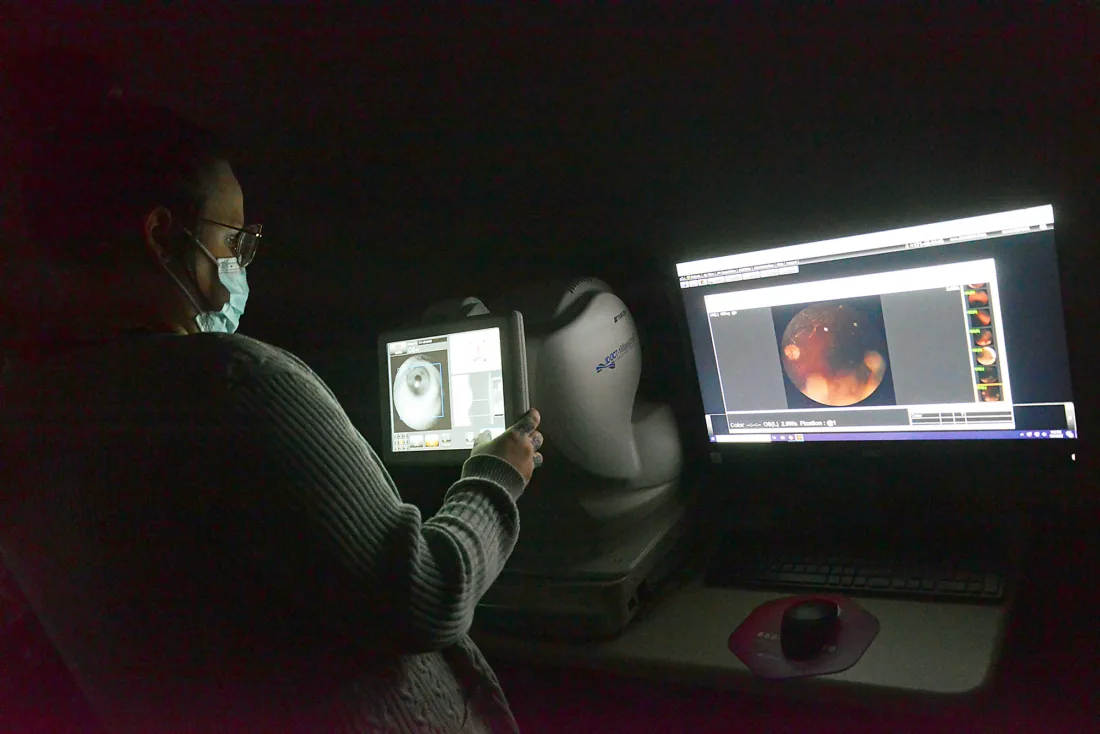
James E. Van Zandt VA Medical Center telehealth technician Katherine Heverly scans the eyes of Paul Johnson of Altoona with the facility’s new 3D optical coherence tomography machine on March 21, 2023. Mirror file photo by Patrick Waksmunski
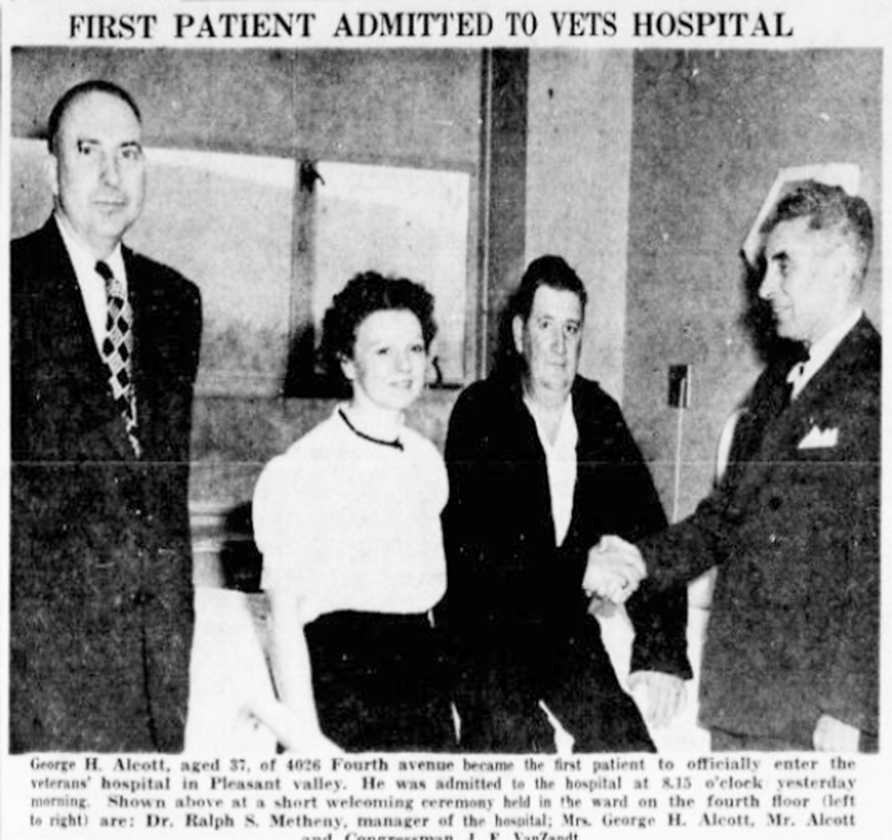
In this Altoona Mirror file photo, the Van Zandt VA Medical Center admits its first patient on Sept. 19, 1950. Mirror file photo
The James E. Van Zandt VA Medical Center is at 2907 Pleasant Valley Blvd., Altoona. Mirror file photo by Patrick Waksmunski
The James E. Van Zandt VA Medical Center is at 2907 Pleasant Valley Blvd., Altoona. Mirror file photo by Patrick Waksmunski
James E. Van Zandt VA Medical Center telehealth technician Katherine Heverly scans the eyes of Paul Johnson of Altoona with the facility’s new 3D optical coherence tomography machine on March 21, 2023. Mirror file photo by Patrick Waksmunski
In this Altoona Mirror file photo, the Van Zandt VA Medical Center admits its first patient on Sept. 19, 1950. Mirror file photo
Trending
Air Force veteran Bill Lightner has been a patient at Van Zandt VA Medical Center for 40 years, following a vehicle accident in 1987 in California that ultimately left him paralyzed from the chest down.
He's a fan.
"It's the best place around," Lightner said when asked recently whether the local hospital system, with its 14-county catchment area, is a valuable community asset.
Given that he has multiple issues due to the accident, Lightner likes that he can "get everything done under one roof" at Van Zandt, such as general services, pain relief, vision help, urology, chiropractic and orthopedic surgery, he said.
"It would take me weeks or months to get (all that is needed) done on the outside" -- in the community, he said.
Lightner likes that anyone who's enrolled in the VA system is met by a greeter at the main entrance of the hospital and immediately shown -- and sometimes escorted -- where they need to go.
He likes that the Community Living Center for nursing care, where he has gone for a 30-day rehabilitation stint, provides care that "goes above and beyond."
He likes that the VA system, including the hospital in Altoona and its five community-based outpatient clinics in DuBois, Huntingdon, Indiana County, Johnstown and State College, uses an integrated records system that makes interactions seamless, no matter where in the system one seeks care.
He likes it that Van Zandt can send him for higher level care to facilities in the system that are a reasonable distance away, like the hospitals in Pittsburgh and Cleveland, he said.
"It's a fabulous program," said Pennsylvania Army National Guard veteran Bob Baranik of the local VA.
Baranik appreciates the stability of the four-person medical team that treats him "like gold" and interacts with him on a first-name basis every time he comes in.
"At the VA, you're a lot more than a number," Baranik said. "It's the way medical care (everywhere) probably should be."
Baranik likes that the VA has a "scheduling system that is second to none" -- one that accommodates patients no matter their competence with modern electronic communications -- with older patients receiving paper notices and younger ones digital notifications, he said.
He likes that the system seeks reimbursements from the insurance carriers that cover VA patients, relieving pressure on taxpayers who would otherwise be paying the full cost of veteran care.
He likes that the facility offers plenty of stable jobs that help support the local economy.
He's impressed that all the Van Zandt employees seem to like their jobs.
He likes the flexibility of telehealth options, like the setup he uses at Van Zandt to connect with his arthritis doctor at the VA hospital in Pittsburgh -- a setup that involves a camera that can focus in on a particular joint on the hand, so the doctor can get a close-up view.
And he appreciates that providers based at Van Zandt travel to various CBOCs on certain days of the week, reducing the distances patients must travel, he said.
"Everything is first class," Baranik said. "We're so blessed to have such a beautiful property in the middle of Blair County."
Not everything is perfect, Baranik said.
"The waiting list (for specialists) is unfortunately a little long," he said. "There aren't enough specialists."
But when such a shortage forces a VA patient to go to a doctor in the community, the VA picks up the tab, he said.
He recently saw a UPMC doctor for a neck issue and hasn't seen a bill for it, he said.
Baranik also appreciates the national VA's attention to the hidden risks of foreign deployments for service members.
It's an attention based on lessons learned from the VA's failure to pay adequate heed to the not-yet-visible damage that soldiers discharged after Vietnam bore within them, according to Baranik.
"A lot left with ailments," Baranik said.
Afterwards, when those ailments manifested themselves, the former service members were hard pressed to prove it, he said.
It took Congress three decades to "straighten (that) out," he said.
Nowadays, service members returning from deployments receive a thorough, multi-day exam that aims to ensure there is no concealed illness, to ensure that the service members are "put back on the streets healthy," Baranik said.
Baranik tried unsuccessfully to enroll in the VA healthcare system for 20 years.
He finally succeeded after retirement, and his reduced income dropped him into a qualifying category.
Lightner paid for his post-accident care for three years.
Finally, his mother urged him to go to the VA, based on his own time in the Air Force and his father's prior time in the Marines.
"I went over and sure enough they saw me and got me on medications and supplies, and here I am 40 years later," Lightner said.
Van Zandt is 'jewel'
Van Zandt is "one of the jewels we have in Blair County," said Jim Patterson, chairman of the supervisors of Logan Township, where the hospital is located.
"Having (the facility) here is a source of tremendous pride for Altoona," said Altoona Mayor Matt Pacifico.
Van Zandt opened 76 years ago in September 1950.
Its creation was based on a 1938 law sponsored by local Congressman James E. Van Zandt that called for establishment of a VA hospital in central Pennsylvania, according to a timeline provided to the Mirror last year by Van Zandt spokeswoman Rachel Prichard.
The Congressman considered the local area "a robust region for veterans," hospital Director Derek Coughenour said then.
There were advocates in the region who would have preferred the hospital be placed in State College, but Van Zandt wanted it in Altoona, his hometown, saying the area here was more heavily populated with veterans, Coughenour said.
Van Zandt didn't learn that Altoona had actually been chosen to host the facility until after World War II, according to Prichard.
The VA adopted the Van Zandt name in 1983.
Van Zandt died three years later at age 87.
The facility began as a single-site, traditional hospital, with an emergency room and an intensive care unit.
It admitted 2,700 patients the first year.
It has evolved to include the outpatient clinics, with heavy emphasis on outpatient care at all locations, although there are 11 acute care beds at the hospital, along with 40 nursing home beds, as of last year.
The first clinic opened in Johnstown in 1997, with the Huntingdon and Indiana clinics opening in 2014.
The 24-hour ER at the hospital went away in 2014, replaced by an urgent care center that was open for 12 hours a day. The urgent care center went to round-the-clock operations in 2022.
As of last year, Van Zandt was handling 26,000 patients annually.
Annually, it handles about 521,000 outpatient visits and performs 2,300 surgeries, according to a statement from Prichard.
Van Zandt is one of the smaller VA facilities, but its outpatient and ambulatory surgery services are "robust," its use of telehealth and the clinics is "strong" and its range of services "broad," Prichard said.
Mirror Staff Writer William Kibler is at 814-949-7038.