
Making history: Blair County’s rich industrial past paves way for present innovation
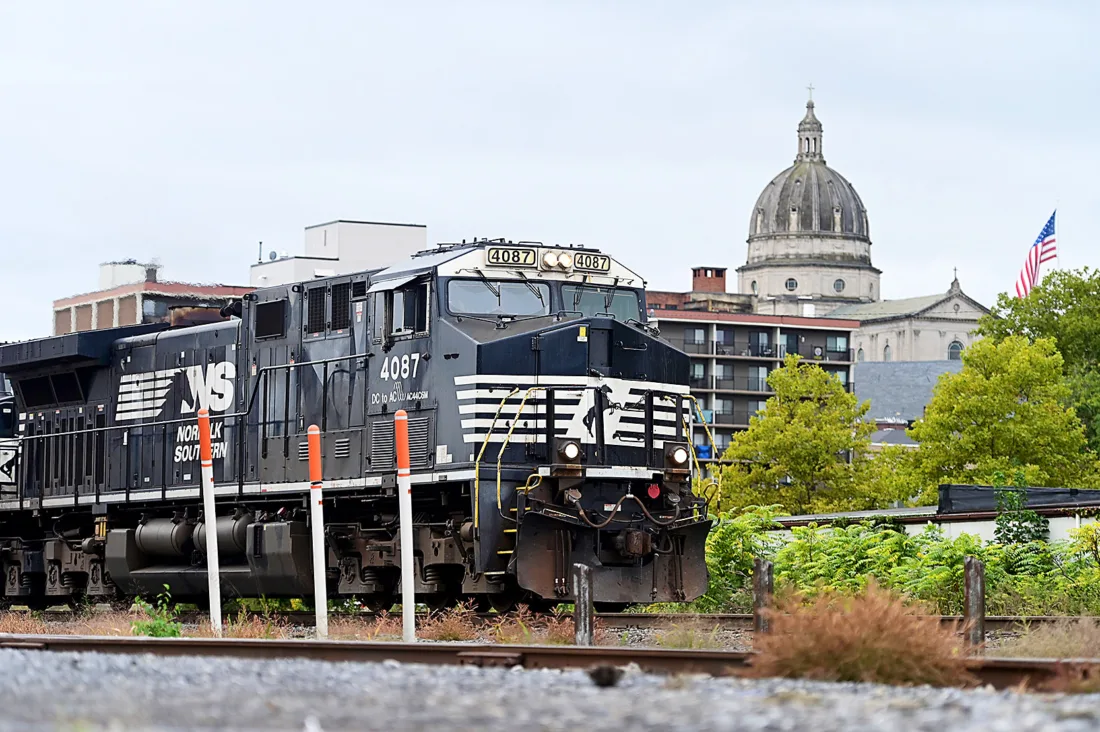
A Norfolk Southern train travels eastbound through Altoona on Monday morning. Mirror photo by Patrick Waksmunski
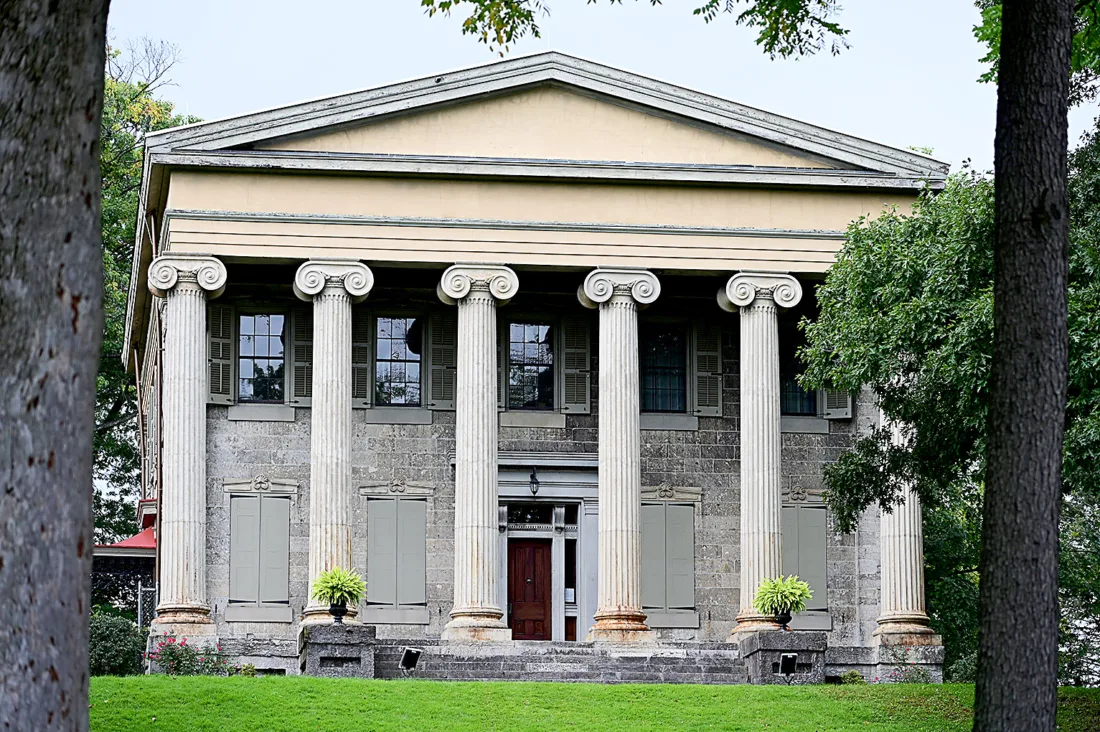
Ironmaster Elias Baker built the grand Greek Revival Baker Mansion during the height of regional iron production in the region. Mirror photo by Patrick Waksmunski
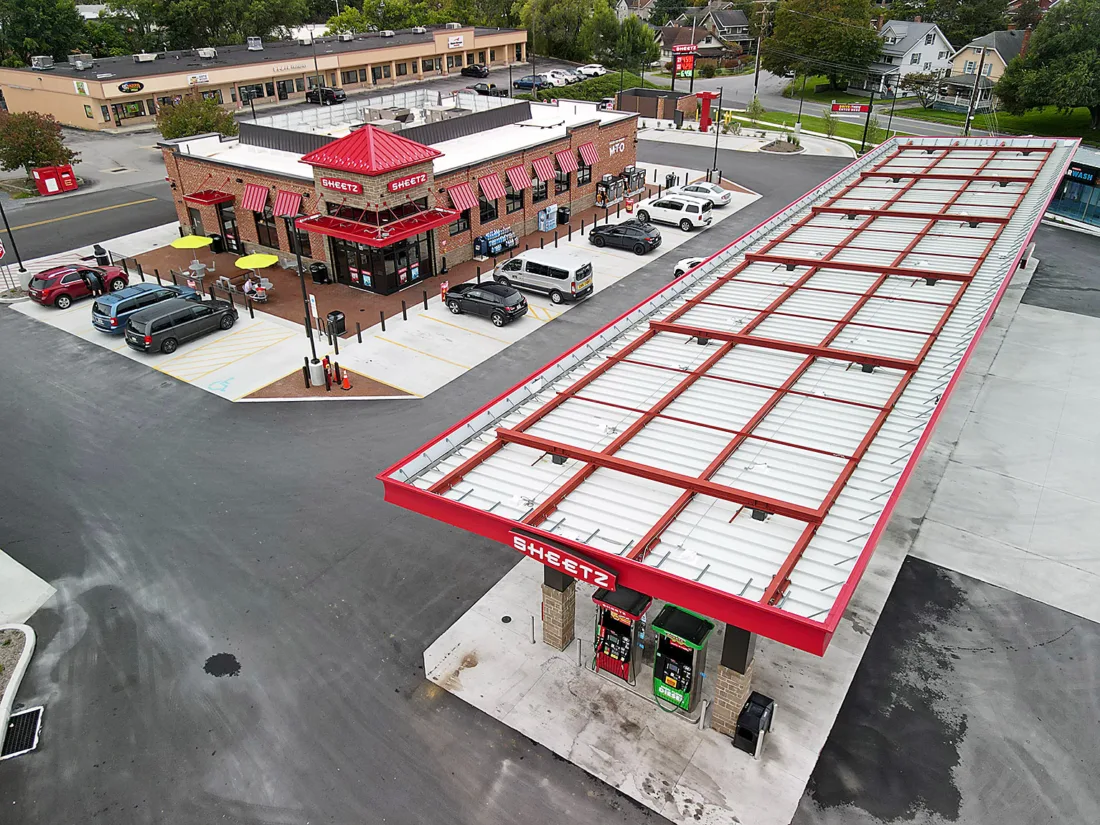
Sheetz, seen at 3315 Beale Ave., Altoona, has grown from a small dairy store in 1952 to one of the largest employers in Blair County with more than 800 locations in seven states. Mirror photo by Patrick Waksmunski
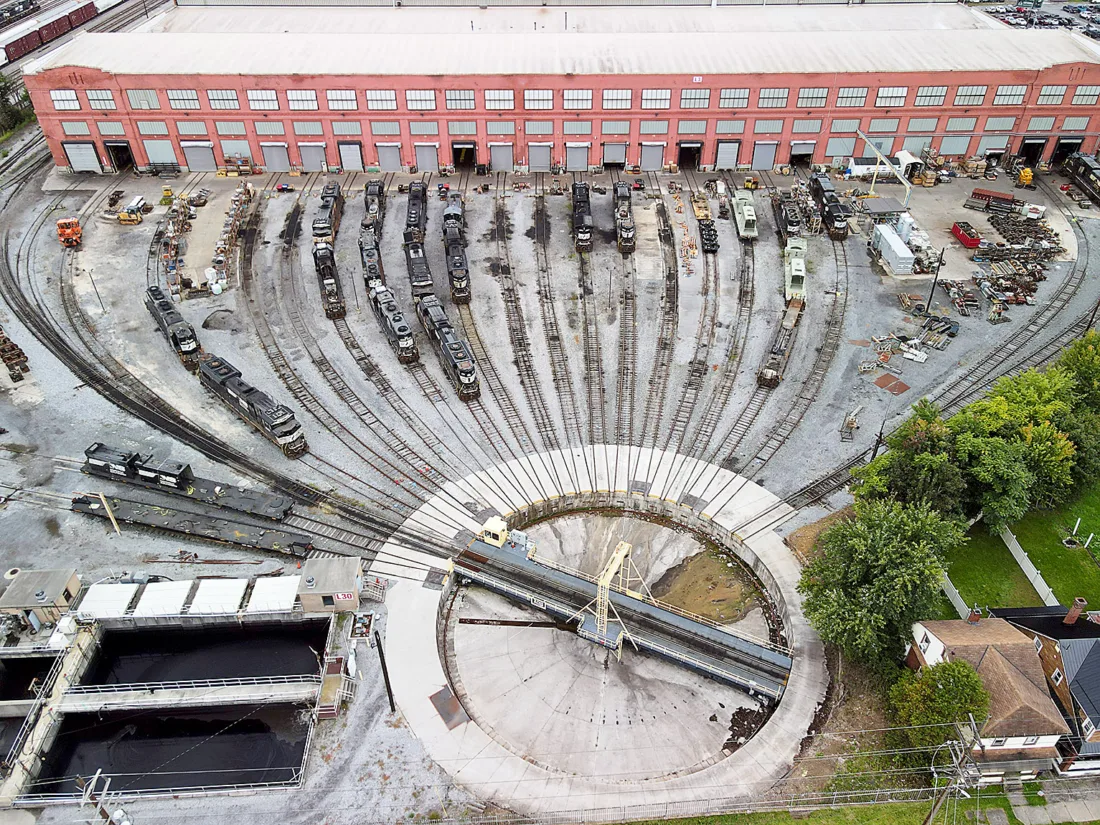
The Norfolk Southern Juniata Locomotive Shop turntable is seen in Altoona. The Pennsylvania Railroad established the city as a strategic company town and maintenance center. It grew into the world’s largest railroad repair and manufacturing complex. Mirror photo by Patrick Waksmunski
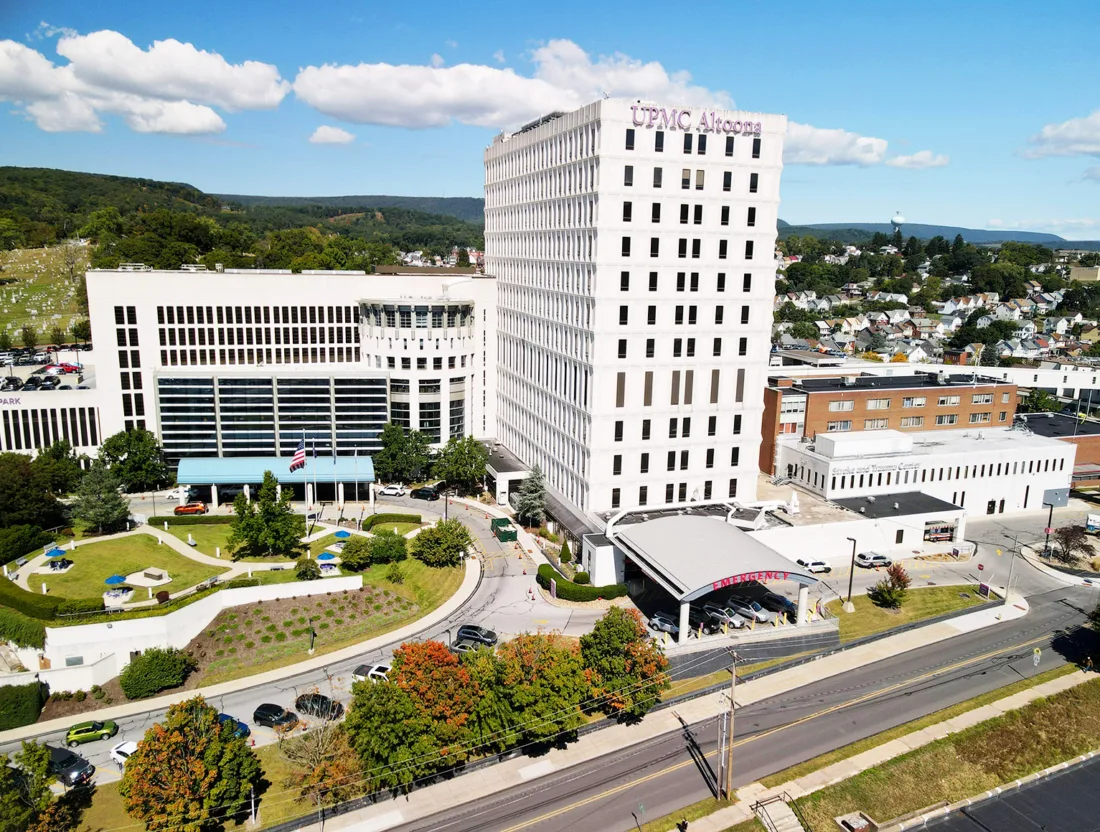
UPMC Altoona, at 620 Howard Ave., Altoona, is one of the region’s top employers. Mirror photo by Patrick Waksmunski
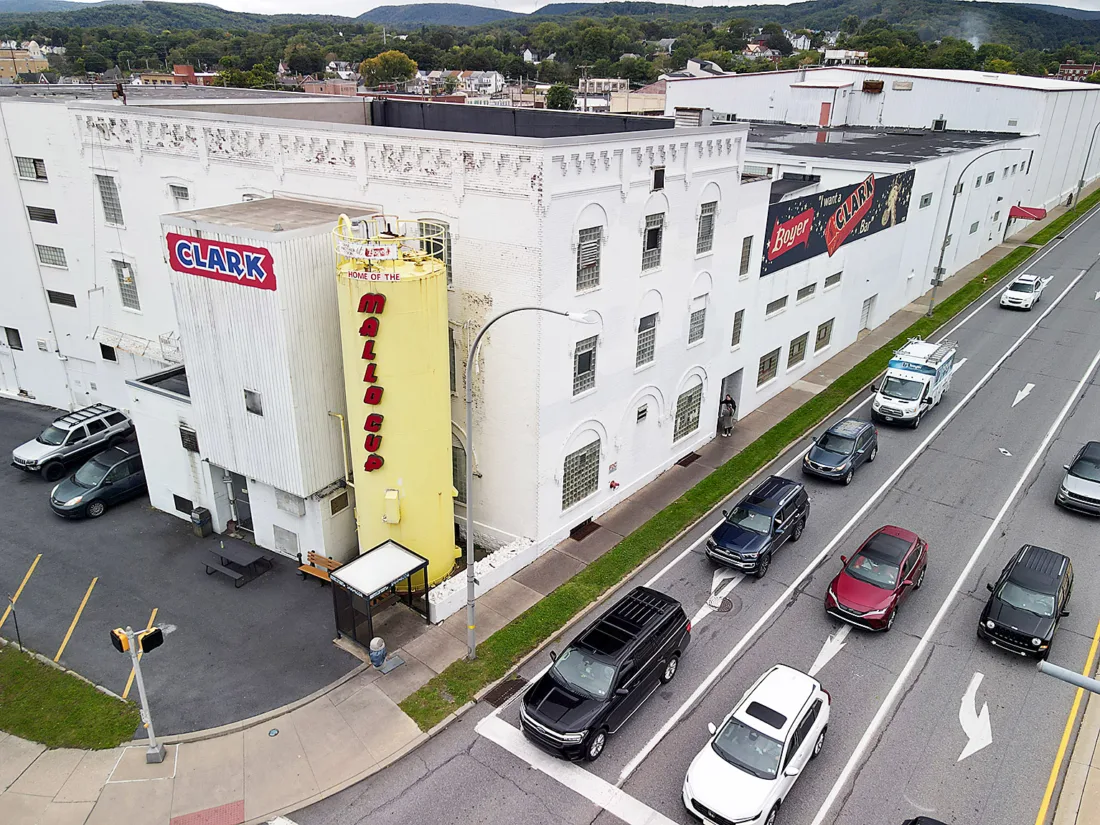
Boyer Candy Company, at 821 17th St., Altoona, is one of the city’s longest-running employers. Mirror photo by Patrick Waksmunski
A Norfolk Southern train travels eastbound through Altoona on Monday morning. Mirror photo by Patrick Waksmunski
Ironmaster Elias Baker built the grand Greek Revival Baker Mansion during the height of regional iron production in the region. Mirror photo by Patrick Waksmunski
Sheetz, seen at 3315 Beale Ave., Altoona, has grown from a small dairy store in 1952 to one of the largest employers in Blair County with more than 800 locations in seven states. Mirror photo by Patrick Waksmunski
The Norfolk Southern Juniata Locomotive Shop turntable is seen in Altoona. The Pennsylvania Railroad established the city as a strategic company town and maintenance center. It grew into the world’s largest railroad repair and manufacturing complex. Mirror photo by Patrick Waksmunski
UPMC Altoona, at 620 Howard Ave., Altoona, is one of the region’s top employers. Mirror photo by Patrick Waksmunski
Boyer Candy Company, at 821 17th St., Altoona, is one of the city’s longest-running employers. Mirror photo by Patrick Waksmunski
Trending
Blair County boasts a rich industrial past driven by the 19th-century iron trade, the expansion of early canal and transport networks and its rise to a world leader in railroading through the Pennsylvania Railroad.
The iron industry began in Blair County in the early 1800s as at one time the county had 21 iron furnaces, the first being Mount Etna, built in 1809. The county also had 12 forges, eight foundries and four rolling mills, according to Michael Farrow, chairman of the board of the Blair County Historical Society.
Ironmasters like Elias Baker built grand Greek Revival structures such as the Baker Mansion during the height of regional iron production.
Transportation limitations originally held back local iron until the Allegheny Portage Railroad and state canal systems opened access across the mountains in the 1830s.
Most iron furnaces in the area closed about 1880 when steel came around, Farrow said.
The iron industry closed up and moved to Pittsburgh and other larger cities, but Blair County would push on and help aid the steel industry, according to local historian Byron Smail on his Facebook page.
"Blair County had an abundant high quality supply of limestone and ganister rock. These two commodities would be mined and quarried to continue to help the steel industry prosper in Pittsburgh and the rest of America," Smail wrote.
In the 1880s, a group similar to today's chamber of commerce called the Board of Trade started to bring in mills that made silk thread. The original Altoona Silk Mill, owned by Frost & Sons of Paterson, N.J., opened Jan. 15, 1889, at 25th Street and Ninth Avenue and employed 200 workers, Farrow said.
Late in 1889, Schwarzenbach-Huber of Hoboken, N.J., signed a lease with Frost & Sons during their financial distress to operate the mill and subsequently arranged to continue the lease from the Altoona Board of Trade. Ultimately, they owned the building and added additional buildings.
"So, while Schwarzenback-Huber is 'remembered' as the original owner, it was, in fact, the second owner. Frost & Sons were the first owners, albeit only for about a year or so," Farrow said.
Schwarzenbach-Huber had the mill from 1889 to 1934.The successor to Schwarzenbach-Huber in Altoona was Puritan Knitting Mills, which purchased/operated the Altoona Silk Mill from 1934-64. In 1964, Puritan became a wholly owned subdivision of Warner Brothers Co. (Warnaco), Farrow said.
After silk, companies started making textiles, so textile companies were brought in.
Some of those companies included Altoona Overhaul Co., Altoona Textile Co., Blair Shirt Co. and Roaring River Mills.
Railroad hub
Founded in 1849, Altoona was established by the Pennsylvania Railroad as a strategic company town and maintenance center. The Altoona Works grew into the world's largest railroad repair and manufacturing complex, employing thousands and spawning innovations like the K4S locomotive.
The Pennsylvania Railroad built massive maintenance facilities like the Altoona Works and the Hollidaysburg Car Shop to conquer the steep Allegheny ridge. Hollidaysburg served as the primary transfer hub between the Pennsylvania Canal and the Allegheny Portage Railroad.
By the 1890s, the railroad ran out of space in downtown Altoona and expanded into Juniata. In 1899, the railroad again ran out of space in Juniata and stretched to 27th Street. The South Altoona shops were built shortly thereafter, Farrow said.
The heyday of the railroad in Altoona was up until World War II, Farrow said. However, the railroad remains a significant employer in the area with about 430 employed at Norfolk Southern's Juniata Locomotive Shop, and is the largest locomotive repair shop in North America.
Paper mills became significant employers in the area when Daniel Bare opened a mill in Roaring Spring. A mill was opened in Tyrone in 1880 and another in Williamsburg in 1905. The Williamsburg Westvaco mill closed in 1975, Tyrone's Westvaco Mill closed in 2001 and was reopened in 2003 as American Eagle Paper Mills. The paper mill in Roaring Spring, most recently operated as Appvion, closed in 2021.
In 1950, Altoona Enterprises, predecessor of today's Altoona-Blair County Development Corp., spearheaded the Jobs for Joes campaign, an industrial fundraising effort.
"The goal was to attract 20 new manufacturing industries to diversify Blair County's economy away from sole reliance on the Pennsylvania Railroad shops," Farrow said. "Their goal was to bring in companies with 400 or less people for the next 20 years, they helped bring in 20 industries."
Some of the major manufacturing companies attracted to the Altoona area through these campaign funds and industrial park developments included: Sylvania Electric Products, Butterick Co., SKF Industries, Small Tube Products, Veeder-Root Inc., Boyer Candy Company, Crane company, Warnaco/Puritan Sportswear, F.L. Smithe Machine Company, Altoona Shoe Co., Chicago Rivet & Machine Co. and General Telephone Co.
Today, healthcare is the county's dominant industry, accounting for nearly one in four jobs. Retail and manufacturing remain major economic anchors. Manufacturing's location quotient of 1.36 confirms a meaningful regional specialization, according to information provided by ABCD Corp. President/CEO Stephen McKnight.
The five largest sectors -- healthcare, retail, manufacturing, accommodations/food service and transportation/warehousing -- represent approximately 64% of county employment. Blair County is particularly concentrated in manufacturing, healthcare, transportation, retail and agriculture compared with the rest of Pennsylvania, McKnight said.
The county's major employers include Sheetz, UPMC Altoona, state and federal government, Altoona Area School District, Walmart, Smith Transport, Giant Food Stores and Pyramid Healthcare, McKnight said.
"In the last 50 years, Blair County's employment base has significantly diversified. We are no longer concentrated in a single sector. This has resulted in a more resilient economy; one that is less susceptible to sudden disruptions," McKnight said.
McKnight said it's important to not underestimate the scale of what the railroad once was.
"It is the only reason Altoona exists in its physical form and as a statistically relevant economy today. At its height, the Pennsylvania Railroad employed approximately 16,500 workers in its Altoona Works operations alone. With support jobs and families that followed, Blair County's population peaked in 1940 at more than 140,000 people," McKnight said.
All businesses today push to do more with less.
"They always strive for more efficient and robust output. All sectors achieve that through larger capital investments in automation and technology. As a result, Blair County's GDP has continued to increase. Despite automation, our labor force also continues to grow, which is a good signal for the future. New people are moving in to contribute to that output, often with different and high demand skills. We are seeing an increase in spending power evident in our retail and food/beverage sales along with housing lease rates and sale values," McKnight said.
Mirror Staff Writer Walt Frank is at 814-946-7467.