
Getting an earful: Cambria Heights students pick own sweet corn, get valuable ag lesson
Cambria Heights students pick own sweet corn, get valuable ag lesson
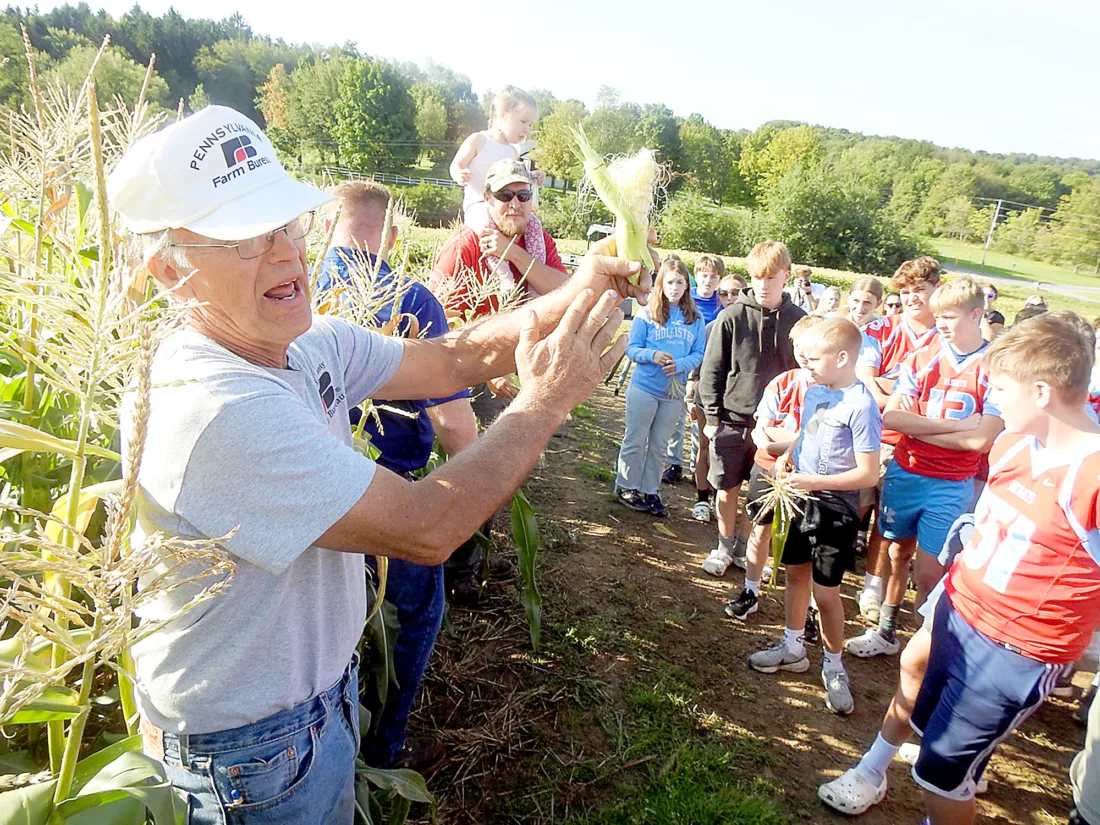
Cambria County Farm Bureau President Marty Yahner holds an ear of corn on Wednesday while teaching Cambria Heights Middle School students about corn. Mirror photo by Matt Churella
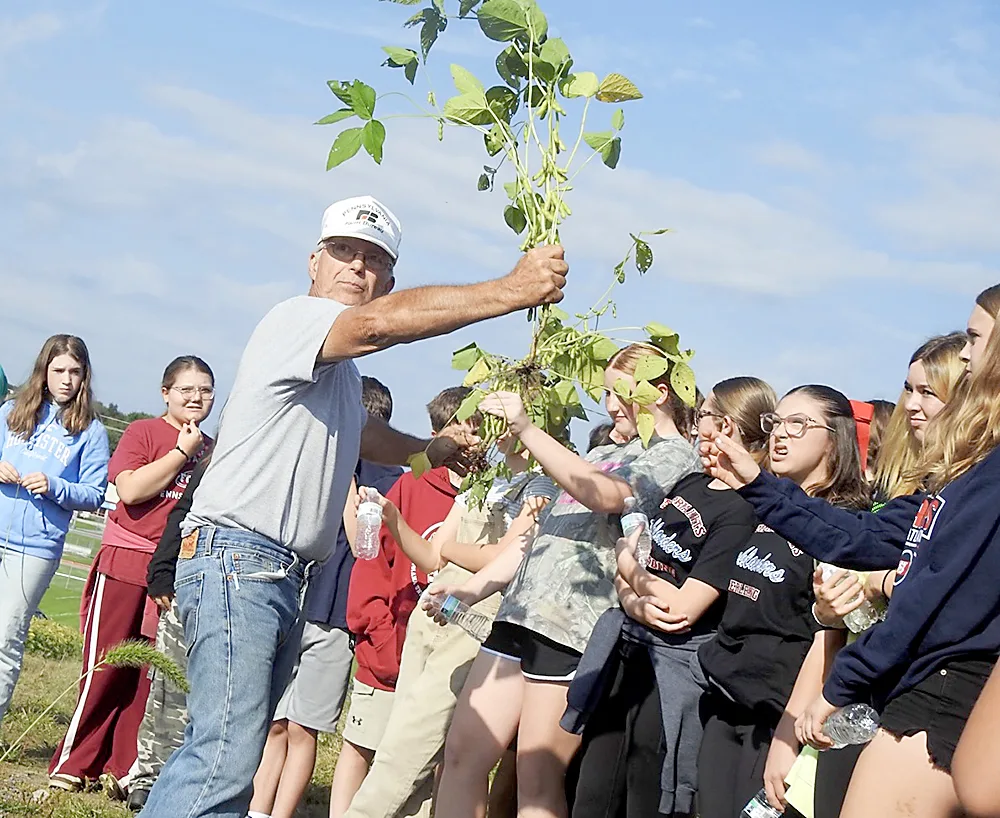
Cambria County Farm Bureau President Marty Yahner teaches Cambria Heights eighth graders about soybean plants Wednesday at Yahner Brothers Farms’ field in Clearfield Township. Mirror photo by Matt Churella
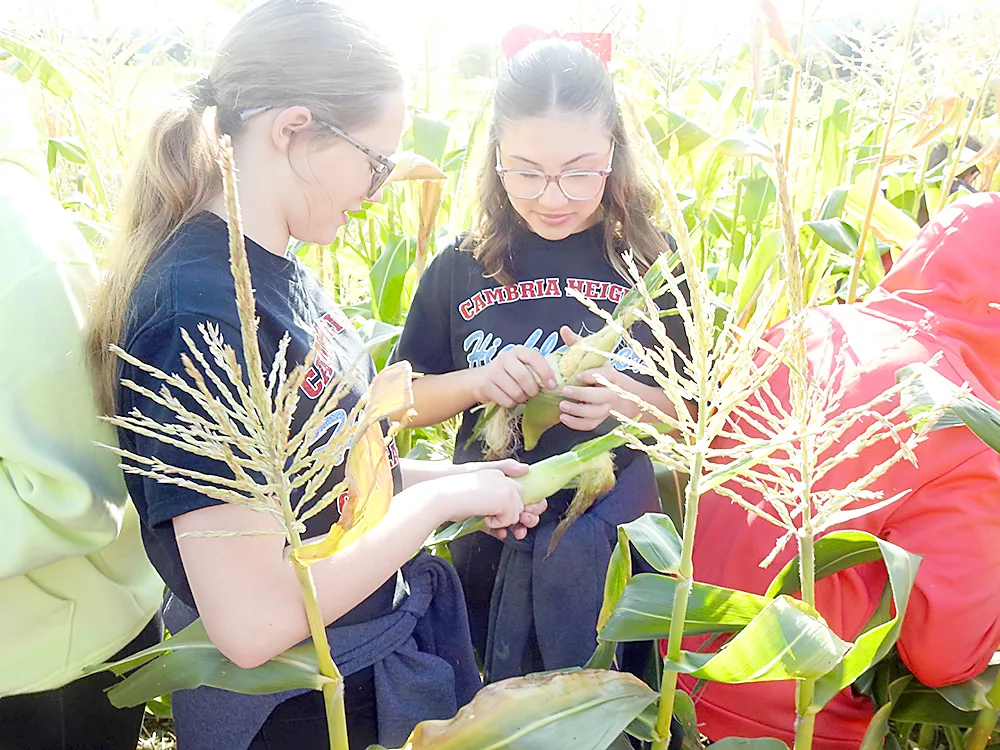
Cambria Heights eighth graders Emily Wyland (left) and Hannah Petrisko pick corn from Yahner Brothers Farms’ field on Wednesday morning in Clearfield Township. Mirror photo by Matt Churella
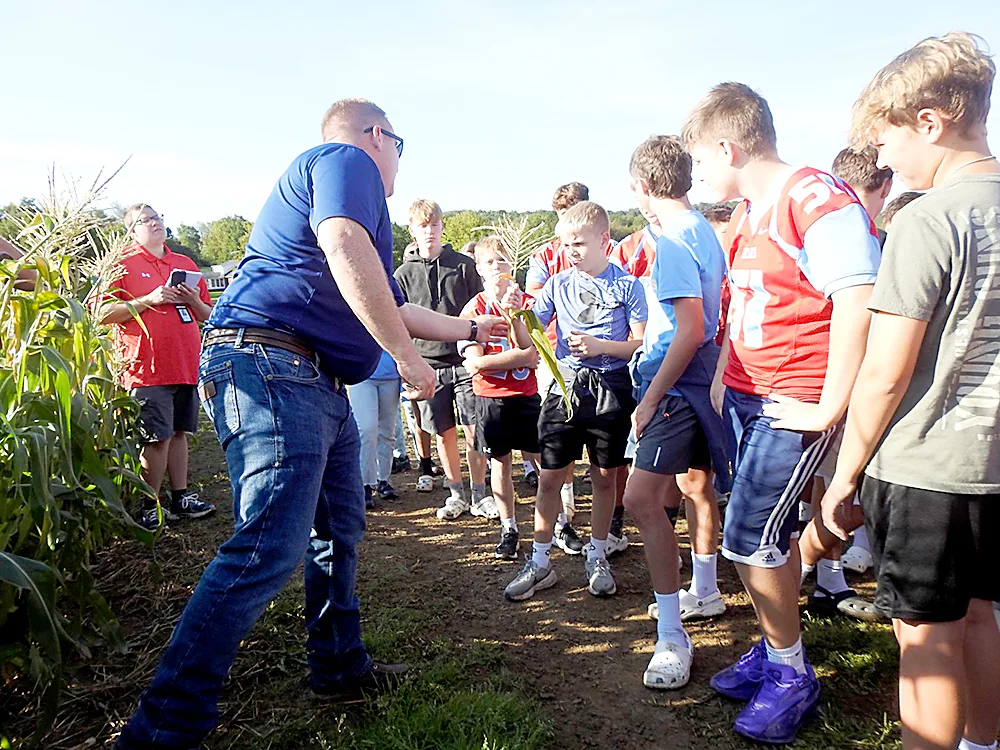
Pennsylvania Farm Bureau President Tommy Nagle hands Cambria Heights eighth grader Charlie Krug the tassel of a corn plant on Wednesday while teaching the students about how corn is a self-pollinating plant. Mirror photo by Matt Churella
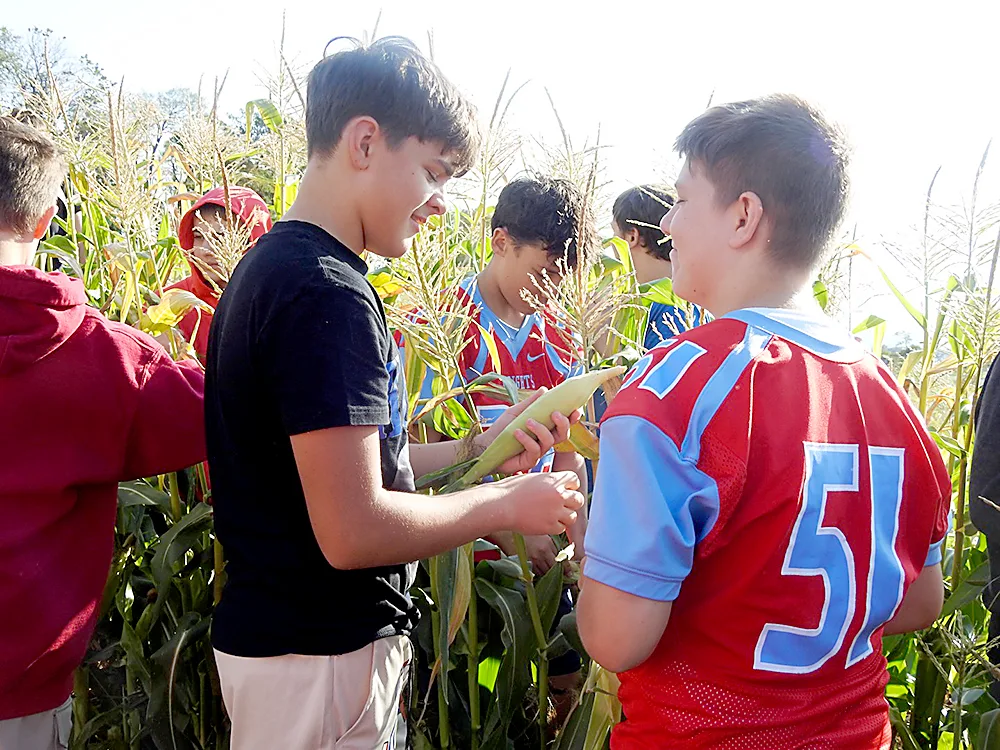
Cambria Heights eighth graders Ryland Fetsko (left) and Liam Wilkie pick corn from Yahner Brothers Farms’ field on Wednesday. Mirror photo by Matt Churella
Cambria County Farm Bureau President Marty Yahner holds an ear of corn on Wednesday while teaching Cambria Heights Middle School students about corn. Mirror photo by Matt Churella
Cambria County Farm Bureau President Marty Yahner teaches Cambria Heights eighth graders about soybean plants Wednesday at Yahner Brothers Farms’ field in Clearfield Township. Mirror photo by Matt Churella
Cambria Heights eighth graders Emily Wyland (left) and Hannah Petrisko pick corn from Yahner Brothers Farms’ field on Wednesday morning in Clearfield Township. Mirror photo by Matt Churella
Pennsylvania Farm Bureau President Tommy Nagle hands Cambria Heights eighth grader Charlie Krug the tassel of a corn plant on Wednesday while teaching the students about how corn is a self-pollinating plant. Mirror photo by Matt Churella
Cambria Heights eighth graders Ryland Fetsko (left) and Liam Wilkie pick corn from Yahner Brothers Farms’ field on Wednesday. Mirror photo by Matt Churella
Trending
PATTON -- Cambria Heights eighth graders picked their own lunch out of a corn field Wednesday morning as the second part of an annual partnership between the district and the Cambria County Farm Bureau took place.
As seventh graders in the spring, farm bureau members gave the students an earful about agriculture and how their food is made.
Although they intended to watch the sweet corn get planted in Yahner Brothers Farms' field across from the district's football field in Clearfield Township, they were unable to at that time because it rained and made the field too wet, said Cambria County Farm Bureau President Marty Yahner, who co-owns the field with his brother, Rick.
Farm Bureau member George Greiner brought his corn planter out three weeks later and planted the corn when it was dry enough to do so, Yahner told the students while standing in the field.
Thankfully, because there was a lot of rain this summer, the students were actually able to harvest the corn themselves -- something last year's eighth grade class didn't get to experience, with the crops not growing due to drought stress.
Yahner, who also raises beef cattle, donated 20 pounds of hamburger for the students to enjoy with their corn later in the afternoon.
Agriculture is the No. 1 industry in Pennsylvania based on economic activity, but every year, farmers face a lot of challenges, Yahner told the students.
For example, there was a major freeze this spring that was "really devastating" for a lot of orchard farmers, Yahner said.
"The blossoms froze ... so, their income is gone for the year," Yahner said. "That's just one of a thousand things that can go wrong for farmers."
By looking at the back side of the corn field's last row, students got to see evidence of another example, with several stocks pulled over from either deer or raccoons getting to the corn first, Yahner said, adding deer like hiding in the back row so they can eat farmers' crops.
"That's what they do out in all of our fields; they eat our crops," Yahner told the students.
Pennsylvania Farm Bureau President Tommy Nagle told the students that corn is a self-pollinating plant that has a male part called a tassel, which is at the top of the plant, and a female part called corn silk -- the thread-like fibers on ears of corn.
Male pollen grains come out of the plant and land on the silks sticking out to fertilize the female egg cell and form the cob, Nagle explained, adding each strand of silk connects to a single kernel of corn in the cob.
According to Nagle, a majority of the yellow corn grown in Cambria County goes to either livestock feed or to Pennsylvania Grain Processing, an ethanol plant in Clearfield.
Once there, two other products are made besides ethanol, Nagle said, adding distiller's grain is sold back to livestock feed in the dairy, pork and poultry industries, while dry ice -- a frozen form of carbon dioxide -- is produced to keep frozen foods safe for shipping.
The students also learned about nitrogen, phosphorus and potassium -- the three main fertility nutrients that all plants need to grow.
Soybeans, like every species of legume, have nodules that take nitrogen gas out of the atmosphere and make a usable form of nitrogen for the plant, Yahner said.
If you take one of the nodules and squeeze it in your fingers, it should have a pink juice, Yaher said, adding that means the plant is healthy.
Nagle said a lot of environmental groups are worried about the amount of nitrogen farmers add to their crops. What a lot of farmers do now is inject the nitrogen directly into the soil, so when it rains, there's no runoff, he said.
"Farmers are constantly evolving to do a better job to make it more productive for us, but also to make it safer for you," Nagle said to the students. "We want you to understand that the stuff we're doing is for the protection of our local communities."
That makes sense what you think about it, Yahner said, adding farmers are in business to make a profit. One of the ways they do that is by keeping their input costs down and not using more fertilizer, pesticides or herbicides than what's necessary, he said.
"Some people think farmers are using the maximum amount allowed, or maybe more than the maximum amount allowed, and it's going into the streams and creeks," Yahner said. "Believe me, that is the farthest thing from the truth."
Eighth grader Hannah Thomas said she didn't realize what all went into making the food that she eats every day.
"This is special because you get to see all of the hard work that actually goes into farming," Thomas said.
Fellow classmates Makayla Kerr, Preston Kline and Grant Wharton said they also learned a lot about agriculture and were eager to eat the corn.
"I'm excited to eat lunch because I know it's handpicked by all of my nice classmates," Kerr said.
Kline said he learned a lot about the resources needed to make corn and other plants.
"It'll be a good lunch today for school," Kline said. "I love corn."
Now in its fourth year, middle school Principal Jarrod Lewis said the district's community partnership with the farm bureau is nice because students are able to see the process of where their food comes from and how it's made.
"You kind of take that for granted when you see that in the grocery store," Lewis said, but "to see that whole process is always very interesting."
Mirror Staff Writer Matt Churella is at 814-946-7520.