
Warm handoff programs aid nearly 70K
Trending
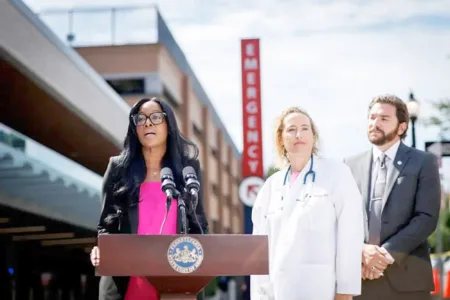
LANCASTER -- Close to 70,000 people have gotten substance abuse treatment through warm handoff initiatives established in Pennsylvania to help people seamlessly connect with addiction programs, officials in Gov. Josh Shapiro's administration said Tuesday.
"Since Governor Shapiro took office, warm handoff programs have been operating in nearly 170 Pennsylvania hospitals," Dr. Latika Davis-Jones, Secretary of the Department of Drug and Alcohol Programs, said at a press conference in Lancaster. "We have recorded more than 93,000 warm handoff encounters, each representing the opportunity to assess the need for substance use disorder treatment and connect someone to care when they need it the most. Those encounters have led to almost 68,000 direct referrals to treatment."
These warm handoffs are intended to directly connect people who have been treated at the hospital for drug overdoses with addiction treatment services.
"Rather than leaving someone to fend for themselves to navigate or treatment and recovery systems on their own, a warm handoff provides a direct and personal connection to care. Providing door-to-door referrals from an Emergency Department to a treatment facility can make all the difference in saving lives and leading individuals onto a path to recovery," Davis-Jones said.
The 2026-27 state budget includes $5 million to sustain walk-in behavioral health crisis stabilization centers, prioritizing regions with limited access to immediate, in-person care. The centers are typically open 24 hours a day, seven days a week and are secure, no-appointment facilities that provide immediate mental health and substance use care.
State officials say the new walk-in centers will be located in areas with limited access to immediate, in-person care.
In addition to the funding for walk-in centers, the budget also provided $10 million to fund the 988 suicide and crisis hotline. Shapiro administration officials say the funding will allow the 988 program to boost its crisis intervention services, expand mental health resources and maintain round-the-clock staffing for the hotline.
More than 145,000 residents called the 988 hotline last year and officials say 90% of those calls were resolved over the phone without requiring a mobile crisis response or referral to a walk-in center.
The number of overdoses and overdose deaths has fallen in the years after the COVID-19 pandemic as the state has expanded treatment options and made naloxone increasingly available to stop overdoses before they turn fatal.
There were almost 4,500 overdose deaths in Pennsylvania in 2019. There were about 3,300 overdose deaths last year, according to the Department of Health.