
Fracking comeback faces new obstacle
Trending
Gas industry officials and environmental advocates alike predict that rising energy demand from data centers will drive a surge in natural gas demand.
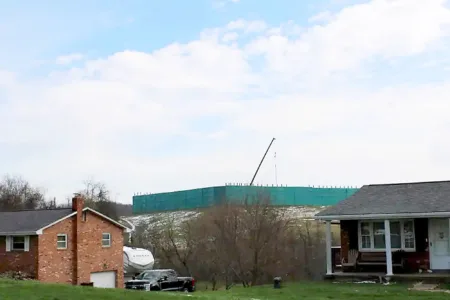
Environmental groups are pushing for stricter setback requirements before an expected resurgence in fracking. Current rules bar so-called unconventional drilling within 500 feet of occupied buildings. Critics say those setbacks do not adequately protect nearby residents, citing dozens of studies documenting health problems among people who live near fracking activity.
More than 2,000 horizontal wells were drilled in 2011, the busiest year of fracking in Pennsylvania. The state has not seen more than 1,000 wells fracked since 2014.
Last year, drilling companies completed 444 unconventional wells. As of Friday, they had begun drilling 227 wells this year.
Federal data shows that increased energy demands are already translating into increased fracking with over 500 wells completed in the region including Pennsylvania, Ohio and West Virginia in the first half of 2026. That's up from 399 wells completed in the region in the first half of 2025.
A coalition of environmental groups petitioned the state's Environmental Quality Board to increase the setback to 1 kilometer from any occupied building or drinking water wells. The petition seeks to increase the setback for schools, hospitals and other buildings serving vulnerable populations to 1 mile.
The environmental groups noted that a statewide grand jury in 2020 called for more restrictive setbacks for fracking activity. But at the time, officials with the state Department of Environmental Protection indicated they believed the setbacks could be changed only through legislation.
Industry groups say the proposed setback requirements would effectively create a moratorium on fracking activity.
"Make no mistake, this proposal is a de facto ban on natural gas development in Pennsylvania," Stephanie Catarino Wissman, executive director of the American Petroleum Institute in Pennsylvania, said ahead of a November 2025 hearing on legislation to establish a 2,500-foot setback requirement. "Our industry is producing natural gas safer and more efficiently than ever before -- advancing best practices and following the state's robust regulatory framework, including current setbacks, while providing affordable, reliable energy, generating billions of dollars for our economy and supporting 400,000 jobs for Pennsylvanians."
Environmental groups do not dispute that increased setbacks would greatly reduce the surface area available for drilling activity.
Even so, about 2.2 million acres of land in Pennsylvania would remain open to fracking. And even if the state enacted stricter setback requirements, property owners could still voluntarily allow gas companies to drill closer to their homes, Katie Jones, Ohio River Valley coordinator for FracTracker Alliance, told CapitolWire/State Affairs on Friday. More than 800 wells have been drilled within 500 feet of buildings despite the existing setback, she said.
Jones calculated that 27% of the state's population lives in regions affected by fracking activity. That figure includes almost 600,000 children.
"It's really not the fault of Pennsylvanians for living where they do," said Matt Kelso, co-founder and manager of data and technology for FracTracker Alliance. "The people already live there, and you're trying to put this new possibly harmful activity in their neighborhood. I don't think you should blame them for living less than whatever the setback distance is."
Gas industry officials say they are already taking steps to ensure that drilling activity takes place as safely as possible.
"It is our top priority to protect the health and safety of the communities and environment in which we operate, and we follow industry best practices, standards and government regulations to ensure strong environmental and public health protections," Wissman said in a statement. "As an industry we rely on data, facts and science that we put into practice every day by employing thousands of scientists and engineers that are innovating, safely producing, refining and delivering affordable, reliable energy to all Americans."
Environmental advocates say technological advances allow gas drillers to drill horizontally for miles, which would offset much of the reduction in surface area available for fracking if the setbacks are increased.
"Even if you have a limited amount of space to do the above-ground drilling, you still have so much area below ground," Jones said.
State officials have indicated that the Environmental Quality Board's decision is expected by the end of 2026.