
Governor hopefuls weigh in on Medicaid issues
GOP’s Garrity faces incumbent Democrat Shapiro in November
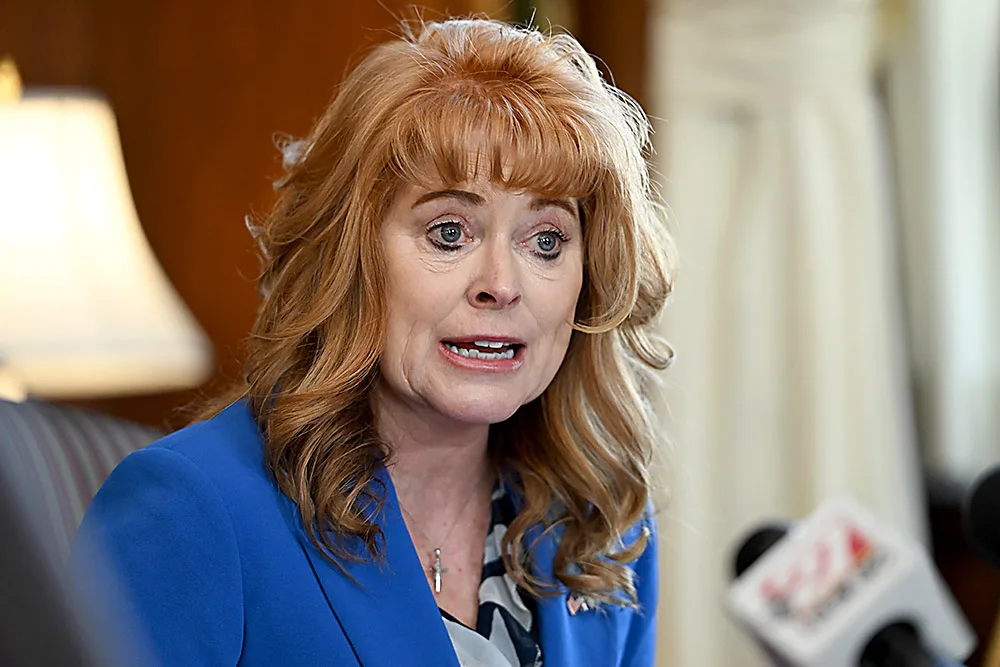
Pennsylvania state Treasurer Stacy Garrity speaks during a news conference in Treasury Department offices, on April 23 in Harrisburg. The Associated Press
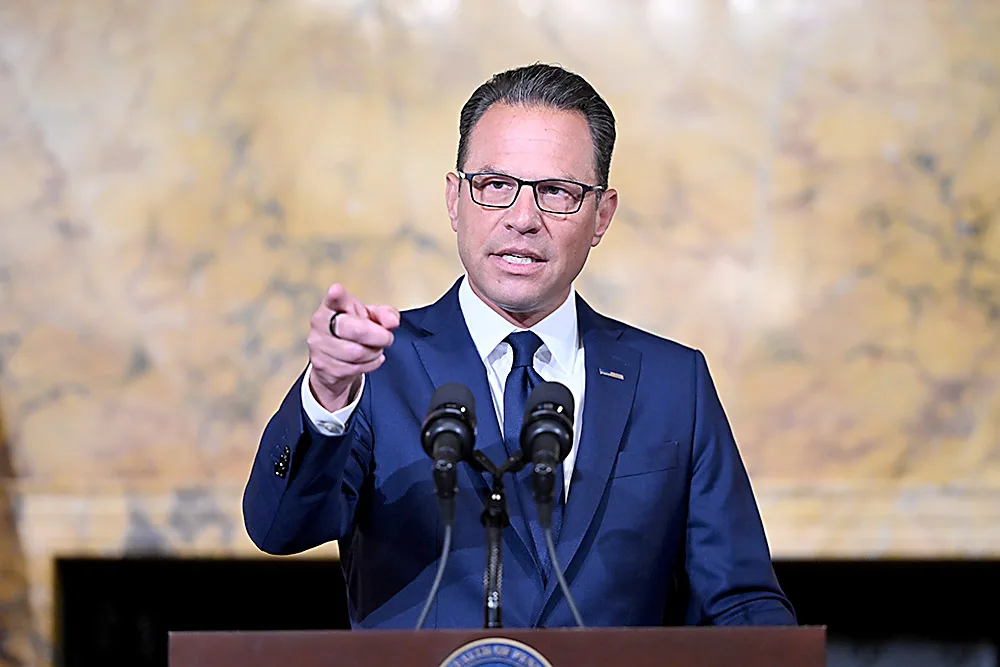
Pennsylvania Gov. Josh Shapiro speaks during a news conference at the state Capitol Aug. 18 in Harrisburg. The Associated Press
Pennsylvania state Treasurer Stacy Garrity speaks during a news conference in Treasury Department offices, on April 23 in Harrisburg. The Associated Press
Pennsylvania Gov. Josh Shapiro speaks during a news conference at the state Capitol Aug. 18 in Harrisburg. The Associated Press
Trending
HARRISBURG -- Key federal Medicaid changes will roll out next year, and Pennsylvania's governor will play a crucial role in how they're implemented or challenged.
The sweeping 2025 federal budget law, President Donald Trump's signature piece of second-term legislation, is expected to lead millions of people to lose coverage and cut federal Medicaid spending by hundreds of billions of dollars. Independent research shows it will create administrative and financial complications for states, leaving them with big decisions.
One of the biggest changes is that working-age adults who don't fall into traditional Medicaid categories, such as those for people who are pregnant or have disabilities, will be subject to new work rules and have their eligibility checked more frequently. Hundreds of thousands of such people in Pennsylvania have coverage now because former Democratic Gov. Tom Wolf expanded eligibility, as allowed under the federal Affordable Care Act of 2010.
The Medicaid issue offers a clear contrast in the race between Democratic Gov. Josh Shapiro and his Republican challenger, Treasurer Stacy Garrity, and it gives insight into how they would manage a massive program that provides healthcare for nearly 2.9 million Pennsylvanians. The federal government and states fund the program, which is administered by states operating under federal rules and guidelines.
Shapiro has repeatedly criticized these changes, called the cuts in the bill an example of cruelty, and joined a lawsuit challenging the rollout of work requirements.
Meanwhile, Garrity has embraced the federal law, including the Medicaid changes. Her campaign promises she would work with the Trump administration to implement the law's "anti-fraud protections" and that she would also demand independent performance audits of the state's Medicaid programs.
The governor will face a host of decisions about Medicaid in the years ahead, and while some of those specific policy approaches are likely to get fleshed out in annual budget proposals and hashed out during negotiations, Shapiro and Garrity have made it clear where they stand on the state's overall approach.
Shapiro's administration has highlighted its work to prevent people from losing coverage, including offering an FAQ hotline, a communications toolkit, and other resources to help prepare for the changes. But, before the law passed, Shapiro warned Pennsylvania couldn't provide its own funding to make up for the lost revenue. During his primary night rally, he talked about the importance of other races on the ballot -- flipping control of Congress -- in order to roll back the Medicaid cuts.
Garrity campaign spokesperson Matt Beynon told Spotlight PA that changes in the Medicaid program strengthen it "by cracking down on fraud, waste, abuse, and improper enrollment." He highlighted changes in the law, saying that it "requires more frequent eligibility reviews, improves data matching to prevent people from enrolling in multiple government health plans, and closes financing loopholes that allowed states to improperly draw down federal funding."
These changes will "protect taxpayers while preserving Medicaid for the children, seniors, people with disabilities, and low-income families who depend on it most," Beynon added.
Beyond the upcoming federal changes, the governor faces other choices for the Medicaid program, from abortion access to handling fraud.
Here's where the candidates stand on the issues.
Governor's power over Medicaid
It costs tens of billions of dollars each year to provide benefits and administer the program in Pennsylvania. Nearly one in four Pennsylvania residents are enrolled.
Governors can influence coverage both through executive and legislative action.
For instance, in 2015, Wolf approved a major expansion to Medicaid eligibility, which was allowed under the federal Affordable Care Act.
And on a smaller scale, the governor's power over the program was on display late last year when the Shapiro administration restricted access to weight-loss drugs for Medicaid patients. The move was projected to save the state hundreds of millions of dollars, Spotlight PA previously reported. Shapiro has also talked about how he's resisted "forces on the other side of the aisle that are pushing me every budget cycle to cut money out of Medicaid."
As treasurer, Garrity has limited power over Medicaid. But during remarks to the Pennsylvania Press Club, she talked about the importance of scrutinizing it and other state programs, saying "there is a lot of room for efficiency in government." She cited her work as treasurer. Her department released a report in July describing how it identified and prevented nearly $820 million worth of improper payments for various agencies in a recent fiscal year. That led to over $88.1 million in taxpayer savings, "using a fairly conservative definition," the report said.
Federal Medicaid changes
The 2025 federal budget law, called the "One Big Beautiful Bill" by Trump's White House, included $4.5 trillion in tax breaks, plus more than $1 trillion in cuts from federal healthcare and food assistance over a decade, the Associated Press reported.
Some of the law's provisions will have a big impact for people receiving coverage under Medicaid expansion. With some exceptions, it imposes new work or community engagement requirements on non-disabled adults, according to an analysis from RAND Health, while also requiring adults covered under Medicaid expansion to have their eligibility checked every six months, instead of every year.
Responding to administrative changes under the law will be the heaviest lift in the short term for states, according to an analysis from government relations firm MultiState, and will likely "require increased administrative personnel to accommodate the increased onus on agencies." Otherwise, the report says, enrollees could lose coverage not because they aren't eligible "but because of paperwork or administrative issues."
In Pennsylvania, state officials face a number of challenges as they prepare for the change, including not having a budget for paid advertisements to spread the word, WESA recently detailed.
In response to questions from Spotlight PA, a Pennsylvania Department of Human Services spokesperson described a number of ways the administration has shared information to help "Medicaid recipients affected by these dangerous changes navigate the new rules and bureaucracy to stay covered." The recent state budget included funding to fill nearly 400 positions at County Assistance Offices "to support the additional workload created by" the federal law's "unfunded mandates," according to the spokesperson, Brandon Cwalina.
The administration estimates more than 310,000 people will lose Medicaid coverage in Pennsylvania not because they're ineligible, but because of "bureaucratic hurdles," Cwalina said.
During the campaign, Shapiro has highlighted Garrity's support for the federal law, including in a recent ad and in his primary night speech.
Shapiro, in his capacity as governor, joined two dozen other states, as well as Washington, D.C., to sue the Centers for Medicare & Medicaid Services over the agency's interpretation of exceptions to the work requirements under the federal law. They argue the agency's exceptions are too narrow and will "force medically frail individuals in need of healthcare to jump through unnecessary administrative hoops to get and retain life-saving healthcare coverage."
Beynon, the Garrity campaign spokesperson, criticized the governor in general for the lawsuits against Trump.
Shapiro had sued the Trump administration more than two dozen times over the past year and a half, Spotlight PA previously reported. The governor has challenged the president on a range of issues, including the loss of federal funding, rollbacks of environmental protections, and student loan limits. He's highlighted that record.
Garrity has said Shapiro "blames President Trump for all of our problems."
Beynon told Spotlight PA that Garrity would work with the Trump administration to implement the 2025 federal budget law's "anti-fraud protections, strengthen provider screening, use modern data analysis to identify impossible and duplicate claims, and demand independent performance audits of Pennsylvania's Medicaid programs." He also said that the federal government provides a higher reimbursement rate for Medicaid expansion enrollees than traditional recipients and said Garrity wants "a fairer federal funding formula."
If elected, Garrity would also use rural health funding as part of the federal budget bill to address a number of issues, Beynon said, including by deploying telehealth platforms across rural systems, expanding broadband, and prioritizing specialty services, such as mental health, cardiology, and orthopedics. Her administration would "establish rural diagnostic and lab offices so telehealth providers can send patients for follow-up care close to home," the spokesperson said.
Fighting over fraud
Both candidates have portrayed themselves as tough on fraud.
Garrity's issues page appears to reference a statement Shapiro made as attorney general in which he estimated Pennsylvania likely loses $3 billion a year due to fraud and improper billing in the state's Medicaid program. He made those remarks following a 2019 statewide grand jury report released by his office. The report said "state regulators and law enforcement lack the tools to effectively oversee and investigate fraud" in the Medicaid program.
Shapiro joined with lawmakers to support changes following that grand jury report, including creating a "false claims" law that would financially incentivize whistleblowers to come forward, Spotlight PA previously reported.
Whistleblowers could receive a share of money that's recovered through litigation.
Such a measure passed out of the state House in 2025, but has not come up for a vote in the state Senate. During his latest budget address, Shapiro urged the legislature to act on the issue, and a campaign spokesperson cited the governor's support in a response to questions from Spotlight PA.
Garrity's campaign website criticizes Shapiro on the issue, saying, "Instead of addressing fraud as Attorney General, he focused on increasing state spending as Governor -- raising the risk of even more waste. Taxpayers deserve better." Her campaign website describes rooting out fraud, waste, and abuse in state government as a priority. Savings would be used "to reduce the deficit and lower the burden on taxpayers," the website says.
Beynon, the Garrity campaign spokesperson, said her administration would create a fraud task force, and the initiative would strengthen the state's inspector general, empower the attorney general to address the issue, and require the auditor general to conduct performance audits of state health care programs.
The latter would be an expansion of requirements for the Department of the Auditor General, which an agency spokesperson said must perform audits of how tobacco settlement money is used by hospitals. The department has discretion over auditing how state agencies oversee health care plans and programs.
Shapiro and his administration have said increased state spending in Pennsylvania budgets has gone to worthy efforts, such as schools, law enforcement, and economic development.
State officials under Shapiro have highlighted their own oversight work, saying the governor "made fighting public assistance fraud a cornerstone" of his administration.
In 2025, the administration cited a federal report that found Pennsylvania ranked first for the number of Medicaid fraud indictments and third for Medicaid fraud convictions. (The rankings were not adjusted for population size.) His administration credited the cases to "the hard work of the dedicated staff at" Pennsylvania's Department of Human Services.
In July, an administration news release said that, since Shapiro took office, two agencies under him have worked together to investigate over 62,000 applications for public assistance for suspected fraud, preventing nearly $179 million worth of benefits from being distributed to people who weren't entitled to the assistance. The same news release also highlighted his work as attorney general on the issue.
Another part of Beynon's response specifically called for an audit of Pennie, Pennsylvania's health insurance marketplace. A spokesperson for Pennie told Spotlight PA that it "has long-established effective processes for rescinding policies that are fraudulent, has robust processes to verify eligibility, and has responded quickly to fraud concerns." Under state law, the governor and legislative leaders appoint members to the board overseeing Pennie, which operates as a state-affiliated agency.
Medicaid coverage for abortion
The two candidates disagree about a Medicaid case that has reached the Pennsylvania Supreme Court.
As governor, Shapiro chose not to defend a ban on Medicaid covering abortion. He celebrated a Commonwealth Court ruling overturning the restriction, saying "a woman's ability to access reproductive care should never be determined by her income."
Garrity criticized both the court decision and how the Shapiro administration handled the case. She called the ruling "immoral" and "callous," and said the Shapiro administration's choice to not defend the ban was "deeply concerning."
Attorney General Dave Sunday, a Republican, has taken up the case, which is currently before the Pennsylvania Supreme Court.