
Judge considers dropping death penalty against Altoona man convicted of 2004 stabbing death
Staton would receive life without parole
Trending
A federal district judge in Pittsburgh held a hearing Wednesday on a proposal to drop the death penalty against an Altoona man who has been in prison since 2004 for the stabbing death of his estranged girlfriend.
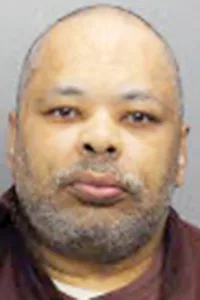
Andre Staton, 63, was tried by a Blair County jury and sentenced to death for killing Beverly K. Yohn, who at one point lived with Staton, but who had moved out of his home due to his abusive behavior.
Despite a Protection From Abuse order to stay away from Beverly and her children, Staton was accused of forcing his way into her new residence and stabbing her repeatedly.
Staton, a Baltimore native, had a prior record of stabbing a girlfriend.
After the incident in Altoona, he fled to Baltimore, where he was arrested after a search that lasted several days.
Since his conviction and sentence, Staton has fought for a new trial, filing a federal habeas action in which he complained about the pretrial publicity, the failure of court to grant a change of venue and the ineffectiveness of his lawyers.
Represented by Pittsburgh attorney John Swab, Staton's hearings have gone on for many years.
The Pennsylvania Court has rejected his arguments, and U.S. District Judge Joy Flowers Conti has held repeated hearings, eventually ruling that Staton was incompetent to represent himself.
Recently the defense and prosecution came to an agreement concerning the matter.
Blair County District Attorney Pete Weeks indicated that the proposal calls for a resentencing of Staton to life without parole.
That sentencing would occur in Blair County.
Judge Conti held a hearing on Wednesday and asked the attorneys to prepare an order for her to sign.
Weeks stated that the order could be presented to the judge as early as today.
She heard from not only the lawyers, but from a member of the victim's family.
Staton was able to participate in the hearing by video from the State Correctional Institution at Somerset.
The Blair DA indicated he would have more to say if and when the judge signs the agreement.
Staton was sentenced to death by Blair County Judge Elizabeth A. Doyle on June 1, 2006, and he presently is incarcerated in the State Correctional Institution Somerset.
The jury that heard the case included seven men and five women, and according to the jurors, following many hours of deliberation, the decision to recommend the death penalty was a draining, heartrending experience.
The prosecution led by now-retired District Attorney Richard Consiglio sought the death penalty because Staton, in forcing his way into the home where Beverly was living with her children, had violated a court-imposed Protection From Abuse order.
The 26-year-old victim had resided with Staton for a length of time, but she experienced repeated physical abuse and eventually took her children and moved into her mother's Altoona home.
A week following the issuance of the PFA, on Feb. 25, 2004, one of her sons spotted Staton in his car nearby.
Just as the children were about to leave for school, Staton forced his way into the home, and using a knife he was carrying, stabbed Yohn 12 times and left the knife in her back.
She eventually died from the wounds.
Hollidaysburg attorney Donald Speice, who led the defense, challenged the prosecution's request for the death penalty.
The defense pointed to Staton's impoverished home life and the fact that he had been physically abused by an alcoholic father.
He was depicted as a sickly child with heart problems, but was described by the defense as a person who had potential to do good.
According to one of the jurors speaking after the trial, these mitigating factors could not overcome the aggravating circumstance presented by the prosecution -- that Staton ignored a court order to stay away from his estranged girlfriend and her family.
Doyle commented during sentencing, "May God have mercy on us all."
Staton, too, reached out to God, saying the Almighty will be his judge.
Tensions were high on the day of sentencing.
One supporter of the victim said Staton "will rot in hell."
Station himself, as he was leaving the courtroom stated, to a Yohn family member, "It's all right. I got Bev."
Through the years, Staton challenged his conviction and sentence that was upheld by the various appeals courts, including the Pennsylvania Supreme Court.
He then took his case to the federal court, initially for the purpose of winning a new trial.
His federal case was assigned to Conti.
In 2018, Staton filed a declaration that he wanted to waive further challenges to his sentence and "forego any and all penalty phase mitigation within the Capital case appeal process."
On May 4, 2020, the judge ordered a mental health evaluation of Staton to determine if he was competent to waive his rights.
Experts were appointed to evaluate Staton and those experts -- both for the defense and prosecution -- agreed Staton suffered from a mental disease that "greatly constrains his ability to make rational choices among his options."
One of the experts stated his mental disease "prevents him from understanding his legal position and options available to him."
Due to the determination that Staton is incompetent to make decisions about his own case, the judge has appointed attorney Julie Brain of Philadelphia, who represents individuals on death row, as his guardian to make decisions concerning his federal court case.
Staton, during the initial appeal stage of his case, was represented by attorney Tim Burns of Ebensburg.
Once again he displayed his temper.
On May 13, 2013, he became upset with his lawyer while in Doyle's courtroom.
He was cuffed to a belt around his waist, but despite that caution, Staton, standing beside his attorney, was able to lift his belt up around his chest and deliver a blow to the attorney's forehead.
Burns was treated for injuries.
Another five to 10 years was added to Staton's already hefty sentence on charges of aggravated and simple assault.
A Blair judge dismissed another one of the charges against him for striking his lawyer that could have resulted in a life sentence.