
Region struggles with poor air quality
Wildfire smoke spurs park closures, increase in those seeking treatment
Trending
Since the invention of the telegraph in the 1830s and the laying of the first transatlantic telegraph cable in the 1860s, we have lived in a technologically connected world.
This week, Pennsylvanians are once again experiencing a different kind of connectivity -- the airborne kind that has existed since the earth first developed an atmosphere: the kind that has allowed volcanic eruptions to cause winter conditions in the summer half a world away.
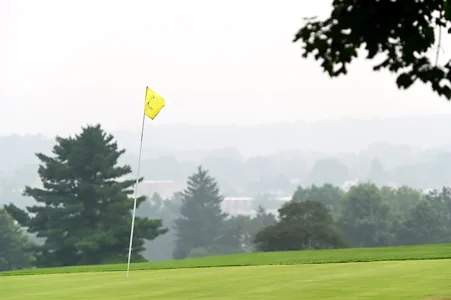
On Thursday and Friday, smoke from wildfires from central Canada spread in a narrow band across Pennsylvania from Pittsburgh to Delaware, creating hazy conditions that have drawn a gray curtain over the mountains, while posing health hazards, especially for people with respiratory issues, according to National Weather Service meteorologist Matthew Peare of the State College office.
The smoky atmosphere has generated an increase in patients seeking treatment for air quality-related issues at UPMC emergency departments, and it has led to the closure Friday of DelGrosso's Park, the rescheduling of Curve Movie Night at Peoples Natural Gas Field that same day and the cancellation or postponement both Thursday and Friday of youth baseball games in the area.
Air quality those two days reached the purple, or "very unhealthy," level for the first time over the whole state, with smoke density peaking locally Thursday evening and with just marginal improvement Friday -- when at 9 a.m. there were 153.8 micrograms of particulates per cubic meter in the air, according to Peare, citing a federal website.
The tiny, invisible particles from the smoke create a serious risk of flare ups for people with asthma or chronic obstructive pulmonary disease (COPD), according to Dr. George Zlupko of Altoona Lung Specialists.
The risk increases when people are outside, especially when they're exerting themselves and breathing deeply and rapidly, Zlupko said.
The particles are irritants, and if not trapped in the mucous layers of the airway -- in the nose, the mouth or the back of the throat -- or not coughed out after entering the lungs, they can get into the alveoli and remain in the lungs for life, like coal dust, according to Zlupko.
A mask, including a surgical mask, can trap the smoke particles for people working outside, Zlupko said.
There are medications that can reduce inflammation caused by the presence of the particles in patients' lungs, Zlupko said.
The ash-bleared windshields of planes flying through the smoke of the wildfires illustrate the issue, Zlupko said.
"Imagine what is getting into your lungs when you breathe that in," he said.
The smoke can also create problems for people with diabetes and heart disease, people who are immunocompromised, women who are pregnant and children, said Alex Pozun, an emergency department physician at Conemaugh Memorial Medical Center in Johnstown.
For asthmatic people, it can lead to wheezing and an attack, and it can cause scratchy throats, runny noses, headaches and tiredness, as well as a racing heart and chest pain, Pozun said.
Surprisingly, Pozun didn't see an influx of respirator cases in the Conemaugh ER Thursday or Friday -- a benefit he attributed to smart behavior from local residents who avoided the problematic air outdoors, coupled with the closure of some pools and other outdoor venues.
"People are choosing to do more indoor activities like bowling or the movies," he said.
It makes sense to take precautions even when indoors, by having window fans blowing outward and ensuring that air conditioners are equipped with filters, Pozun said.
Air purifiers can also help, as can avoiding fires from certain kinds of cooking grills, he said.
Persistent airflow from the northwest over the past few days brought the smoky air to our region, while a high pressure system overhead has kept it trapped near the surface, Peare said.
Light and variable winds meanwhile have failed to disperse the smoke, he said.
Smoke was likely to linger overnight Friday, but things should improve today, starting in the morning with southwest winds picking up ahead of a system moving across the Great Lakes that should "help blow the smoke out" by the afternoon, Peare said.
Some scattered showers and thunderstorms should help, he said.
But behind the cold front, the wind may shift to come out of the north on Sunday, which could bring more smoke back to the area -- although it's not likely to be near the surface, and so shouldn't be so troublesome, Peare said.
"We will need to monitor it," though, Peare said.
Mirror Staff Writer William Kibler is at 814-949-7038.